So instead, I’m writing about “Little Women”

I haven’t blogged in ages because I keep thinking that I should write something personal and insightful. But when I start trying to do that, I just get bogged down. I don’t want to seem preachy, I don’t know how much I want to reveal–I just don’t enjoy it.

So chuck it. Let’s talk about Greta Gerwig’s Little Women.


I work at a tech company, and before the Christmas break, the chatter was all about Star Wars. Who would see it when, how many times, in what format, and at which theatre. So much excitement.

… Which I couldn’t share, ’cause I didn’t care. I did see the first two in this new Skywalker set. I thought the first one was too much of a rehash of the original Star Wars. I found the second better, more interesting. But this one, somehow, really seemed primarily aimed at the super-fans (who are legion). I’m sure it’s an entertaining enough movie. But I’m in no hurry to see it.

When I first saw the trailer for the new Little Women, I wasn’t sure it was necessary, given that the 1994 version was so good. I was intrigued, though, by the near suggestion that maybe Jo… Doesn’t get married?

And then all the amazing reviews started coming out, so I started really anticipating its release. I had visions of seeing it at the VIP theatre–lounging in my comfy chair, being served appetizers and wine–but then realized that while it was playing at that theatre, it wasn’t in the VIP room. (Not with stupid Star Wars hogging a bunch of those screens.) So instead we trundled off to see it at on a regular screen at a regular theatre, with regular seats and not even any popcorn, because the lineup to get that was too long. (Stupid Star Wars.)

Jean’s been watching a bunch of women-centred shows with me lately: TV series Fleabag (which he loved), the movie Girls Trip (which he did not; must agree it was pretty stupid), and the movie Booksmart (I liked this one more as it progressed; he remained unmoved by the main characters).

With Little Women, he loved the cinematography and found the characters interesting, if not always likable. He’s never read the book and doesn’t remember the 1994 Little Women (which we saw together), so the story was all new to him. He declared he wished there was more plot. (Does Fleabag really have any more plot, though?) And he kept mixing up the actors playing Beth and Amy (declaring they looked too much alike), which made for a certain amount of story confusion, as you might imagine.

Me, I read the book multiple times in my youth, so it was all about seeing how the famous scenes were interpreted this time. And the unique approach here is that much of the story is told in flash-back form, as the movie begins with Jo in New York, meeting Professor Bhaer. As events occur in that time line, she thinks back on moments from her youth.

It’s kind of an exhilarating way of presenting it, as those of us who are familiar with the story are also, basically, looking back on those scenes with nostalgia. Giving away Christmas dinner to the Hummels. Getting in trouble over pickled limes. Oh right, the ice skating accident. Beth and her piano. The burnt dress. The burnt dress. The burnt stories! (So much burning!)

The movie just skitters along at a contemporary pace, moving across scenes before we can get bored with them, but without seeming rushed.

The actors are all terrific. Among the famous are Saiorse Ronan as Jo, Emma Watson as Meg, Timothy Chalumet as Laurie, Laura Dern as Marmee, and Meryl Streep as Aunt March. Not previously known to me were Florence Pugh as Amy and Eliza Scanlen as Beth, which I assume contributed to Jean’s confusing the two of them. They stood up among this cast, with Pugh doing an especially great job with Amu. And I would note that both actors had startlingly rich, deep voices, which was really striking (to me; Jean claimed to not have noticed).

But does Jo marry? (Spoiler alert, I guess?) That’s the thing: it’s not clear. By that point in the story, Jo is working on a novel called Little Women, based on her life. She is discussing the fate of the fictional Jo with her editor, he of the opinion that women characters must end up either married or dead. There is a scene of Jo and Professor Bhaer kissing in the rain. But did that really happen or is it just written into the novel…?

Brilliant.

This Vox article–The power of Greta Gerwig’s Little Women is that it doesn’t pretend its marriages are romantic–gives a great take on Little Women‘s “marriage problem”: that it’s hopelessly unsatisfying that Jo ends up with Professor Bhaer (especially the way he’s described in the novel) while Amy gets Laurie. Apart from making Jo’s marital status ambiguous, Gerwin makes the Laurie / Amy partnership much more palatable partly by, as the article says, spelling the economic reality for women at that time.

Sorry, Star Wars fan, for dumping on your movie, which I haven’t even seen. Just a joke. I do hope you enjoyed it. Because I do understand loving something in your childhood / teenagehood and wanting to see it re-created on-screen. Only for me, that something is a novel about four young women in the time period of the American Civil War.

Finding fiction

A tip on reading more books that I’ve found useful is to just embrace having more than one on the go at a time. Prevents any one book from feeling like a slog that is stopping you from moving on to your new, shiny books.

Personally I aim to have at least one fiction and one non-fiction book in progress. Non-fiction isn’t so hard to line up—just go with subjects I’m interested in. Fiction is tougher. I now see why so many people love genres of fiction: makes it easier if your aim is to have a bunch of mysteries, romances, or sci fi novels at the ready.

But if your genre is, basically, General Fiction? Quite a bit tougher to narrow that down. I seek inspiration everywhere.

The Music Shop by Rachel Joyce

Source: Spotted it in a book store (but later bought the ebook)

A love story, of sorts, between an eccentric owner of record store—as in LPs, at the time when everybody was buying CDs (and maybe cassettes)—and a mysterious young woman who swooned outside the shop one day. She claims to know nothing about music. He agrees to teach her about it.

That’s the best part of this book, to me—the in-depth discussions of great exemplars of different types of music: jazz, rock, classical, R&B… Makes you want to rush out and listen to what’s being discussed. Fortunately, the book comes with a Spotify playlist:

I do not know what the book’s main character would have thought of Spotify…

An American Marriage by Tayah Jones

Source: Barack Obama recommendation

A novel about a recently married couple in which the husband is wrongfully convicted of sexual assault. The wife has no doubt of her husband’s innocence; nonetheless, he faces a long incarceration away from her. How do you manage that?

Much of the novel is told as a series of letters. The story does not proceed on a predictable path, but it is plausible one. Thanks, Obama.

Young Jane Young by Gabrielle Zevin

Source: Kobo (ebook seller) recommendation

A work of fiction built around the story of a young woman who has an affair with the older, married, male Senator she’s an intern for. Shades of Monica Lewinski, yes, though that affair is mentioned in the novel as the news that drives her own story out of the headlines.

What’s interesting is that the story is told exclusively from the point of view of the women involved: the intern, her mother, her daughter (the story covers many years), and the Senator’s wife. And you’re not always sure who is who, at least not right away. I loved the approach and really got caught up in this novel.

Asymmetry by Lisa Halliday

Source: New York Times best books of 2018

This one didn’t work out!

The novel is in three parts. The first two seem unrelated. The third is supposed to bring them together. I read the first part, about a love affair between a young woman and much older man (a writer). They were interesting characters, but they didn’t really do much. There wasn’t much plot happening.

Before proceeding, I look into other reviews. They said that the second part was less interesting than the first, and that the supposed connection you find out about in the third is tenuous, maybe unfathomable. So, I gave up on this one.

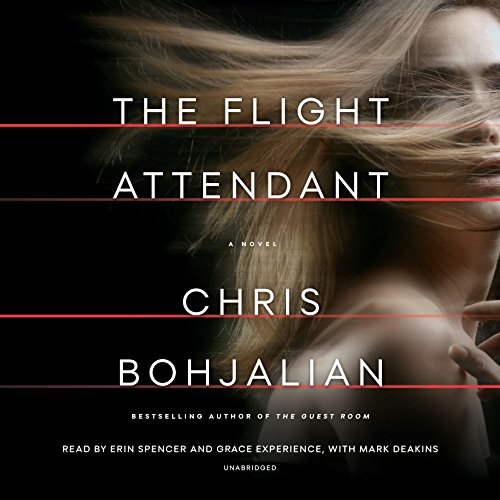
The Flight Attendant by Chris Bohjalian

Source: Recommendation from The Washington Post

Cassandra Bowden, a flight attendant and a binge drinker, wakes from drunken stupor to find that the man she spent the night in Dubai with has been murdered. What to do?

If there’s one genre I do tend to return to, it’s the thriller, and this one is somewhat reminiscent of The Girl on the Train. Unlike that novel, however, it’s clear early on in this story that Cassandra did not murder her lover. But her lack of memory about what happened complicates her situation. And her frequently poor judgment often makes things worse.

This was a pretty fun read. I got it as a library ebook and had to binge read through the last parts because someone else had put a hold on it and I wanted to know how it ended.

Non-fiction

I’ve been in a bit of a rut here, of musician bios.

Thanks a Lot, Mr. Kibblewhite is Roger Daltrey’s breezy, easy-reading autobiography. You can tell that it was built from Roger telling his story to the writer he worked with, who assembled the pieces into a coherent narrative.

It is an interesting story, starting in the deprivations of post-war London and continuing up to closing out the Olympic Games, making a triumphant return to Hyde Park, and nearly dying of viral meningitis. With many entertaining anecdotes on the way, from Keith Moon’s antics to the many women in his life (and a number of surprise children) to The Who’s financial challenges and musical triumphs.

I can recommend this one as being appealing even to more casual fans of The Who, as Jean and I listened to the audiobook version (read by Roger Daltrey) and Jean was approving. He had a much higher opinion of Mr. Daltrey by the end of reading this than he had going in.

Unlike with Roger Daltrey’s book, which I preordered and read pretty promptly, this one has been sitting on the bookshelf for a while. I ended up quite enjoying it, though.

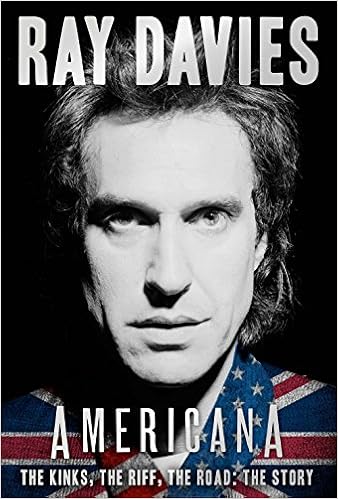
This Ray Davies’ second autobiography. Though it does some moving back and forth in time, it’s told in a much more straightforward fashion than his first, which employed a faux, third-party narrator. Here, Ray just writes his own story, focusing on The Kinks relationship with America, and therefore covering the period starting in the early 1970s when the band’s work ban was lifted. It includes the whole 1980s “arena rock” period during which I discovered The Kinks and became a fan, so was of particular interest.

Ray discusses some of his relationships he was in during this time, but with considerable discretion, so if you’re hoping for dirt on his volatile relationship with Chrissie Hynde, you’ll be disappointed. It’s mostly about the music, the band, and his uneasy relationship with the US itself—culminating in his shooting by a mugger in New Orleans. Getting shot is no joke, it turns out…

Another book with a soundtrack (yes, there’s also a Part 1; I just prefer Part 2)

Meditation

Many years ago I read (at least some of) Wherever You Go, There You Are by John Kabat-Zinn. The point that stayed with me all this time is that if you’re not really fully present and engaged with the now, you’re not really living.

Which doesn’t mean that I am always, or even particularly frequently, fully engaged with the present. I am a hopelessly plan-y person, which makes for a lot of thinking ahead! But I at least had that idea, in the back of my mind, that if you’re going to do a thing, you do that thing, you focus on it, and you really appreciate it. And at least occasionally, I would actually do that.

Kabat-Zinn’s technique for getting better at being present and mindful was (and still is) meditation. That practice, I never adopted. I think I tried a few times, but it never stuck.

silhouette of man at daytime
This is not me. (Photo by Prasanth Inturi on Pexels.com.)

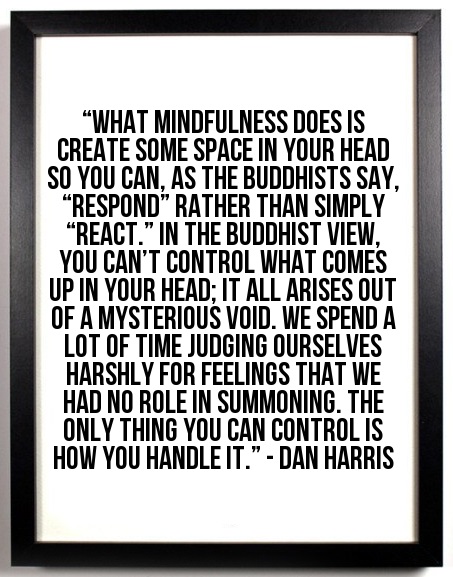
Jump ahead to January 2018. TV journalist Dan Harris is the guest on The Daily Show, talking about his new book Meditation for Fidgety Skeptics: A 10% Happier How-to Book. A lot of people are interested in trying meditation, he says, but think they don’t have the time. His pitch to them? Five to ten minutes, he says—that’s enough. Don’t even have five minutes? One minute will do.

Then he adds that it’s nothing complicated, that it doesn’t require wearing of yoga pants and becoming a mystic, and that you’re not failing if you don’t manage to clear your head. The attempt to clear your head is what matters.

I finally bought the book this spring, and after a few bouts of anxiety left me wishing I had some better coping techniques, this summer I actually read it.

After an introduction to what meditation is and what its benefits are, the book is divided up into chapters based on people’s excuses for not doing it. I thought I’d only have to read the first two: “I can’t do this” and “I don’t have time for this.” Then when I actually started trying it, it was a bit uncomfortable, so I figured I should also read the third chapter: “People might think I’m weird.” (What’s actually weird? That so many people find being alone with their thoughts so off-putting they are actually willing to give themselves electric shocks as a distraction.)

In the end, I found something of value in each chapter, even the ones that appeared to have nothing to do with me: “Meditation is self-indulgent”—as if I have any trouble with self-indulgence. Or, “If I get too happy, I’ll lose my edge”. Yep, that’s me all right, miserable and edgy, and wanting to stay that way!

But the “self-indulgent” chapter included tips for if you thought you maybe had the opposite problem (of perhaps being a little selfish), and the “edge” chapter included some great techniques from managing worries (the “Is this useful?” mantra).

Furthermore, the book was just more interesting and fun to read than I expected from a “self-help” type. There was a running story-line of going on a meditation tour and trying to gain recruits. Meditation techniques are not “one size fits all”, it turns out.

But did the book work? Yes, absolutely, in that for the first time in my life, I am meditating regularly. (Turns out that my office has a meditation room! Who knew?)

And am I now 10% happier? Is the meditation itself working? Well, that’s hard to say. The whole thing is subtle (the promise is about a 10% happiness increase, not a complete transformation of your entire outlook) and the effects take time. At first it just seemed weird and a bit pointless. Now, sometimes I actually look forward to it. I can’t say for sure, yet, whether I’m developing better long-term coping strategies. But maybe?

Quote-2.jpg

My relationship with the Globe and Mail is dysfunctional

I do think that, in these times, it’s important to support the newspaper industry financially, if you can afford to. This might seem crazy, when so much news is available for free online—and there’s certainly an argument that news companies haven’t been that smart in making so much of it available free online. But, we need to support real journalists. Those who hold politicians to account. Who spend months on investigative stories. Who fact check. Who provide the background details on that “click-bait” headline. Someone needs to help pay for all that—or we’ll lose it.

coffee magazine
Photo by Kaboompics .com on Pexels.com

However, there is really no need to subscribe to as many newspapers as I do. Most of these subscriptions, I acquired at some great deal, but these deals gradually expire, I have to start rethinking some of these relationships.

Long-time companion: My local paper

If you’re looking to subscribe to one newspaper, your local paper is a good one to consider. For one thing, if you even have one, you’re lucky—just ask Guelph. And there have been studies that closures of local newspaper increase the cost of local government: no more watchdogs.

But you don’t have to think of your subscription as a charity donation; it is actually a source of useful information—who’s running for office in your town; local perspectives and comments on national and international stories (example: Greg Mercer’s great investigative work on Doug Ford’s shoddy treatment of former Kitchener MPP Michael Harris, later picked up by The Toronto Star); upcoming and ongoing constructions projects; festivals and other events; stores and restaurants opening, closing, moving, and expanding; and updates on when the heck those Ion trains are going to get here. The New York Times is great, but it ain’t going to cover any of that stuff.

Conestogo River at sunset!
Wondering where this lovely neighbourhood trail is? Your local paper might tell you.

Plus, an e-subscription to my local paper, the Waterloo Region Record, is pretty cheap. For just under $8 a month, you get unlimited access to the website and a full replica of the print edition in a handy Android or IOs app. It’s also a nice, I think, that The Record is not a Postmedia publication, meaning it doesn’t run obligatory corporate editorials (that just happen to have a right-wing slant). The Record is owned by the TorStar, who allow the local staff to set their own editorial direction.

Cheap date: The Washington Post

So, this is how they lured me in: They said subscribe to our newsletter, and we’ll give you full website and Washington Post app access for six month. And I said, OK. And it turned out their newsletter was kind of interesting, and I was reading a bunch of their articles (Trump era! You can’t look away!), and when the six months was up they said, how about you give us $20 (US) and then you can keep getting the newsletter and having full website / app access for a year. And I said, OK.

postThen the year was up, and I was like, oh my God, what is my price going to jump to now? But it didn’t jump at all (except to the extent that the Canadian dollar fell); it was still just $20 US for another year. Or about $2 Cnd. a month. Which, I can totally afford, so I’m keeping it, because—you can’t look away!

Weekly gentleman caller: The Toronto Star

Though this is soon to change, the Toronto Star doesn’t currently have a online paywall, so my subscription is an old-timey one, to the paper version, but on Sundays only. And at this point, I’m still getting it at half price.

It is kind of nice to get a paper copy (in limited quantities), and I do usually get it read (though not necessarily all on Sunday). I’m also wondering if this small subscription will provide some access once the paywall does go up. So I’ll hang on to this for now to see what happens.

Toronto Star special project: Daniel Dale keeps track of every false claim Donald Trump makes. (Maybe they should do Doug Ford also?)

Glamour boy: The New York Times

Yes, this is the prestige paper, but the thing that stands out to me about The New York Times is that its online experience is just head and shoulders above everybody else’s. Their long-form stories are interactive and gorgeous. For example, though it broke my heart:  Losing Earth: The Decade We Almost Stopped Climate Change.

losing-earth.png
“Long-term disaster is now the best-case scenario…”

You can seamlessly link to the responsive and attractive New York Times app from browsers and social media. As a subscriber, you can “set aside” any story for safe-keeping or later reading, something I’m now constantly expecting from all other papers! But alas, no one else has it. (Thanks goodness for Pocket.)

And if you like cooking? A vast collection of recipes is available, auto-organized, to which you can add external sources. And even get it all printed up (for a small extra fee). If you want the “full paper replica” experiences, that’s available, too. And though it’s not my thing, the crossword experience is apparently incredible as well.

recipes-nytimes.png
The lovely (and far less depressing) cooking section of the New York Times

I had this subscription for a year at 60% off, and the full monthly price ($22; they let you pay in Canadian) is now a bit of a shock. Cheaper subscription are available—and even freeloaders aren’t completely cut off. So I’ll have to do some research on how much glamour I really need in my life.

Dysfunctional relationship: The Globe and Mail

If you think The New York Times is a bit pricey… Meet the Globe and Mail. I have the cheapest possible subscription, but now that this 60% off discount has expired, we’re talking $27 a month. That’s just to read stuff on the website—no amazing app, no replica of the full paper, no home delivery, nothing much extra other than… Report on Business magazine.

So I keep breaking up with The Globe and Mail. Which is always painful—because it requires a phone call, of course, no handy Cancel button. And the cancellation request is never immediately accepted. No, they first try to lure or guilt you into staying, but if you succumb, you know you’re just putting off the pain to a later date.

But even when I succeed in ending the relationship, I often find myself lured back. Because for all the frustrations with this publication:

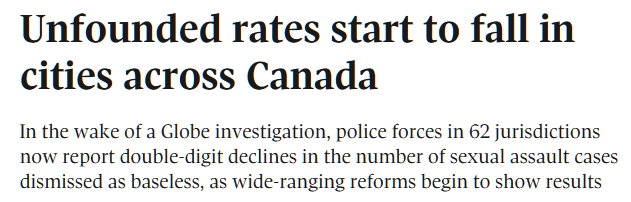
They do have some very good columnists, and they do invest in long-form investigative pieces more so than any other Canadian newspaper. A prime examples is the Unfounded series that Robin Doolittle worked on for 20 months, revealing that an incredible percentage of reported sexual assaults were being dismissed as “unfounded”, or without merit. It’s a rare case of a newspaper story leading to nation-wide changes in policing.

unfounded-rates-fall.png

There’s also the simple fact that a lot of Globe and Mail stories are “subscriber-only”, period. While there are ways around this (you can get the Globe digital replica free from the library, for example), they are not  as convenient as just clicking and reading the story. But what price convenience? That’s what I have to decide.

I have not completely forgotten how to read

This Globe and Mail article, called I have forgotten how to read, was posted some weeks ago now, but the opening sticks with me [bold added by me]:

Turning, one evening, from my phone to a book, I set myself the task of reading a single chapter in one sitting. Simple. But I couldn’t. There was nothing wrong with my eyes. No stroke or disease clouded my way. Yet – if I’m being honest – the failure was also not a surprise.

Paragraphs swirled; sentences snapped like twigs; and sentiments bled out. The usual, these days. I drag my vision across the page and process little. Half an hour later, I throw down the book and watch some Netflix.

Out for dinner with another writer, I said, “I think I’ve forgotten how to read.”

“Yes!“ he replied, pointing his knife. “Everybody has.”

“No, really,” I said. “I mean I actually can’t do it any more.”

He nodded: “Nobody can read like they used to. But nobody wants to talk about it.”

I identified with the gist of the remainder of the article, which is that the Internet has rewired our brains and made it difficult for us to focus on extended text, such as a book. Heck, even a brief Internet outage (maybe 2.5 hours) one Sunday left and my husband and I feeling like lost, disconnected souls, missing our regular jolts of online distraction.

But still, that opening example… You literally can’t sit and read one chapter? That just seems impossible. Like, how boring was this book you were trying to read? Maybe don’t go for Moby Dick or Middlemarch. Try some hot fiction. A lively bio, maybe.

On the other hand, if actually true, it’s made me feel slightly superior, because despite my web-addled brain and Twitter addiction, I still manage to read a book chapter pretty much every single day.

Sure, it takes a bit of conscious effort. No screens in the bedroom (other than an eReader), TV off by a certain time. And quite deliberately having at least two books on the go, so that my Internet-addled brain has variety and choice. Normally, I try to make sure it’s at least one fiction and one non-fiction on the go.

Here’s a few I’ve gotten through—or am working on—recently.

Caught by Lisa Moore

Nobody I’ve talked to seems to have of this book, even though it was supposedly a best seller. It’s a Canadian novel, set in 1978, about a young man convicted of drug dealing who escapes from prison. He then connects with his former partner in crime, who evaded incarceration, for another possible job. But he might not be evading the law as well as he thinks….

This was a well-written novel, with each chapter acting like a short story in itself, with its own suspenseful arc.

I was pleased to see that CBC has adapted the novel as a mini-series, and even more pleased that they’ve changed some plot elements in an interesting way. Now I don’t know how this version will end, as I’m thinking it can’t be the same as in the novel…

The Handmaid’s Tale by Margaret Atwood

Yes, it was about time I read this, and yes, it came to mind because of the popular mini-series, even though I only watched the first episode of that, because then the free Bravo preview ended, plus I found it kind of dark.

Compared with that one episode of the mini-series, the novel was not as depressing as I’d expected. The episode quickly presents the story of Offred’s capture and “orientation” into the life of handmaiden; the novel spends more time with her immersed in that life, with flashbacks occurring only later on in the book. And it’s overall less graphic, I suppose.

I “enjoyed” reading it, if that’s the right word? It kept me engaged, anyway. And not having seen the rest of the mini-series, I didn’t know how everything would play out.

Mortal Error: The Shot That Killed JFK by Bonar Menninger

This a non-fiction work about what I think is the most convincing take on the Kennedy assassination: that the President was accidentally killed by one of his own security men. It documents the work of ballistics expert Howard Donaghue, who was asked to prove whether Oswald could possibly have fired three times in the necessary time span for him to have acted alone. Donaghue managed to replicate that feat, but wanted to do more research before giving his own stamp of approval on the official account. Hence begins years of research.

He discounts some of what conspiracy theorists insist prove their case; the “magic bullet” problem. He explains that by how Kennedy and Connolly were seated relative to one other, and by the type of bullet used. But he couldn’t buy everything about the official account, either, concluding, for example that the first shot did ricochet onto Kennedy but not Connolly. And he was especially troubled by the fatal head shot: both its trajectory and its effect. Leading to his eventual conclusion that it was actually fired from a different location and type of gun.

I know exactly nothing about gun and ballistics, of course, but the evidence laid out here just works better for me than any other I’ve heard. The official story, about one deranged man acting alone, makes it hard to explain why so many officials did act in such weird, suspicious, cagey ways—breaking Texas law by stealing away the body, later losing the President’s brain (!). But arguing that Oswald was either just a patsy or a party to some government conspiracy doesn’t work that well, either; he really did seem the deranged loner type to try something like this, and he did murder officer Tippet.

But that Oswald alone tried to murder the President, and that one of the security men reacting to the shooting tripped and accidentally fired? And that officials didn’t want the world to know that accident happened? Yes, that makes sense to me.

There was a documentary made about this theory in 2013. (The book was published in 1992.) Trailer below, but the whole thing seems to be posted on YouTube.

My Real Children by Jo Walton

Someone had recommended Jo Walton to me as an author, and I picked this particular novel because it was the only one immediately available for borrowing (as an ebook) from my library. It’s a novel about a woman whose life starts off on one trajectory, then splits off in two directions based on a pivotal decision. After the setup chapters, the book alternates between what happens when she says “yes” versus what happens when she says “no”.

It’s not only her own personal life that veers in different directions in each case, but world history itself. Early on we learn that in one case, President Kennedy (him again!) was killed, while in the other he was not. So you initially think that one life will take place in “our” world vs. an alternative one. But no. Kennedy is killed is different way, and a whole other history follows (such as his brother not being assassinated and instead becoming President himself).

With the mix of two personal stories and two alternative world histories, I got totally caught up in this. My original plan was to read what I could doing the three-week borrowing period then check it out again later, but no, I found I really wanted to finish it! The only downside to that was that it meant reading the later chapters in rapid sequence, which got pretty confusing—there was so many characters (friends, children, partners, grandchildren), not to mention varying historical facts—to try to keep straight in each “life” at that point.

I was wondering how this would all come together in the end. The answer wasn’t entirely satisfying, but I didn’t regret the journey one bit.

The Last Black Unicorn by Tiffany Haddish

The current read, one I am still working on. (Plus, it’s a book club book, so discussion is to come.) Early part is a really sad story, told by a very funny person.

Call Me by Your Name by André Aciman

Just anticipating this will be my next fiction read, as that is the Oscar-nominated movie that really had my heart this year. Whereas my brain said Get Out might have been the best in terms of ideas. But the Academy thought Shape of Water, of course—it was also good. Jean and I liked The Post also, but it was more conventional than the other five nominated movies I saw.

I did not watch the actual telecast, beyond the opening monologue. I had reading to do.

Random Internet experiences. (Or are they?)

Jean’s been away camping at Algonquin this weekend. During our thunderstorm, followed by our crazy wind storm, I realized that:

a) I have no idea where we keep flashlights in this house. (Perhaps Jean took them all camping?) In case of evening power outage, I would just be stumbling around in the dark. Or playing with matches. (Fortunately, no power outage occurred.)

b) If it was also happening in Algonquin, that would make canoeing really difficult. Since I did have power, though, a web search seemed to indicate that Algonquin was not in the wind warning region. Snow was a definite possibility, but winds were moderate.

Yep, the Internet is certainly great for finding out stuff. And for getting stuff. Like, I wanted to get a new audiobook for an upcoming trip. I went to Audible.com to see what I could find.

An aside: I used to be a member of Audible.com, but in recent years I’d realized that everything they had seem to also be available on iTunes. And cost less. But the Audible.com website it still a far superior place to go when browsing. It has categories, it has reviews, it has recommended lists. By comparison, shopping for audiobooks on iTunes really sucks.

After poking around for a while on Audible, I settled on Lori Lansens The Wife’s Tale. I wanted to read it anyway; it had great reviews; I thought Jean would also like it; it had a bit of a travel theme…

I did find it a bit odd that it wasn’t available in iTunes, but figured I’d just get it direct from Audible. I filled in the form, credit card number and all, clicked Submit… And was told I couldn’t have it, because I live in Canada.

Lori Lansens, of course, is a Canadian author. But apparently her Canadian publisher, unlike her American one, doesn’t want to bother making an Audible version of her novel available. Sucks for me. But also sucks for her, because after ranting and fuming for a while, web searching to see if there was any other obvious way to get the Lansens audiook (not that I could find, and was surprised to that library audiobooks are sometimes listed as not available? I guess it’s part of the deal of them being free that only so many people can access them at once?), I ended up purchasing the audiobook Nick Hornby’s Juliet, Naked instead.

Then today I got to wondering if software existed that could create sheet music from a song on a CD. Because there are some songs I’d like to play that I don’t have the sheet music for, and I’m really not good at playing by ear.

I wasn’t able to find software quite like that, but I was able to find software that would take a MIDI file and “notate” that. So I downloaded a trial version of that. And then, in two clicks, I was able to find a free MIDI file of exactly the song I was wanting to play, even though it was a fairly obscure album track.

The software will take a little figuring out, but it’s fairly cool. It reads in the file intelligently, then allows me to make some modifications (add lyrics, hide the drum score). Now I seem to have a pretty decent score of this song. Assuming I continue to like this app, I’ll buy it once the trial period ends, as apparently my being Canadian does not prohibit me from owning this particular piece of software.

Though I don’t think it’s directly connected to this issue—I don’t understand it all well enough to say—the apparent randomness of what digital files I am permitted to access (even when willing to pay) nevertheless reminded of this post I that also read this week:

Canadian Prime Minister promises to enact a Canadian DMCA in six weeks

What a goddamned disaster. The Tories have shown — yet again — their utter contempt for public opinion and Canadian culture and small business when these present an inconvenience to more windfall profits for offshore entertainment giants. Remember: thousands of us responded to the Tory inquiry on copyright law, and overwhelmingly, we said we did not want a US-style copyright disaster at home. Remember: hundreds of thousands of us wrote and called our MPs. Remember: Canadian artists’ coalitions fought against the imposition of a DMCA in Canada. Remember: America’s copyright war has been an absolute trainwreck, with tens of thousands facing lawsuits, competition and innovation eroded by DRM, free speech challenged by copyright takedowns, and no improvements for creators or creativity.

There’s only one thing stupider than being the first country to enact the DMCA, in spite of its obvious shortcomings: enacting the DMCA after the first country has spent a decade showing how rotten and backwards this approach to copyright is.

Three books, five days

… And that’s pretty good for me. The key, I’ve found, is trains. And given what’s currently happening at airports, more of us may be taking trains. At least take comfort in knowing it’s good for literacy.

Oryx and Crake by Margaret Atwood

… even though, I have to confess, two of the three books were consumed in Audible form, on my iPod. That way you can also watch the scenery. And the snow-covered trees were really pretty.

OK, the most important thing about finishing Oryx and Crake is that I’m no longer in the embarassing position of never having read a Margaret Atwood novel. Yes, I know. You’d be amazed at the great authors I’ve yet to read. Though, to be fair, I have tried reading Margaret Atwood before. I just had to give up about a third in, due to incredible lack of enjoyment. (Not even sure what book that was, anymore.)

But Oryx and Crake, I found really interesting. It’s an Apocalyptic future kind of tale, taking place in a globally warmed future where a single remaining homo sapien coexists with “Crakians”, genetically engineered humans who lack humans’ more destructive impulses. A lot of the realities of the book—the bizarrely genetically engineered animal hybrids, the smart technologists locked away in compounds away from the “plebe-lands”, the reliance on medicine to treat everything—seemed somewhat plausible, only a little beyond what is actually going on.

So it was an unpleasant yet somewhat familiar world, and it was fairly engrossing uncovering the mystery of what led to this point.

Julie and Julia: My Year of Cooking Dangerously by Julie Powell

I had seen and enjoyed the movie, so I got curious about the book, which I did actually read, and without the benefit of train motion. Julie Powell had a blog that covered her efforts to make all 524 recipes in Julia Child’s Mastering the Art of French Cooking, in one year. Though a personal strain (these are not easy recipes), the blog became very popular—ultimately becoming a book, then a movie (obviously).

Watching the movie, I somewhat related to Julie. She and I both like to write about food, for example. She and and I both cook from written recipes (as opposed to just whipping up your own thing, which is a whole other talent). She and I are both in a long-term, childfree marriages to really sweet guys.

And reading the book, I found even more similarities. Like—I kid you not—her total obsession with Buffy the Vampire Slayer. One of the most dire crises of the book is when CBS wants to interview her on the night of the very last Buffy ever!

So part of my brain thinks, geez, why didn’t I think of blogging about making all of Julia Child’s recipes in a year so that I could get a book deal, and a movie deal, and get to write another book?

But then I’m reminded that there are some key differences between Julie and me.

She’s much more open than I about writing about personal, embarrassing stuff, for example. And that is a big part of the charm and appeal of the endeavour, which made it a success.

There’s also the fact that she was really dissatisfied with her secretarial job, and her difficulties in getting pregnant, both necessary fuel for taking on and maintain this crazy project of hers. (Along with occasionally copious amounts of alcohol, cigarettes, and expletives.) Me, I don’t have quite enough angst to take on making boeuf bourgignon until 2:00 in the morning, sustained only by nicotine and rum.

And most particularly… Frankly, I would never do classic French cooking. Reading the book, even more than seeing the movie, made me realize I have no interest in this type of arduous cooking: Digging out bone marrow, making gelatin from a calve’s hoof (seriously! apparently smells like a tannery), chopping up a live lobster (all the parts squirm, it appears), boning an entire duck.

It was fun to read about, though.

Dead Until Dark by Charlaine Harris

This was the return trip audiobook. I had downloaded Fahrenheit 451 as well, but that was starting to seem like a little too much apocalypse for one trip, so I dug around and stumbled upon this one, the first Sookie Stackhouse mystery. OK, vampire mystery. But the vampires are still incidental, even though I realize this is the second time they’ve been mentioned in this post.

And also, that all three books are from a single individual’s point of view.

Anyway. In this case, the point of view is Sookie Stackhouse’s, a telepathic bar waitress in a world where vampires exist and have just attained legal status. Sookie meets Bill, a vampire who sets her small Southern town a-twitter by deigning to live in it. She’s intrigued because she cannot read his mind; this comes as a major relief. But their path to true romance hits stumbling blocks in the form of the murder of women who have a sweet spot for vampires.

Jean declared this too much of a chick book for him, though not too much for him to listen from start to finish.

I found it diverting enough, but I’m not sure I’m compelled to read any more of these. Sounds a bit weird to say given that the main characters are a vampire and mind reader, but there were more supernatural elements introduced later in the novel than I wanted. Made it a bit harder to believe in the world. Sookie was a fun character, it had some nice sexy bits, and I was curious about the murderer’s identify. But it’s not something I’d say you’d have to go out of your way to read.

(In case anyone was wondering, I haven’t yet seen True Blood, which is apparently based on, but very different from, these novels.)

Yes nukes, fast trains, and no oil

A few years ago, while on vacation in Costa Rica, I read George Monbiot’s Heat: How to Stop the Planet from Burning. While I don’t recommend it as vacation reading, it was interesting. The premise was how Britain (as example country) could reduce its greenhouse gas emissions by 90%, yet still maintain a decent standard of living.

I thought he had a number of good ideas, but one I didn’t agree with was his dismissal of nuclear power as one option. He struggled with it, and the fact that it produces no greenhouse gas emissions, but finally concluded he couldn’t live with the waste disposal issue. But I thought the issue was global warming?

So I was kind of pleased to see the very lefty This Magazine coming around to that same point of view. While they sadly haven’t made the whole article available online, you can get the gist from the cover: “Wind and solar can’t save us from climate change. Like it or not, nuclear power can.”

The Walrus’ “Off the Rails” focused on the sad state of train travel in Canada. Though I thought I basically knew the score here, I was surprised to learn that Canada did have high-speed trains; it just never had the infrastructure to actually run them at their maximum speeds. And also, that the US actually has some high-speed trains (Boston to Washington). And that they’re thinking of adding more—that might even connect to Canada! Toronto to New York by train, anyone? That would be awesome!

Pretty struck, too, by the graph of greenhouse gas emissions, per passenger, for train, plane, and automobile. First two—not as different as I thought. Last one—much better than I thought. (Too bad the graph is not in the online version of the article. Guess they need to give you some reason to buy the paper version.)

But most striking, for sure, was The Walrus article called “An Inconvenient Talk”. Which basically argues that, way before global warming becomes a crisis, we’re going to run out of oil. And that will be a crisis.

OK, sure, not the first time we’ve heard about this “running out of easy oil” point. But Chris Turner is a very good writer:

Here’s the upshot: if you plan to drive a car or heat a house or light a room in 2030, The Talk is telling you your options will be limited, to say the least. Even if you’re convinced climate change is UN-sponsored hysteria or every last puff of greenhouse gas will soon be buried forever a mile underground or ducks look their best choking on tar sands tailings, Dave Hughes is saying your way of life is over. Not because of the clouds of smoke, you understand, but because we’re running out of what makes them.

And he focuses on a pretty convincing subject in the form of Dave Hughes, whose life mission is now to inform people about this problem looming all too soon. (10-20 years, he says.)

And, Turner boosts this with views from others. Like the IEA:

As recently as 2005, well into Dave’s second career as a peak-hydrocarbon prophet, the executive director of the International Energy Agency (IEA) — probably the most trusted name in fossil fuel reserve prediction — was dismissing peak oil’s proponents as “doomsayers.” Mainstream media coverage, meanwhile, tended to focus on the hard-core survivalist subculture the science had inspired.

Two weeks after you ride along with Dave Hughes for Talk No. 155, though, the IEA releases the latest edition of its annual World Energy Outlook, which predicts a global oil production peak or plateau by 2030. In a video that appears online soon after, the Guardian’s George Monbiot [him again] requests a more precise figure from the IEA’s chief economist, Fatih Birol. The official estimate, he confesses, is 2020. Monbiot also inquires as to the motivation for the IEA’s sudden about-face, and Birol explains dryly that previous studies were “mainly an assumption.” That is, the 2008 version was the first in which the IEA actually examined hard data, wellhead by wellhead, from the world’s 800 largest oil fields. Monbiot asks, with understandable incredulity, how it was that such a survey hadn’t been conducted previously. Birol’s response: “In fact, nobody has done that research. And the research we have done this year is the first in the world…”

And from Alberta oil patch executives:

He calls the $150-a-barrel price shock of last summer “just a prelude.” “People take it for granted,” he told you, “that they can go to the gas station and fill it up. I don’t think in two or three years that’s something you’ll be able to take for granted. I really don’t.”

And as you read all this, you keep thinking to yourself what Chris Turner keeps saying you are thinking to yourself: “This can’t be right…”

Addition from the perspective of 2024: I don’t, in fact, think the projections that we’d be more less running out of oil by now have proven to be correct… (Unfortunately, I guess.)

A rock’n’roll odyssey

The Record will be publishing another Letter to the Editor from me sometime next week. Not about politics, but in response to a book  review they published.

The book reviewed was X-Ray by Ray Davies of The Kinks. The review wasn’t terribly positive, but that wasn’t really my issue. It’s that the whole thing was littered with factual errors—names, who played what instrument, musical genres of particular songs. And that the book was finally dismissed as just another “sex and drugs” rock’n’roll memoir.

Even leaving aside that there isn’t that much sex and drugs, really (Ray was never a drug addict and isn’t that open about his sex life), the style of this bio is really unusual. To quote the Amazon description:

In this unique “unauthorized autobiography,” Kinks singer and songwriter Davies casts himself as an eccentric old man some 20 years hence who is asked to tell his life story to a young interviewer working for a world-ruling conglomerate called “The Corporation.” Eventually, the Orwellian subplot is overshadowed by Davies’s very personal account of his band’s many rises and falls.

So I really thought, man, this reviewer didn’t even bother to read the book.

So then I wrote a really mean letter about that, and sent it to both the letters page and the Book Page editor.

I heard back from the latter, saying that, you know, I’d like to print this, but you can’t go around accusing reviewers of not reading the books. And also, the letter is too long. (My letters to the editor are always too long.)

So I rewrote it, now stating that the book had not been read very carefully—but still pointing out some of the factual errors (in what was a really, really short book review), and my view that whatever flaws the book has, lack of originality isn’t one of them.

Whereupon it was accepted for publication. Of course, these things get published under one’s real name. And I started thinking, huh, this is kind of a small town, and boy, would it be awkward if I ever ran into the book reviewer at a party, or something.

Then the Book Page editor contacted me again, with a message from the book reviewer, who really wants to talk to me! So we can “discuss rock’n’roll”. Oh, boy.

Of course, I’m not really up for that. But I am in the phone book… Perhaps it’s time to invest in Call Display. 🙂

Dolls, Mad Men, and the US election

So I just finished Jacqueline Susann’s Valley of the Dolls. It’s a novel about three beautiful women who all become rich and famous—but not without being victimized, betrayed by love, and addicted to valium (sedatives, the “dolls” of the title). It’s an addictive read, and while certainly not literary, I was left pondering just what the message was supposed to be here.

The novel is set between 1945 and 1965, or so, and the portrayal of women is something to behold. Like the assumption, throughout the novel, that a woman should quit her job—no matter how fabulous—the minute marriage or even just engagement is on the horizon. Pile on the more dramatic horrors of involuntary incarceration in a mental institution and choosing suicide over the potential loss of fabulous breasts to cancer, and you’re left feeling rather glad to be living in these times.

One gets a similar sense from the much-hyped TV series Mad Men, set in 1960. One character, Peggy, becomes the first “since the War” to do any copy-writing for the Stirling-Cooper ad agency feature. “It’s like watching a dog play piano” says one of the men, of Peggy’s writing abilities.

The most recent episode I watched focused on the Nixon-Kennedy election. The firm—which the creator notes is a “dinosaur”, destined to be rocked by the changes of the times, not participating in them—is backing Nixon. And having to accept that their man has been bested by the young, charismatic Senator from Massachusetts.

And here we are, with the year’s US election, and the old man of the Republican Party figures his best chance of defeating the young, charismatic Senator for Illinois is to put a young, dynamic woman on his ticket.

Good thing she didn’t quit her job when she got married.