On being a fan of Bob Geldof’s music

Apparently it’s quite weird that I want to go see Bob Geldof in concert. (For the third time, no less.) People seem to find it as strange as if I said–I don’t know–that I had tickets to see Bill Clinton. Play saxophone.

In that, it’s not as if Bob Geldof isn’t famous. He’s the Live Aid guy; the one who gets interviewed about African issues; who is an occasional guest editor of national newspapers; who won the knighthood decades before Paul McCartney, Elton John, Bono, and Mick Jagger did; and who is the father of all those girls with weird names (Pixie, Fifi, Tigerlilly, Peaches…).

It’s just that he’s no longer thought of as a musician.

A friend of mine kind of summed up what the world thinks: “Really interesting guy. But I don’t like his music.”

To which I say, Oh, really?

Because it appears to me that most North Americans know exactly two Bob Geldof songs:

  1. I Don’t Like Mondays
  2. Do They Know It’s Christmas?

And that they love both of them. One is the prototypical 1980s song; the other one the prototypical pop Christmas song. When Electric Thursdays does 80s music; “Mondays” is the big encore everybody is thrilled about. At their Christmas concert? Yes, the Band Aid song gains the standing ovation at the end.

I heard this song first via this video–on TV Ontario, of all things

But people have no idea what else Bob Geldof has done (musically).

So this is how I became a fan.

I stuck with The Boomtown Rats longer than most

This seems largely forgotten now, but everywhere except the US (where, thanks to “Mondays” getting banned, the Rats weren’t even a one-hit wonder), the Boomtown Rats were a very popular band in their time. They spent 123 weeks on the UK charts, including two songs at number one (the other being “Rat Trap”). In Canada, they played hockey arenas, and appeared on SCTV.

I became a fan of the Rats the same way everyone else did—after I heard “I Don’t Like Mondays”. It’s just that I stuck with them longer than most. I was not deterred by the “world music” sounds of Mondo Bongo (the album after the “Mondays” one), nor the dark themes permeating the amazing V Deep, VI Shallow. Judging by sales figures, others were a little put off by this. But I remained a fan to the end (that being the sixth and last album, In the Long Grass.)

One of my favorite songs from V Deep VI Shallow: Talking in Code, live

I saw Bob Geldof live

Bob’s first solo album, Deep in the Heart of Nowhere, in wake of Live Aid and all, was something of a success, with the hit single, “This Is the World Calling”. I got that at the time (my favorite song was “Pulled Apart by Horses”), but honestly, like most people, I then lost track of his musical career. “The Great Song of Indifference” was a big hit most places, but Canada followed the States in ignoring it.

A live version of The Great Song of Indifference

So when I went see him in concert in 2002, it was mostly due to Boomtown Rats nostalgia. And he did a reasonable sampling of those tunes, but also quite a few from the solos albums I had missed, and therefore didn’t know: the Irish jig-infused Vegetarians of Love and The Happy Club.

The fun My Hippie Angel, from The Happy Club

But no matter: I loved the show. As I wrote at the time, it was–and remains–one the best I’ve ever seen.

I bought all his solo albums

After that show, I picked up the two albums I’d missed, and I listened more to the one I’d picked up shortly before the show: Sex, Age, and Death. It would prove to become one of my favorite albums by anyone, ever.

One for Me by Bob Geldof, clearly inspired by now late but then merely former Mrs. Geldof, Paula Yates

And when his new one, the hilariously titled How to Compose Popular Songs That Will Sell came out last year, I bought that. It’s quite varied in style, but consistent in high quality.

Why I’m fan

It’s pretty simple, really. I’m a fan of music of Bob Geldof’s music because I listen to it.

You are not a fan only because you do not listen to it. It is not played on radio, it is no longer a big hit, you have seek it out.

If more people listened to it,  more would like it. Not everyone, obviously, but more. His tunes are catchy. They have intelligent lyrics. His band is fantastic. There’s plenty to like. (And Ontarians, please note: You have an exceedingly rare opportunity this week and next week to see him play live, in Hamilton, St. Catharines, Oshawa, Ottawa, and Brockville. They’re small venues, not expensive, and if it’s anything like the two shows of his I’ve seen, you won’t regret it.)

Closing out with Bob’s life in song, in the amusing hidden track from his latest album, Young and Sober. “In the year of 75, that’s when I sang myself alive.”

Ladies and gentlemen, Ms k.d. lang

I had all good intentions of getting a list a few tracks from k.d. lang’s new album, Sing It Loud, before seeing her in concert last Wednesday. But with the renovations going on, that just didn’t happen. So it occurred to me that I didn’t really know that many k.d. lang songs. I have the Ingenue album, and Hymns of the 49th Parallel, a few more versions of her singing “Hallelujah”, and her duet of “Crying” with Roy Orbison. That’s it.

Turns out my three companions to the concert were pretty much in the same boat. We were joking how we’d all just be sitting there, waiting for “Hallelujah”. But that voice, right? It should be great on any tune, whether we knew the song or not.

Continue reading “Ladies and gentlemen, Ms k.d. lang”

Missing from the North American version of Tommy

Bit of a tiring weekend, sorting through papers, files, magazines, books that all needing clearing out of our large downstairs room, so new flooring can be put in. Still to be addressed is all the media–CDs, DVDs, VHS! Many of the latter I expect to finally discard (though I do still have a working player), but I plan to hang on to the CDs and DVDs for the time being. Even though they’re rapidly becoming obsolete themselves.

One concerning thing about DVDs disappearing is that with them seem to go the “extras”. I realize that plenty of people don’t give a toss about the “extras” on a DVD; they just want to see the movie. So the alternative of downloading, or using Netflix (which never includes extras, I hear?), suit them just fine.

But me, I like a good “extra”. I’m a bit a analytical, and if a movie makes me think, I like to see if the extras provide any answers. I therefore still rent physical DVDs (albeit from an online service). And though my movie purchasing has slowed way down, I can still be lured in by the offer of juicy additions to a movie I really enjoyed.

When I discovered that the European version of Ken Russell’s Tommy had a whole extra disc of “stuff”, none of it available on any North American release of the movie (and also not findable, at least by me, on any torrent site), I had to get it. I have reconciled myself to the fact that I basically love Ken Russell’s Tommy, despite its excesses, sexism, controversial portrayal of pedophilia, and casting of people who can’t really sing. For me, that’s just outweighed by the incredible visual design of the film, the effort at teasing out a semi-coherent narrative from a muddled LP, and of course, the sheer beauty of Roger Daltrey.Roger Daltrey in Tommy

Young Mr. Daltrey looking rather angelic

Finding a European copy proved a bit tricky, as the movie is going out of print. But via Ebay, I did my hands on a German version. (The movie and extras are all in English, of course; it’s just the subtitles and navigation and cover that are in German.) It was PAL format and Region 2, but Ebay also offers region-free DVD players at a good price, so I was set.

And now, from her interview, I know what Ann-Margret was thinking during her infamous writhing in beans, chocolate, and champagne scene. (At one point it was “ouch!”, because she badly cut her hands on the broken glass.)

Ann-Margret with beans in Tommy

Ann-Margret losing herself in the role

Unfortunately, they didn’t ask her one of my other questions, which was how she felt about having been cast a “mother” to someone just 3 years younger than she. Daltrey kind of covers that, though, saying that his biggest acting challenge here was trying to pretend that the gorgeous woman draped all over him in certain scenes was his “mom”.

(Honestly, those two look like they want to devour each other in some scenes. I’m curious to see what Ken Russell has to say about that in his commentary, but I’m not up to those parts yet.)

It seems that no one but Daltrey was ever seriously considered for the lead, but Townshend does say the age thing gave him pause. “Well, Roger wasn’t a natural choice to me! He was a bit long in the tooth for it.”

And what did Ken Russell, an older man who preferred classical man, think of working with the ‘orrible ‘oo, reputed to be so ill-tempered, out of control, and generally nasty bunch of guys? He said:

He [Daltrey] was as good as gold, full of suggestions, willing to do take after take. He suggested things, very inventive, very imaginative guy, and one of the nicest people you will ever hope to work with.

In fact, I was told at the beginning, Oh, you don’t want to work rock stars, they’ll make your life a misery, they’re difficult, they’re drunk. They were the nicest people I’ve ever worked with! They were good as gold. They were like little babies! They were just sweet.

The Who. Sweet as little babies. Where else am I going to hear something like that, but on a DVD commentary track? How will I find out these things, in a future world with no “extras”?

The Door, Live

I’d heard good things about Kitchener’s free Blues Festival, but had never attended. This year, a free weekend combined with an appearance by Ray Manzarek, best known as the keyboardist for The Doors, prompted me to go.

Classic shot of The Doors

A few weeks earlier I’d seen Holly Cole at Waterloo’s free Jazz Festival. I couldn’t help comparing the Bluesfest experience to that. Holly Cole was the marquee event of the Jazz Fest, but although we didn’t arrive much ahead of time, entry was smooth and quick, and we had no trouble setting up with good sight lines of the stage.

Ray Manzarek on stageBy contrast, we had to line up and wait for entry to the Manzarek show (they gave everyone a wrist band), and it was basically impossible to get a good view. We had to rely on the big screen, just getting occasional peaks at the people on stage. Per a letter in The Record, this was a change from previous years, with “VIP” people (who paid, I assume?) getting access to all the good seats. At any rate, as a festival itself, it did leave me more impressed with the Jazz one.

But back to Mr. Manzarek. He wasn’t there to do a Doors nostalgia performance; he was there to perform music from his new album with partner Roy Rogers, a guitarist, forming the Manzarek-Rogers Band. They were joined on-stage by a drummer, bassist, and saxophonist.

I knew this in advance, and wasn’t sure how I’d like it, but despite not being familiar with any of the blues numbers, they were mostly enjoyable. Blues, after all, isn’t really that different from rock, and a lot of these were pretty rockin’ blues numbers. And he did throw us a couple of bones: an instrumental version of “The Crystal Ship” and encore performance of “Riders on the Storm” (both originally by The Doors, of course). Those ones naturally received the most enthusiastic reception.

Physically, Ray pretty much looks his age, I guess. He has a lot of hair, but it’s all gray, and his face is lined. But he’s certainly lost no manual dexterity, and he has a strong singing voice—actually a bit Morrison-like. (Should mention that partner Rogers was no slouch, either, on vocals and guitar.) And Manzarek is still such a hippie in the way he speaks, though, with his “hey man’s” and his basing songs on the poetry of Jack Kerouac. As the evening was winding down, he said, “But that means you get to go and get drunk, get stoned, and get laid. Now it doesn’t seem so bad that it’s ending, right?”

Can you see the real me?

I’m a latecomer to The Who’s QuadropheniaTommy  was the first Who album I got, and that was decades ago (on LP); Quadrophenia may have been the last, and that was a couple years ago (on CD).

Quadrophenia album cover

I resisted that one, I think, because I just didn’t find the concept that appealing. The story of drug-addicted, “quadrophenic”, disillusioned mod Jimmy just seemed so British, so male, so 1960s–I couldn’t relate.

When I finally got the album, I liked the songs well enough right off, but really couldn’t put “the story” together until I also saw the 1996 Quadrophenia Live DVD. During that concert, a Jimmy narrator (on a big screen) provides a narrative thread through the songs—even though it’s not exactly the same one intended by the original album—that sufficiently put it together for me.

But that’s when I started to realize, with repeated listening, that the “story” didn’t really matter. Because the songs just sounded so great, you didn’t need to worry about plot.

The Quadrophenia songs work as standalones–much more so than most of the Tommy ones do. They also have a universality that you might not expect of “rock opera” songs. Who doesn’t want to be seen for who they are (“The Real Me”)? Who hasn’t had to do a crappy job (“The Dirty Jobs”)? Who hasn’t felt the wish to just slide away from a bad situation, even if it’s into oblivion (“Drowned”)? Who doesn’t want to feel awash in love (“Love Reign O’er Me”)?

You don’t have to be British, or male, or a baby boomer to get it. You just have to be human.

So it’s with that background that I went to see the new Who documentary about the making of Quadrophenia, subtitled Can You See the Real Me?, at the Galaxy theatre last week.

Given previous, it should come as no surprise that the parts I found least compelling were the fuller explanations of Jimmy’s story, and what the mods were all about. Though that wasn’t all a loss, since it’s always good to learn things, and that I did. Story-wise, I hadn’t realized that “The Punk and the Godfather” was about Jimmy going to see The Who themselves in concert, and being disillusioned that they’re now big rock stars, worlds apart from him. (Because that’s something they changed in the 1996 concert version.)

As for the mods, the point that their tidy hair and neat suits made them look like smart, respectable young men at work, when it was really a form of covert rebellion (though they did need those jobs to afford the suits) was an interesting point.

Though Pete Townshend the story-teller is the dominant figure in this documentary, I did like that some commenters view the album more as I do, as fairly universal: “I thought it was about me” says Manager Bill Curbishley, and he doesn’t mean that’s because he was a mentally ill mod, and not so much needing a plot: “Pete always has these great concepts, but the problem is he always wants to wrap a complicated story around it”, says Roger Daltrey.

What I liked best was the exploration of the music, the songs; all the archival concert footage included (nothing like seeing the young and beautiful Roger Daltrey on the big screen); and the look at the band dynamics at the time.

Those dynamics were some ugly, Unfortunately, we are somewhat stymied in exploring them by having only two band members remaining, and apparently not having a lot of footage of what Moon and Entwistle thought of Quadrophenia. Both men are featured, but they of course don’t necessarily get asked what we’d now like to know. For example, Pete says at the outset that John, as a songwriter, was unhappy that the band had become all about Pete’s songs. So how did John feel about Quadrophenia, to which he didn’t contribute a single track? No idea.

Tommy was quite a collaborative effort by the band, at least for The Who. Entwistle contributed two songs, Moon came up with the holiday camp idea (and a writing credit), Daltrey suggested that he embody the Tommy role, thus finally truly becoming the voice of the band. But Quadrophenia was all Pete, all demo’ed and done and presented to the band. “The rest of them must have felt a bit like session musicians,” is one opinion expressed in the documentary.

Yet, Pete did use the four very different band members as the both representative of Jimmy’s four split personalities, and as the four musical motifs that echo through the album, which Pete says is the more important aspect. Moon the lunatic, Pete the hypocrite (interesting, and I’m not sure how that leads to a “Love Reign O’er Me” theme), Roger as “bad” (the album liner notes say “tough guy”, but Pete’s original notes say “bad”) and John as “romantic”, those two intersecting as “sex”. (I don’t think Pete meant that in a gay way.)

Who concert image

Of course, it’s only Mr. Bad who’s still around to say what he thought of all this, and it’s interesting that there still seems to be so much tension between the two on this (given they’re about to tour it together, and all). Pete comments on how the rest of the band liked to drink for a couple hours before getting to work, which the non-alcoholic Roger hated as a waste of time.

Then there’s this. “Pete may have produced this album”, says Roger, steely-eyed, “but he did not produce my vocals. I wouldn’t have it.” And Pete suggests that’s because Roger could not take criticism. “You had to be very careful what you said to him. You really did.” Little wonder that during the first rehearsal for this album’s tour, Pete hit Roger with his guitar, and Roger responded by knocking him out cold with one punch.

Yet there’s no denying the deep admiration Pete expresses for Roger’s vocal work on the album, particularly, of course, on “Love Reign O’er Me”, a song that literally gave me goosebumps every time it was played on the wonderful theatre sound system during this documentary—the album version, a live version from that time, and the 96 live version.

Looking at Moon’s vocal work on “Bell Boy”, Pete comments on how Keith could never sing anything straight; it was always as a character. And that he did find it hard for his Ace Face character to come off comic. But of course, again, no way to know what Moon thought of this, though he clearly enjoyed singing the song in concert.

Bell Boy mike handoff

Those two songs get special focus during the documentary, as do some others, like “The Real Me”, “Cut My Hair”, “5:15” (partly Beatle-inspired, that one), and “Drowned”. But I was disappointed that “Doctor Jimmy” didn’t get that treatment. It just seems there would be so much to say about that one… How the complex musical arrangement of song that itself suggests a split personality (it’s my favorite Who song to play on the piano, but it’s not easy!), the shocking lyrics (“Who is she? I’ll rape it!”), even its importance to that darn storyline, as this moment of craziness then leads Jimmy out to that rock and possible redemption. But nada about “Doctor Jimmy” here.

Much as I enjoyed the concert footage, the documentary also covers how that tour was something of a disaster. It was booked a mere two weeks after the album was done, leaving the exhausted band no time to really prepare a stage show, and forcing them to play songs that the audience just didn’t know yet.

Pete said at the outset that his goal had been to write something that would replace Tommy as a concert vehicle. In that, Quadrophenia failed. (And maybe that’s why Pete feels this is the one he just has to take on the road again. Needs another do-over.)

The doc was only about an hour long, the theatre viewing filled out by showing some of the songs from the 1996 Quadrophenia Live DVD. This leads me to wonder if some footage is being held back for the eventual DVD release. Maybe I’ll get that “Doctor Jimmy” analysis after all?

The Queen Extravaganza

The Canadian locations for The Queen Extravaganza tour consisted of the usual suspects—Toronto, Montreal, Vancouver, Calgary, Edmonton—and one outlier: Québec City.

The Queen Extravaganza is a project of Roger Taylor of Queen. He held an online competition to find, essentially, the ultimate Queen tribute band. And of the nine winners, a full third are from Québec: Québec City native son Francois-Olivier Doyon on bass, Yvan Pednault—familiar to many from his long run starring in Toronto’s We Will Rock—on vocals, and Marc Martel, YouTube sensation for his uncanny physical and aural resemblance to Freddie Mercury, also on vocals.

Yvan Pednault

Yvan Pednault, apparently not yet tired of singing Queen songs for a living

So odd a choice as Québec City might have seemed for tour opener, it was probably a wise choice. The show sold out (trying to get my two tickets that opening day was a challenge, let me tell you), and the crowd was super-enthusiastic.

And yes, I was there. Naturally, Toronto would have been closer and easier—but it was on a Tuesday, and we hadn’t been to Québec in a while, so there we were. In Québec for the Queen Extravaganza.

Continue reading “The Queen Extravaganza”

The trifecta: Big bands, a night at the opera, and war horse

trifecta, n. (traɪˈfɛktə)

Any achievement involving three successful outcomes

Our self-created “culture weekend” began Friday night with the KW Symphony’s salute to big band music, featuring In the Mood, Take the A Train, It Don’t Mean a Thing (If It Ain’t Got That Swing), Come On-A My House, As Times Goes by… Songs like that. Songs that swing.

Guest conductor Matt Catingub, who’s from Hawaii, brought along some guest saxophonists, guitar and bass, and drummer. He himself at various time played sax, sang, and played piano. The symphony were able to keep up with the challenging arrangements—ones that taxed the horn section in particular.

It was a very fun night out. The only thing that would have made it better was if the Centre in the Square had a dance floor we could have used. This music was made for dancing, not sitting.

A Night at the Opera cover

Saturday we made our way to Toronto for Classic Albums Live: Queen—A Night at the Opera. This was our second time seeing a Classic Albums Live presentation, and we were both a little dubious about it, having been underwhelmed by the first. But I just couldn’t resist seeing how they would possibly tackle this very challenging album, “cut for cut, note for note”.

As the liner notes for the show said, “with Queen, the key word was more. More singers. More guitars. More sound.”

So to handle Brian May’s multi-layered guitar sound, they had six guitarists (one of whom focused on the acoustic and the koto). Lead vocal duties were handled by three different singers: one for Freddie’s higher vocal parts (that was a woman), another for his lower range, and one more singer to present Brian and Roger’s vocal leads. And another singer (another woman) who did lead backup.

That not being enough, there was also a full choir. (“We had all of Toronto up here on stage”, the announcer said.) Somehow, though, they did manage with just one each of drums, bass, and piano.

Classic albums live for Queen

“It takes a village” to perform Queen music. (And this doesn’t even include the choir.)

It was really an awesome show. Why did it work so much better than The Beatles one, which felt a bit pointless and lifeless to me?

  • You can’t suck the life and fun out of Queen sings by playing them as recorded, because fun is built into the songs. Doing this whole album meant singing a passionate love song to a car, doing an entire musical break on kazoos, and embracing lyrics like “You call me sweet like I’m some kind of cheese” and “Thursdays I go waltzing to the zoo”.
  • By playing live what were purely studio effects (just four musicians and three singers, massively overdubbed), you aren’t reproducing what was on the record. You are re-creating it. And as an audience, we are hearing it in a new way, for the first time.
  • Queen were show-offs, and the musicians managing to pull off all those notes, and guitar chords, and that crazy intricate timing, was truly impressive. We were in the second row, and you could almost see them sweating blood trying to get everything in at the right time, in right pitch. The announcer said it was the most difficult one they’d ever tackled, and I believe it.

I’m in Love with My Car performance (video)

The second half featured more Queen songs, some quite well known (We Will Rock You, We Are the Champions, Under Pressure, Bicycle Race—complete with bike bells, Somebody to Love), and some not as much (Brighton Rock, Keep Yourself Alive, Get Down Make Love). The show seemed to go by in a flash.

Brighton Rock performance (video)

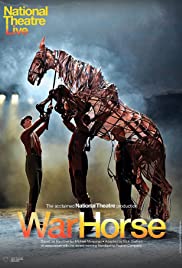
warhorse

And on Sunday, still in Toronto, we saw the Mirvish production of War Horse, which really deserves all the praise it has received.

The puppetry used for the horses (and a goose!) is just incredible. Despite seeing people legs and bodies beneath and around the horses, they really seem very horsey, and you gradually don’t even really notice the puppeteers.

The story, of course, is not a totally cheery one, as nothing about the First World War is cheery. It’s interesting, though, how Joey’s encounters with British, Germans, and French in turn shows all in an ultimately sympathetic light. The plot is very well constructed and emotionally compelling.

Toronto Star review: War Horse is bold, brave and heart-stoppingly wonderful

That’s about right.

Toronto building

Photo taken on our walk over to see War Horse

Queen documentary

Queen: Days of Our Lives“In 1971, four college students got together to form a rock band.”
Queen: Days of Our Lives is a relatively recently released documentary about the band. The core of it is a two-part band history that played on the BBC. The Blu-Ray adds about 90 minutes of bonus material.

There have been many Queen biographies before this one, a number sanctioned by the band. The special thing about this one is that Brian and Roger provided a lot of new interview material for it.

As someone who has seen a lot of those earlier documentaries, not to mention read a number of books about the band, I didn’t learn too many new facts. But I definitely still enjoyed the structure of the documentary. It was well-edited, moving briskly along from milestone to milestone. Aspects of the band’s story that have really been covered to death by now—the early success in Japan, Bohemian Rhapsody, Live Aid—are of course here again, but not especially dwelled upon, as how much new is there to say?

Instead, the insights are more personal. For example, Brian discusses how his father, understandly, was just flabbergasted that his son chose rock music over completing his PhD in physics. And it wasn’t until well unto his career that a huge show at Madison Square Garden really brought home to his Dad that Brian wasn’t wasting his life or his education. Brian still tears up at the memory.

John DeaconJohn Deacon, generally considered the least interesting member of the band, casts a surprisingly large shadow over the production. There is, for example, a fair amount of attention given to “Another One Bites the Dust”, which he wrote. One fact I hadn’t know that came out is that it, and not BoRhap, is Queen’s best-selling song. And one of the extras amusingly relates how, in later years, John kept a full bar behind some of the stage equipment, and would nip back there for drinks when his bass playing was not required. (Which reminds me of another rather humorous anecdote from this, of the very rare occasion where Fred was really too inebriated to perform the first part of the show, and the rest of the band struggled to cover. Of course, Freddie brought it home in the end.)

Of course, the fact that John is alive and yet did not provide any new insights for this project is hard to ignore. Naturally, Mr. Deacon has every right to retire, and doesn’t owe the fans any more than the 20+ years he already gave to a band that, this documentary reveals, he was surprised to find become such a big success. Still, it would have been nice to hear from him. And it is a bit sad to hear Brian comment that “We’ve lost John, too.”

Also clear from this project? “Queen were never cool,” as Roger said. And as a fan from the time, I can tell you, this is true. Except for a fairly short time in the late 70s, Queen fandom was something I tried to keep quiet. Because it was not cool to be into them.

The 1970s were a battle between disco and punk, and Queen were… Queen. The 80s brought Brit pop, but except for a little ill-received (though I liked it) foray into funk sounds, Queen still kept sounding like… Queen. Ultimately, this has made them endure. But at the time, they were about as respected as Nickleback as is now.

Never cool. Just really popular.

Well put-together though the documentary was, I also enjoyed the extras. Some were extensions of was seen in the film, some were additional interviews that didn’t make the cut at all. The only thing I found a bit superfluous were the seven music videos, supposedly “all new”. But many are so close to the original videos, it took me a while to realize they were different cuts (often with more “backstage” views of what was going on).

I live you with a video one of the most delightful extras from the disk: Scrabble Wars.

Symphonic prog rock

Last night’s Intersections concert by the KW Symphony was called Prog Rock. But this was not symphonic versions of rock songs, per se. It was symphonic music that either inspired, or was inspired by, heavy rock. For example, there was a composition by Matthew Hinson called, I kid you not, “Homage to Metallica”. It contained not a lick of Metallica music, but definitely had the Metallica spirit.

There was also Grieg’s In the Hall of the Mountain King, which has been covered by tons of rock bands, including The Who. And Anton Mosolov’s Iron Foundry, which was inspired by actual heavy (industrial) metal. And a more modern piece by Paul Stanhope called Throbbing, evoking the sound of a police car chase around the neighborhood.

All of this loud, heavy music was a challenge. (Definitely the first time I was handed ear plugs at a symphony concert—though I didn’t find I needed them.) In fact, Edwin Outwater included a couple lyrical Satie Gymnopédie numbers as interludes. “This concert,” he said, “needs a palate cleanser”.

The grande finale of the evening was a piece by Nicole Lizée commissioned for the KW Symphony: 2012: Concerto for Power Trio. This one was inspired by, and did include bits of, Rush music, but elaborated upon, distorted, sped up… Like hallucinogenic Rush, Lizée (who was there) said. It included the classic Rush music trio of guitar, bass, and drums.

It was my favorite piece of the evening. And Jean’s least.

I guess Rush is always polarizing.

————————————-

Also, some interesting material about the last Intersections concert, Quantum: Music at the Frontier of Science.  First, Paul Wells, from Macleans Magazine, has written an article about it, and the positive response to it from the people of KW (two sold-out shows).

And you can sample of it yourself, from YouTube. Excerpts from the show:


And a documentary about the making of the show:

Genies vs. Oscars

I skipped watching the Oscars this year, but I did watch The Genies, which give out awards for Canadian films. What made the Genies a better bet for me:

  • Show was just 1 hour long, vs. whatever crazy length the Oscar show is. They do this by not covering all the categories on air; just the interesting ones. Hello. That’s reason enough all by itself.
  • It’s not preceded by tons of other Canadian movie award shows, so I had no idea who would win. With the Oscars, thanks to the Golden Globes, the SAG, the Director’s Guild, etc. you pretty much knew who’d be clutching the trophies.
  • I’d seen 3 of the 5 nominated Genie movies, vs. only 5 out of 10 of the Oscar ones. So percentage-wise, higher. (I realize that’s unusual.)
  • Musical performances that weren’t lame, because, as far as I could tell, they had nothing to do with movies. But they were by Canadian performers.

So there you be.

I was totally thrilled to see the young actress from M. Lazhar win the Best Supporting Actress award, as she was really was amazing in the role. And gave quite a delightful acceptance speech.

And it’s alway fun to see Viggo Mortenson, winner of Best Supporting Actor for A Dangerous Method, who was also very charming in his acceptance  speech.

For Best Picture, though, I have to see that I was really pulling for Cafe de Flore. Monsieur Lazhar won, and I can’t really complain about that, as it was quite a fine film, and it gave the director a chance to give the Oscar speech he couldn’t. But Cafe de Flore spoke to me in a more compelling way. At least Vanessa Paradis was recognized for her work as the lead of that film.