Playing a bit of catch-up here, on the eclectic mix of KW Symphony concerts we’ve seen this fall and winter…
It began in September with the season opener. The first half were two fairly fabulous modern classical pieces, both by local composers, Stewart Goodyear’s Count Up and John Estacio’s Brio: Toccata and Fantasy for Orchestra. The second half was somewhat more familiar: Beethoven’s Symphony in D minor: The Ode to Joy. It’s a bit funny in that it features a mass choir (four choirs, combined) and four soloists, but for most of the performance time, they are just sitting there. They only start singing in the later movements.
But what a gorgeous piece that is. I’m always worried I’ll get a bit bored during the slow bits of classical pieces, but that didn’t happen here. Too beautiful, too moving. Then afterward, we attended the opening gala, which offered a live band (not classical), dancing, hors d’oeuvres, drinks, and an auction. It was a fun evening.
In October, we saw Penelope, by Sarah Kirland Snider (who was in attendance), which was part of the Intersections series. It was a “song cycle”, in which a woman’s husband returns from the war after many years, not remembering his previous life. The performance is his wife’s reaction to this and attempts to restore his memory, partly through reading Homer’s Odyssey to him.
Haunting is probably the best descriptor of this one. It wasn’t quite like anything I’ve heard before. It was written for and performed by Shara Worden, who has a gorgeous but unusual, almost unearthly, quality to her voice. Think I’d like to get the recording, though it would be the kind of thing you’d want to just listen to and through on its own, and not on shuffle mode with other things.
(I found this video while researching this, and really got drawn into watching it all, though it’s seven minutes long…) After the song cycle, Shara Worden performed some of her own songs, which were quirky and somewhat lighter, even featuring audience participation.
Then earlier this month, Edwin Outwater presented the work he’d listened to a lot as a (clearly very unusual) teenager, Gustav Mahler’s Symphony No 5. The piece is over an hour long and requires more musicians than KW Symphony has, so they were joined by about 40 additional musicians. In the first half, after with Schubert’s brief Entr’acte No. 3 from Rosamunde, Outwater explained what was going on the various parts of the Mahler symphony, with excerpts, then in the second half, they played it all. Though I’d had kind of a day at work, I couldn’t help but be drawn in by the gorgeous music rather than brooding on that.
He’s right that it’s an amazing work. Still can’t imagine myself having listened to it as a teenager, though.
Finally, the first Jeans’n’Classics concert led off this month with something I did listen to as a teenager: The Beatles: Rubber Soul and Revolver. Jean calls me a snob for this, but I still protest that following the old US releases of these albums rather than the more definitive UK / CD versions was a weird Boomer thing to do, particularly as it meant the omission of songs like “Love You to” (my favorite of the three Harrison songs on Revolver) and “And Your Bird Can Sing”. And the even more brilliant songs “Drive My Car” and “Nowhere Man” are only recent additions, tacked on at the end of Rubber Soul’s odd US play order.
But then again… Maybe has does have a point that it’s just a quibble, because it was a really good concert. The Beatles music is very suited to the symphonic treatment, and Peter Brennan clearly loves them and does cool, original things with the arrangements, such as intermixing “Within You Without You” (from Sgt. Pepper) into Octopus’s Garden.
The two lead singers, David Blamires and Neil Donnell, both have exquisite voices, and their weaker stage presence was made up for by having personable keyboardist John Regan lead us through the set. We also got Don Paulton on keyboards, in a rare double-shot on the ivories. And one has to mention that apart from singing well, as always, Kathryn Rose looked particularly fetching. She seems to be one of those women who just get more attractive as they get older.
The set list, of course, featured three of my all-time favorite Beatles songs, “Norwegian Wood” (which led to a night-long debate as to just what John Lennon was setting fire to there), “In My Life”, “Girl” (so sensual), and “For No One” (a most devastating breakup song). But those two albums are just strong in general, so there wasn’t much dross. The very odd “Tomorrow Never Knows” was suitably trippy ending to the evening.
I’m a latecomer to The Who’s Quadrophenia. Tommy was the first Who album I got, and that was decades ago (on LP); Quadrophenia may have been the last, and that was a couple years ago (on CD).
I resisted that one, I think, because I just didn’t find the concept that appealing. The story of drug-addicted, “quadrophenic”, disillusioned mod Jimmy just seemed so British, so male, so 1960s–I couldn’t relate.
When I finally got the album, I liked the songs well enough right off, but really couldn’t put “the story” together until I also saw the 1996 Quadrophenia Live DVD. During that concert, a Jimmy narrator (on a big screen) provides a narrative thread through the songs—even though it’s not exactly the same one intended by the original album—that sufficiently put it together for me.
But that’s when I started to realize, with repeated listening, that the “story” didn’t really matter. Because the songs just sounded so great, you didn’t need to worry about plot.
The Quadrophenia songs work as standalones–much more so than most of the Tommy ones do. They also have a universality that you might not expect of “rock opera” songs. Who doesn’t want to be seen for who they are (“The Real Me”)? Who hasn’t had to do a crappy job (“The Dirty Jobs”)? Who hasn’t felt the wish to just slide away from a bad situation, even if it’s into oblivion (“Drowned”)? Who doesn’t want to feel awash in love (“Love Reign O’er Me”)?
You don’t have to be British, or male, or a baby boomer to get it. You just have to be human.
Given previous, it should come as no surprise that the parts I found least compelling were the fuller explanations of Jimmy’s story, and what the mods were all about. Though that wasn’t all a loss, since it’s always good to learn things, and that I did. Story-wise, I hadn’t realized that “The Punk and the Godfather” was about Jimmy going to see The Who themselves in concert, and being disillusioned that they’re now big rock stars, worlds apart from him. (Because that’s something they changed in the 1996 concert version.)
As for the mods, the point that their tidy hair and neat suits made them look like smart, respectable young men at work, when it was really a form of covert rebellion (though they did need those jobs to afford the suits) was an interesting point.
Though Pete Townshend the story-teller is the dominant figure in this documentary, I did like that some commenters view the album more as I do, as fairly universal: “I thought it was about me” says Manager Bill Curbishley, and he doesn’t mean that’s because he was a mentally ill mod, and not so much needing a plot: “Pete always has these great concepts, but the problem is he always wants to wrap a complicated story around it”, says Roger Daltrey.
What I liked best was the exploration of the music, the songs; all the archival concert footage included (nothing like seeing the young and beautiful Roger Daltrey on the big screen); and the look at the band dynamics at the time.
Those dynamics were some ugly, Unfortunately, we are somewhat stymied in exploring them by having only two band members remaining, and apparently not having a lot of footage of what Moon and Entwistle thought of Quadrophenia. Both men are featured, but they of course don’t necessarily get asked what we’d now like to know. For example, Pete says at the outset that John, as a songwriter, was unhappy that the band had become all about Pete’s songs. So how did John feel about Quadrophenia, to which he didn’t contribute a single track? No idea.
Tommy was quite a collaborative effort by the band, at least for The Who. Entwistle contributed two songs, Moon came up with the holiday camp idea (and a writing credit), Daltrey suggested that he embody the Tommy role, thus finally truly becoming the voice of the band. But Quadrophenia was all Pete, all demo’ed and done and presented to the band. “The rest of them must have felt a bit like session musicians,” is one opinion expressed in the documentary.
Yet, Pete did use the four very different band members as the both representative of Jimmy’s four split personalities, and as the four musical motifs that echo through the album, which Pete says is the more important aspect. Moon the lunatic, Pete the hypocrite (interesting, and I’m not sure how that leads to a “Love Reign O’er Me” theme), Roger as “bad” (the album liner notes say “tough guy”, but Pete’s original notes say “bad”) and John as “romantic”, those two intersecting as “sex”. (I don’t think Pete meant that in a gay way.)
Of course, it’s only Mr. Bad who’s still around to say what he thought of all this, and it’s interesting that there still seems to be so much tension between the two on this (given they’re about to tour it together, and all). Pete comments on how the rest of the band liked to drink for a couple hours before getting to work, which the non-alcoholic Roger hated as a waste of time.
Then there’s this. “Pete may have produced this album”, says Roger, steely-eyed, “but he did not produce my vocals. I wouldn’t have it.” And Pete suggests that’s because Roger could not take criticism. “You had to be very careful what you said to him. You really did.” Little wonder that during the first rehearsal for this album’s tour, Pete hit Roger with his guitar, and Roger responded by knocking him out cold with one punch.
Yet there’s no denying the deep admiration Pete expresses for Roger’s vocal work on the album, particularly, of course, on “Love Reign O’er Me”, a song that literally gave me goosebumps every time it was played on the wonderful theatre sound system during this documentary—the album version, a live version from that time, and the 96 live version.
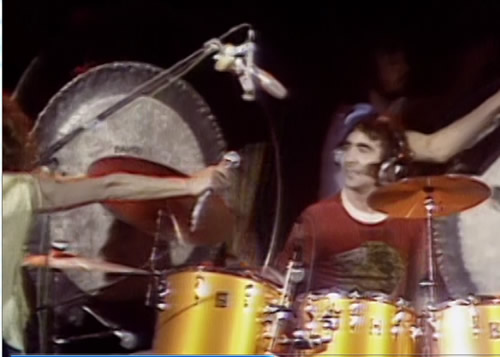
Looking at Moon’s vocal work on “Bell Boy”, Pete comments on how Keith could never sing anything straight; it was always as a character. And that he did find it hard for his Ace Face character to come off comic. But of course, again, no way to know what Moon thought of this, though he clearly enjoyed singing the song in concert.
Those two songs get special focus during the documentary, as do some others, like “The Real Me”, “Cut My Hair”, “5:15” (partly Beatle-inspired, that one), and “Drowned”. But I was disappointed that “Doctor Jimmy” didn’t get that treatment. It just seems there would be so much to say about that one… How the complex musical arrangement of song that itself suggests a split personality (it’s my favorite Who song to play on the piano, but it’s not easy!), the shocking lyrics (“Who is she? I’ll rape it!”), even its importance to that darn storyline, as this moment of craziness then leads Jimmy out to that rock and possible redemption. But nada about “Doctor Jimmy” here.
Much as I enjoyed the concert footage, the documentary also covers how that tour was something of a disaster. It was booked a mere two weeks after the album was done, leaving the exhausted band no time to really prepare a stage show, and forcing them to play songs that the audience just didn’t know yet.
Pete said at the outset that his goal had been to write something that would replace Tommy as a concert vehicle. In that, Quadrophenia failed. (And maybe that’s why Pete feels this is the one he just has to take on the road again. Needs another do-over.)
The doc was only about an hour long, the theatre viewing filled out by showing some of the songs from the 1996 Quadrophenia Live DVD. This leads me to wonder if some footage is being held back for the eventual DVD release. Maybe I’ll get that “Doctor Jimmy” analysis after all?
Any achievement involving three successful outcomes
Our self-created “culture weekend” began Friday night with the KW Symphony’s salute to big band music, featuring In the Mood, Take the A Train, It Don’t Mean a Thing (If It Ain’t Got That Swing), Come On-A My House, As Times Goes by… Songs like that. Songs that swing.
Guest conductor Matt Catingub, who’s from Hawaii, brought along some guest saxophonists, guitar and bass, and drummer. He himself at various time played sax, sang, and played piano. The symphony were able to keep up with the challenging arrangements—ones that taxed the horn section in particular.
It was a very fun night out. The only thing that would have made it better was if the Centre in the Square had a dance floor we could have used. This music was made for dancing, not sitting.
Saturday we made our way to Toronto for Classic Albums Live: Queen—A Night at the Opera. This was our second time seeing a Classic Albums Live presentation, and we were both a little dubious about it, having been underwhelmed by the first. But I just couldn’t resist seeing how they would possibly tackle this very challenging album, “cut for cut, note for note”.
As the liner notes for the show said, “with Queen, the key word was more. More singers. More guitars. More sound.”
So to handle Brian May’s multi-layered guitar sound, they had six guitarists (one of whom focused on the acoustic and the koto). Lead vocal duties were handled by three different singers: one for Freddie’s higher vocal parts (that was a woman), another for his lower range, and one more singer to present Brian and Roger’s vocal leads. And another singer (another woman) who did lead backup.
That not being enough, there was also a full choir. (“We had all of Toronto up here on stage”, the announcer said.) Somehow, though, they did manage with just one each of drums, bass, and piano.
“It takes a village” to perform Queen music. (And this doesn’t even include the choir.)
It was really an awesome show. Why did it work so much better than The Beatles one, which felt a bit pointless and lifeless to me?
You can’t suck the life and fun out of Queen sings by playing them as recorded, because fun is built into the songs. Doing this whole album meant singing a passionate love song to a car, doing an entire musical break on kazoos, and embracing lyrics like “You call me sweet like I’m some kind of cheese” and “Thursdays I go waltzing to the zoo”.
By playing live what were purely studio effects (just four musicians and three singers, massively overdubbed), you aren’t reproducing what was on the record. You are re-creating it. And as an audience, we are hearing it in a new way, for the first time.
Queen were show-offs, and the musicians managing to pull off all those notes, and guitar chords, and that crazy intricate timing, was truly impressive. We were in the second row, and you could almost see them sweating blood trying to get everything in at the right time, in right pitch. The announcer said it was the most difficult one they’d ever tackled, and I believe it.
The second half featured more Queen songs, some quite well known (We Will Rock You, We Are the Champions, Under Pressure, Bicycle Race—complete with bike bells, Somebody to Love), and some not as much (Brighton Rock, Keep Yourself Alive, Get Down Make Love). The show seemed to go by in a flash.
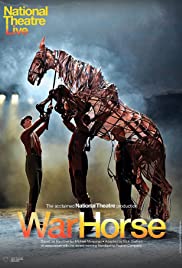
And on Sunday, still in Toronto, we saw the Mirvish production of War Horse, which really deserves all the praise it has received.
The puppetry used for the horses (and a goose!) is just incredible. Despite seeing people legs and bodies beneath and around the horses, they really seem very horsey, and you gradually don’t even really notice the puppeteers.
The story, of course, is not a totally cheery one, as nothing about the First World War is cheery. It’s interesting, though, how Joey’s encounters with British, Germans, and French in turn shows all in an ultimately sympathetic light. The plot is very well constructed and emotionally compelling.
It was a long piece, but I knew if we could get to the “Listening to You” chorus, we’d be all right. We’d have them.
—Pete Townshend on performing Tommy
The raison d’être for Roger Daltrey’s latest tour—apart from his continued desire to keep performing for as long as he possibly can—is to present the Tommy album live in a way The Who never did: Playing the entire thing, in order, with the full complement of harmonies and keyboards and everything included on that iconic album.
Witnessing this Friday night, it became clear that there are a few problems with that approach. The original album is sequenced a bit weirdly, both story-wise and musically. And even with the dropping long, instrumental “Underture”, it’s quite long. So while you would certainly build and gain momentum through some sequences: 1921, Amazing Journey, Sparks, Christmas… Or particularly, Pinball Wizard, Tommy Can You Hear Me, Smash the Mirror… Momentum would then somewhat be lost by the necessity of then performing a lesser track like Sensation or Sally Simpson.
(“Is this still Tommy?” Jean asked, about three-quarters of the way through.)
That said, there was still plenty to enjoy about the live performance of this opera, and it wasn’t all the expected stuff. Like, for example, seeing Roger Daltrey, for the first time (that I know of) taking on the villain’s roles in “Cousin Kevin” and “Fiddle About”. He seemed to really relish those two roles (maybe nice to finally not be the in Tommy/victim role), and sank his acting chops into the interpretation. I can honestly say I’ve never enjoyed either of those songs more.
30 years after being under Cousin Kevin’s boot, Daltrey finally gets to turn the table
Another surprise was just how enjoyable the silly little “Tommy’s Holiday Camp” song was—possibly because it is perhaps the only giddy moment in this rather grim little opera. It was totally fun.
And the songs you expected to be great… Really were great. Last time I saw Roger in concert, the microphone twirling was very limited and approached rather gingerly. But clearly the old man’s been practicing, because it was whipping around like nobody’s business during “Pinball Wizard” and the finale. It was impressive. See:
And speaking of that finale… I’ve seen many videotaped versions of The Who leading the crowd toward what seems an almost religious experience after Roger Daltrey sings the “See Me / Feel Me” chorus for the last time, and then everyone joins in on the “Listening to you / I get the music” chorus. But I’d never participated in that. And this crowd was fantastic. The second that moment came around, everyone was on their feet, rushing the stage, pumping their fists, singing along… It looked, sounded, and felt amazing. The ovation at the end was huge. Daltrey appeared really touched by it.
But how was the voice?
Last time I’d heard Daltrey perform, two years ago, the voice was not good. He’d even had to cancel some performances. So I felt grateful to have seen him perform at all. But that whole show, he was singing through a thick, nearly hoarse, rasp.
It was much, much better this time out. This isn’t to say it was perfect. Despite the humidifier going, the water, the tea, the strictly enforced smoking ban in theatre, the voice did crack on some of the high notes—for example, on the See Me / Feel Me part of “Christmas”. But it sounded beautiful on others — for example, on the See Me / Feel Part of “We’re Not Going to Take It”. And in the lower ranges, there were no issues at all.
(By the way, entire tour performances available from http://www.livedownloads.com/. I hear can now confirm that the Altanta show was particularly good – no voice cracking. )
The concert, Part 2
The second half of the show featured a variety of songs among the now rather large catalog Roger and his band have rehearsed. And where the Tommy had some unavoidable lulls, the second half was nothing but highlights, including (but not limited to):
A bluesy version of “My Generation”
A lovely take on my favorite Who song, “Behind Blue Eyes”
The Simon Townshend spotlight song, “Going Mobile”
An incendiary version of “Young Man’s Blues” (which Roger seems to love the irony of singing, now that he is the old man with all the money), complete with some highly showy microphone twirling, and integrations of the relatively rare Who track called “Water”.
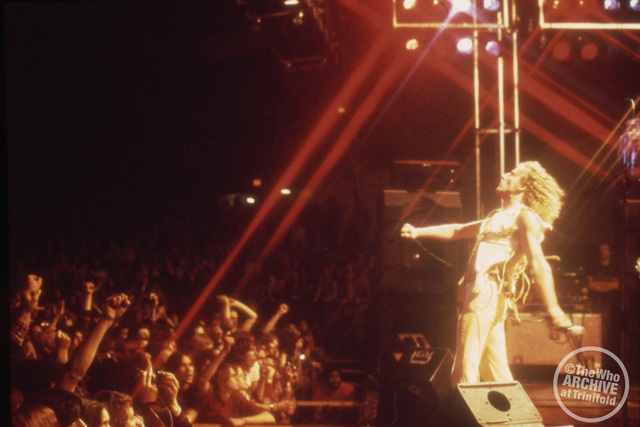
Also fun was his solo track, “Days of Light”. And on “Baba O’Riley”, when he unbuttoned his shirt all the way (as the Toronto Sun’s [female] writer said, “it was an impressive display.” It’s not normal to get even more fit and muscular as you age, is it?), raised his arm, and his full head of hair was backlit, you were definitely reminded that this was the iconic rock God of the seventies, right there, right now, still.
Still a rock god
We want to be on stage, but we don’t want to be on a pedestal. We’re like you. I’m like you. That’s what this song says to me.
— Roger Daltrey, Toronto, September 30, 2011
Since I knew that the playlist for the second half varied from night to night, I was trying not to get my hopes up about any particular song being performed. But in truth, there is one I really wanted to hear: “Without Your Love”. [Because I’m a sap!] I was not to be disappointed on that front. He did a lovely job with it.
After that, he explained that they had a strict time limit for this particular performance, and performed one last song, the lovely “Red Blue and Grey”. I was feeling slightly miffed at apparently getting a shortened show, but you know, the thing started before 8:00 (with a quite good opening act), Roger and band took the stage somewhere between 8:30 and 8:45, and it was nearly 11:00 when it was over. No breaks.
I supposed 2-2.5 hours is a reasonable length of concert for a 67-year-old man who just had throat surgery.
Our seats
Though I tried not to fret overly much before attending this concert, one thing I did wonder about a bit was just how good our seats were, really. Turns out, they were really very good. We were in the fifth row, and though not right in the center, you could see everything really well. The only problem, really, is that is not very good seats for taking pictures and video. There was always a light right behind Roger’s head, which just washed out his face on film.
One photo that didn’t turn out too badly
Fortunately, there were hundreds taking pictures and video there, so I’m not going to be deprived of that.
We did get talking to people before the show started. The guy beside us was kind of funny, as he didn’t seem entirely sure what he was about to see. And his question about how much the seat cost confused me a bit as well. Maybe he won his in in a contest? But, turns out he’d bought tickets from a scalper minutes before, so that explained that. He was a very friendly American from Florida, who’d last seen The Who perform around 1979.
And the people in the row in front us of turned out to be from Waterloo as well. But they’d bought their tickets on Tuesday! This Tuesday! Ticketmaster, I bought my tickets the day they went on sale. Why did these people get better ones, four days before the show? (They said it wasn’t from a reseller or anything.)
[Almost forgot about some lady behind us—apparently not such a big fan—who was nearly freaking out at having been told how long the show would be. Kind of funny.]
Anyway. The important thing is I was really close to Roger Daltrey again, and in fact, even managed to go stand right in front of the stage by evening’s end. (Even though we didn’t make eye contact this time.)
The band
The set list was actually somewhat similar to that of the 2009 Use It or Lose It tour, but it sure has acquired a professional sheen on this tour. In introducing his band, Roger said that they were “the best band I have ever played with.” Now, I don’t know if he’s including The Who among the bands he has played with, but there is no denying he has assembled a fantastic group of musicians here. They provide beautiful backup harmonies throughout, and completely solid musical accompaniment.
I also kind of met them before the show. As I was asking Jean if he remembered seeing what was likely Roger Daltrey’s limo drive past us when were walking over to the Orillia show two years ago [he didn’t], a big limo bus pulled up to the stage entrance of the Sony Centre. So we ambled over to see who would get off. Clearly, we did not meet Mr. Daltrey, or even the young Mr. Townshend. But we did see the keyboard player, and the drummer, and musical director and lead guitarist Frank Simes was particularly nice with all the fans.
The famous-only-by-association Frank Simes
Our buddy Frank on stage
The crowd
I’ve already mentioned them a few times, but it was a great crowd. (The place looked sold out to me; I don’t know if it actually was.) Mostly boomers, of course, but a number of them brought their teenage kids, so that made for a nice younger contingent. I could sense (and hear, in all the singalongs) a real diehard Who crowd. Jean, who didn’t have such a constant laser focus on the man onstage, spent more time actually looking at the crowd and enjoying how much they were enjoying it.
And I’ll leave the last words to Jean.
You know, I didn’t hate that. I didn’t hate that at all.
Last night, May 7, Lowest of the Low played Massey Hall the first time, the capper on their tour celebrating the 20th anniversary of “quite possibly the best Canadian debut album ever”, Shakespeare My Butt. I was not there. But I did see their sold-out show at the Starlight Club in Waterloo, on April 21.
The show itself, I have no complaints about. The opening act were Mick Thomas and Squeezebox Wally, an Australian duo so taken with Shakespeare My Butt that they would play the entire album at their shows. They even made one of the songs—“Rosy and Grey”—a hit there. So there was much more collaboration between opening act and headliner than you normally get, with Lowest members joining in on Mick’s set, and Mick contributing to the Lowest set.
Lowest of the Low played the entirety of Shakespeare My Butt, in order, then came back to do various songs from their other two albums, including “Black Monday” and “The Last Recidivist”. It was fun being in a room full of people who also knew all the words to all the songs. And it was nice to hear, from singer and main songwriter Ron Hawkins, that both “Subversives” and the afore-mentioned “Black Monday” were as honest and beautiful as they were because each was inspired by women he really loved. (He explained it in a less mushy way, but that’s what it came down to.) Performances of both those songs, I found particularly powerful.
But the room? With the low ceiling and all, the music was painfully loud. I had to do the extremely cool “Kleenex in the ears thing” to survive. And with the full house, it was hot and crowded. Plus, way too many tall dudes. I had to keep moving around, trying to get a spot where I actually see the band, and not just the back of someone’s head. The crowd was very well-behaved—no smoke of any kind, and surprisingly little beer spilled. But still. I’d say I’m too old for this kind of show, but I didn’t really like them when I was younger, either.
So kind of glad I didn’t drag any friends with me to this, as I feel I would have just had to apologize. Instead, I suggest, just check out Lowest of the Low on record. That way you’ll thank me later. Maybe start with these ones:
“4 O’Clock Stop”, Shakespeare My Butt, the insanely catchy opening number. Lyrics may not cohere as a whole, but they sure feel right as they hurtle along.
“Black Monday”, Hallucigenia, as the singer regrets the effects of his depressive nature on the “sad and beautiful” Kate. “The way I am has never been too good for us.”
“Rosy & Grey”, Shakespeare My Butt, the most Canadian love song ever, where even “the smell of snow warms me today”.
“Gamble”, Hallucigenia, which sounds like it’s exactly about Buffy and Spike, Season 6, even though it was written before then.
“Henry Needs a New Pair of Shoes”, Shakespeare My Butt, a deceptively upbeat little ditty that, on closer listening, reveals the social conscience of the band, along with their sense of humour.
And now for something completely different….
A couple years ago I wrote about attending the Open Ears festival, and the organizers noticed. So the notified me about this year’s festival, “celebrating the art of listening”. It took place at a busy time for us, but we did manage to attend one concert: Toca Loca, on April 30.
Where Lowest gave me some unpleasant flashbacks to concerts of my youth, this was like nothing I’d ever seen or heard before. The opening number was “Temazcal”, a piece for maracas and tape. So recorded sounds were played, then a live percussionist joined in on maracas. That was followed by “AK-47”, a piano solo based on the assault rifle. It was both virtuosic, and pretty noisy.
Then there was “Pattycake”. Two performers sat facing each other clapping out the familiar childhood rhythm, but at increasingly dizzying speeds, and with some variation in the original words. It was riveting, as mistakes would be—if not disastrous—at least potentially quite painful. “Repetition is good. It builds trust. Soon you come to know what’s expected.”
In the next two pieces, all three members played along to pieces composed for them, one a fusion of New Wave, Synth-Punk, and No Wave (I don’t know what that means, either), the other a love song as expressed by an industrial machine.
And finally, the “Halo Ballet”. In this one, five gamers manipulated the Halo participants into a kind of dance pattern, instead of the usual trying to kill each other. They would shoot patterns into the sky, or be stacked on one other and twirl, or leap around in synchronicity. We watched all that projected on video. Meanwhile, of course, the band was supplying the soundtrack.
Afterward, Jean commented on how we had paid $48 to watch people do Pattycake. “Did you dislike the music?” “No, can’t say I disliked it.” “Were you bored?” “Absolutely wasn’t bored.”
Me either. $48 well spent. And looking forward to the next Open Ears, where I can hopefully experience more of the aurally novel.
No, I can’t tell you how to do that. Trust me, if I could compose popular songs that would sell, I wouldn’t be toiling away in the tech industry. Just like Hugh Grant in About a Boy, I’d be living a life of leisure paid for by my song royalties, all cool toys and artfully tousled hair.
Another person who doesn’t feel he really knows how to compose popular songs that will sell is Bob Geldof, who therefore mockingly uses that as the title of his new album. Now much better known for his ongoing humanitarian work with Africa (Live Aid and all all that), as a musician he’s mostly remembered for one song: 1980s “I Don’t Like Mondays.” (Mind, if you’re only going to be remembered for one song, that’s a really excellent one to be associated with.)
It’s not entirely correct that’s been his only success. Particularly in the UK, the Boomtown Rats had numerous top 40 (and other number 1) hits, and even as a solo artist, “This Is the World Calling” and “The Great Song of Indifference” were pretty big hits. Not to mention his being the cowriter of everyone’s favorite rock Christmas song, “Do They Know It’s Christmas?”
He is a rich man, but the fact is, that’s more from his TV productions (did you know he created Survivor?) and other business holdings than from song royalties. He loves making music but, he says, doesn’t feel comfortable trying to sell it.
So the title is amusing, and apt, and layered in meaning. But is it any good? Well I think so. I’d say it’s better than any of his other solo albums, other than Sex, Age, and Death. Geldof calls this new album the companion to that one. That one, written as he emerged from a deep depression brought on by his marriage ending, was very dark, deeply personal, and hauntingly intense. This one, written as he amazes in the restorative power of love in second marriage, is much brighter, still fairly personal, and incredibly varied in musical styles (including a couple hauntingly intense numbers).
A lot of the songs are pretty catchy. There aren’t any I don’t like. I already love “She’s a Lover” and the hidden track at the end, “Young and Sober”, which synopsizes his entire life in an amusing three minutes. So will it sell? Unlikely, given the decline of album sales in the music industry as a whole. But the mighty few who find their way to this record won’t be disappointed, I don’t think.
PS Excellent 15-minute documentary about Bob Geldof, the musician, then and now: http://vimeo.com/20829390
… On winning Album of the Year at the Grammy’s. Which I actually didn’t realize would be such a shock to everyone who isn’t me. (Cause it was certainly the best 2010 album I heard all year…)
And congratulations, Grammy’s, on giving Neil Young an award for an actual song (not just nice music repackaging), thus eliminating one from your embarrassing top 10 list of people who’ve never won a Grammy.
And to all the people in Twitter-ville so very, very upset that the Grammy’s dared award Album of the Year to a band they’ve never heard of… I gave you my very mature response:
This is another situation where you can’t really find a good reason as to why the group has yet to receive this award; they were popular commercially and critically for not just a brief time but for a long while, and you would think that at some point, one year, in one random category, people could have thought that The Who of all bands did the best job. But that apparently wasn’t the case. Because, as we all should realize by now, these people are morons.
Nevertheless, I do plan to record and watch this year’s Grammy’s. At least they had enough sense to nominate and invite Arcade Fire… And with three nominations, they even have a serious shot at winning one.
A concert is not a live rendition of our album. It’s a theatrical event.
—Freddie Mercury
The most recent “Electric Thursdays” concert did not feature the usual Jeans’n’Classics band. Instead, it was the Classic Albums live crew, trademark “Note for note, cut for cut”. We were warned that there would not even be any talking to the audience ( I guess, because there wasn’t any on the album).
The subject of the “full album” treatment was The Beatles’ Sgt. Pepper. And although the Centre in the Square website had the peculiar note that this concert did not feature the KWS (Kitchener Waterloo Symphony), that was not the case. They were there, although sitting farther back than usual. And also just sitting around more than usual, because of this idea of faithfully rendering the original album. Not all of which featured orchestra.
Now, though it is not my favorite Beatle album, I do like Sgt. Pepper. The musicians performing it were very good. The Symphony, when they did have occasion to play (“She’s Leaving Home”, “Mr. Kite”, and of course, “A Day in the Life”) sounded wonderful. The songs they played on were the highlight to me. The sound mixing seemed particularly good.
But the whole concept is kind of peculiar. The no interaction with the audience. The covering everything on the album, including the little sounds effects and spoken asides. Seemed more of an exercise than a performance, and left me a little cold, and Jean somewhat bored.
Fortunately, the second act, of “Beatles greatest hits” was somewhat more free-wheeling. They still stuck with the “as originally performed by the Beatles” idea, but by selecting a whole series of songs that were originally orchestrated, at least the Symphony had more to do. And this one did feature some of my favorites: I Am the Walrus, All You Need Is Love, Eleanor Rigby, Hey Jude.
The “encore”, which the only the band (not the symphony) came back for, turned into a rather extended set of various other Beatles classics like Ob-la-di Ob-la-da, While My Guitar Gently Weeps (with truly awesome re-creation of the original Clapton guitar solo), Twist’n’Shout, Norwegian Wood (with sitar, which was cool) and Helter Skelter! (And Jean amused me to no end with his shock that this cacophony of feedback was actually a Beatles song.) The band really seemed to be having fun at this part, and interacted a lot more with crowd, speaking occasionally, and getting us to clap and sing along at times.
Still, I have to say that overall, I prefer the Jeans’n’Classics approach. Even though they also sometimes do entire albums, sometimes even with the original artist, it’s never presented exactly as it was originally recorded. It’s always a re-creation, designed to take advantage of the concert hall and the variety of talented musicians available in the orchestra.
And isn’t that the point of live? To hear something different than what you can hear in your living room?

 Finally, the first Jeans’n’Classics concert led off this month with something I did listen to as a teenager: The Beatles: Rubber Soul and Revolver. Jean calls me a snob for this, but I still protest that following the old US releases of these albums rather than the more definitive UK / CD versions was a weird Boomer thing to do, particularly as it meant the omission of songs like “Love You to” (my favorite of the three Harrison songs on Revolver) and “And Your Bird Can Sing”. And the even more brilliant songs “Drive My Car” and “Nowhere Man” are only recent additions, tacked on at the end of Rubber Soul’s odd US play order.





 Cultureguru's Weblog