Buying Canadian

Of course we didn’t like the tariffs, but it was really the 51st state / Governor Trudeau / not a real country / artificial line / not needing anything we have / US is subsidizing us talk that really pissed everyone off. It produced that very rare occurrence: an actually effective consumer boycott. Travel to the US really is down. So are California wine sales. And businesses relying on cross-border shoppers.

It’s a bit sad, as it’s not actually the hotels and restaurants, the vintners, and the duty-free shop owners that we have a beef with.

But what’s a foreigner to do? We don’t have a vote to grant or withhold. We’re not allowed to make political donations. It’s not exactly safe to go over there and protest. And I’m not feeling this is an administration that would be moved by a sternly worded letter.

So, we got our wallets. It’s economic warfare, and many are choosing to direct our meagre funds to products made elsewhere than the United States. Ideally in Canada.

I’m hardly perfect at it, but you do what you can. Since I’m not in this by myself, it’s not only up to me! And it turns out more is accomplished when we come together as a group to work together toward the same goal. Seems there could be some kind of lesson there…

In the meantime, I have discovered some great Canadian products. And I will share! In my favourite categories: food and entertainment.

Foodstuffs and sundry

Black River pure tart cherry juice bottle.

Black River pure tart cherry juice

Cherry juice is very delicious and apparently also a good anti-inflammatory. Black River brand is made with 100% Ontario cherries. It is a little expensive and somewhat caloric. But both problems are solved by serving it diluted with water, which is still delicious, but makes it cheaper and lower cal per serving.

Also worth mentioning (though I discovered it a while ago): Heartwood sour cherry sparkle, another delicious beverage made with Ontario cherries, this one already diluted with sparkling water. 50 calories a can.

Yoggu Coconut Yogurt

I wrote earlier about not yet having found a good non-dairy yogurt, but this is it—as long as you don’t mind a mild taste of coconut. It’s made in British Columbia and has only four ingredient, one of which is gut-friendly probiotics.

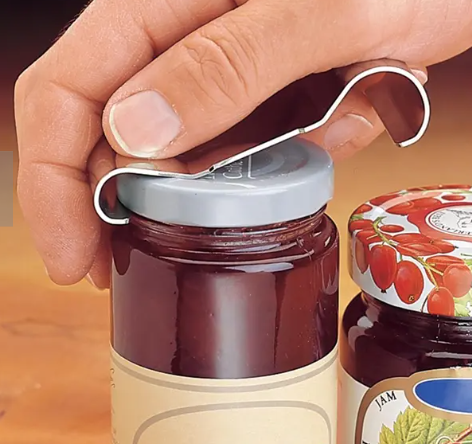
Lee Valley Tool jar opener

Some jars are just a nightmare to open, and Jean’s not always around to help. So he bought me this metal gizmo, which hooks and releases the seal. He also got me a rubber gripper thingie (made in England). With that combo, I can open jars with ease.
Good Leaf Greens

The first week of not buying American was tough in the lettuce aisle, because there seemed to be nothing but California lettuce. Over the next few weeks, though, more and more GoodLeaf Greens became available. These are grown in greenhouses in Southern Ontario. The stay-fresh packaging is really fantastic, and this stuff is good!

Arts and entertainment

I have most definitely have not given up all American TV shows and movies and books (and streaming services). But, I have recently consumed some good Canadian media as well…

TV series

Empathie (Emphathy)

This Québec series, available on Crave, is just a stunner. It’s one of my favourite shows right now. (Jean loves it also.)

Suzanne, a former criminologist turned psychiatrist, starts a new job at the Mont-Royal Psychiatric Institute, where she meets Mortimer, an intriguing intervention officer with whom she strikes up a friendship, and fascinating patients.

Right in the first episode, as we segue from Suzanne’s private to professional life, expectations and assumptions are upended. It only gets more fascinating as more of her past is revealed, and learn more and more about her troubled patients and dedicated but flawed coworkers.

Wholly original. You gotta see it.

North of North

The scenery is the main stunner in this CBC Gem / Netflix series, which was filmed in Inuktitut. But it’s also fun watching Siaja try to make more of her life than being a wife and mother. You can’t help but cheer her on. It is a comedy, but there are some heavy moments as well. Nothing you shouldn’t be able to handle.

Small, Achievable Goals

This CBC Gem series might not be for everyone. It’s a comedy in which two women of very different characters and slightly different stages of life are forced to work together to make a podcast. It’s particularly notable for its very open depiction of perimenopausal and menopausal symptoms. It’s funny and very feminist and I wish it had been available when I was first navigating the mysteries of perimenopause.

Book

Fall on Your Knees

Yes, that Fall on Your Knees, the Anne-Marie McDonald novel, set mostly in Cape Breton, first published way back in 1996. I have just finished reading that now.

I had avoided it partly because it’s quite long, but more because I thought it would be super depressing. Turns out, it’s not particularly depressing. Admittedly, a lot of pretty terrible things happen. It takes place in the past (late 19th and early 20th centuries), when things weren’t so great for women (unlike now, haha).

But for the characters, things just are as they are, and they have to cope, without falling into despair (although that happens on occasion). More often, though, they find original and often terribly misguided ways of dealing. It’s so interesting! I just found myself pulled along and wanting to continue reading, so the length wasn’t much of a problem, either.

The novel starts with the meeting of James, the piano tuner, and Materia, the daughter of one of the piano owners. Their ill-advised marriage sets all subsequent events in motion, and the novel continues through the lives of their daughters and grandchildren.

Movie

Drive Back Home

This is a road movie, based on a true story. It takes place in 1970, when things weren’t so great for LBGTQ+ people (unlike now, haha). Following his father’s funeral, a plumber from a small town in New Brunswick has to drive to the big city of Toronto to get his brother out of jail, after he’s been arrested for public indecency. Their mother insists that he bring his brother back home.

Some funny and some rather harrowing moments ensue. The movie stars the wonderful (despite not being Canadian) Alan Cumming and the also very good (and probably Canadian) Charlie Creed-Miles. It’s available to stream on Crave.

Books 2023

Instead of an overview, I decided to focus on two books that captured some of the social unease of 2023. (Albeit with additional recommendation of short story collection How to Pronounce Knife by Souvankham Thammavongsa.)

The Survivalists: A Novel by Kashana Cauley

The Survivalists, by Kashana Cauley, is a novel centred on Aretha, a young Black lawyer. Near the start, she goes on a date with the handsome Aaron. She doesn’t go into the date with high hopes, but she and Aaron really hit it off. However, this is not a romance novel.

Aaron is a coffee entrepreneur—he sources, roasts, and brews high-quality beans. He works out of his home, a mansion that he shares with two other people. Their focus is not so much on coffee. Brittany and James are more into protein bars, bunkers, martial arts, go bags… and guns. They are survivalists.

Aretha finds this out only gradually, learning some of the alarming details only after she moves in with Aaron. Aaron is frequently away, hunting down beans, leaving Aretha trying to make the best of it with her odd roommates. Meanwhile, her career prospects, which she has banked her entire future, seem in increasing jeopardy as a new hire consistently outshines her. The prospect of working on survival gradually takes on more of an appeal, much to her best friend’s dismay.

It’s definitely uncomfortable taking this journey with Aretha, whose choices at many points are… not the ones I would have made, let’s put it that way. And that made be the reason for the rather polarizing reviews of this book. But I was really drawn into this story, and I felt it was saying something about today’s society, and its risks, and how much we can protect ourselves from them.

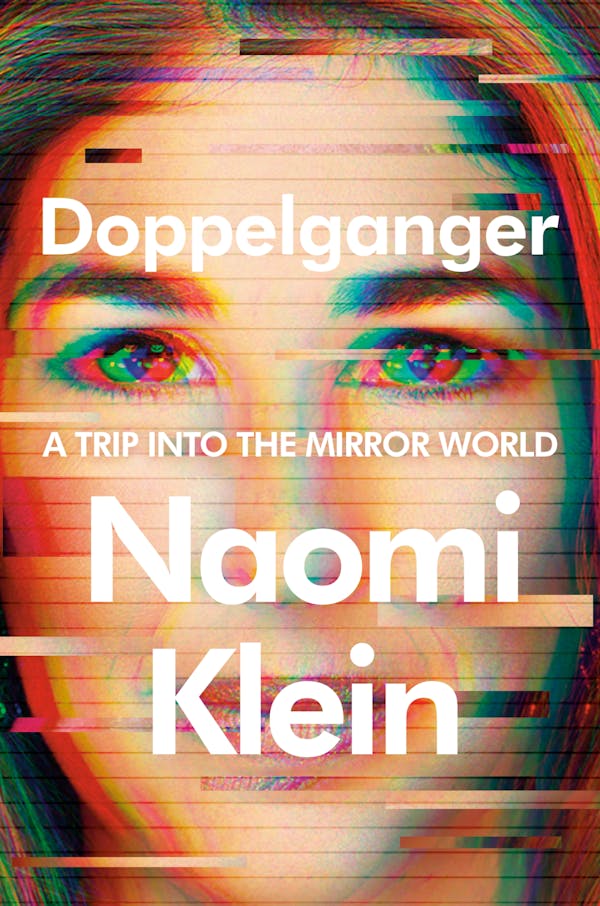
Doppelganger: A Trip into the Mirror World by Naomi Klein.

Doppelganger, by Naomi Klein, is a more personal work of non-fiction than this author has produced in the past. Over the years, Naomi Klein has been confused with Naomi Wolf, author of (most famously) The Beauty Myth. This became something of a problem during the pandemic era, as the previously liberal and feminist Naomi Wolf came to embrace anti-vaccine, pro-gun, conspiratorial, right-wing beliefs.

Klein is alarmed that her name is mistakenly being associated with extremely troubling opinions that she by no means shares. She discusses how this damages her online “brand”, not being at all sure what to do about it, and the fact this is even a concern is something of an irony for the author who first came to fame with No Logo.

Klein then becomes very curious about the question many were asking: what the heck did happen to Naomi Wolf? Klein researches Wolf’s past, revisiting some of her past work, noting some of its limitations, and pointing out areas where her data is weaker. And also traces the history of her declining influence in leftist circles, which culminates when Wolf’s confusion about the phrase “death recorded” as indicating execution when it meant the opposite, led to the cancellation of her book Outrages.

In contrast to the mocking engendered by that, Wolf was truly embraced by the right, receiving the kind of acclaim and popularity she hadn’t had in years. Stuck at home during the pandemic like the rest of us, Klein became somewhat obsessed with following Wolf’s trajectory—even to the point of becoming a devoted listener of Steve Bannon’s podcast (shudder), where Wolf is a frequent guest.

The book looks into the wider questions of how the right has been so successful in garnering attention and enthusiastic followers. “They get the facts wrong but the feelings right.” Klein notes the missed opportunities on the left to fight the government for policies such as school ventilation upgrades, debt cancellation, and permanent paid sick days for all. (But also the difficulty in doing so when everyone is, by necessity, separated.)

It also examines the predecessor anti-vaccine debates and their effects on the autism community, along with a fascinating but appalling history of approaches to treatment of autistic children. (Klein’s son is autistic.) It covers the lost opportunities on climate change. And using the point that both she and Wolf are Jewish and have made stances related to that, it also includes what turned out to be a very timely chapter on Israel and Palestine.

It’s all a bit of an unsettling journey, through the personal and the political and back again. Klein concludes that we need to continue fighting for what we believe in, as a group effort. But with no illusions that it’s going to be easy.

Bosch, Poker Face, Fleishman, and more: Tips and recommendations

I’ve gathered up some bits of wisdom of late that I’d like to share.

First up, how to…

…Figure out what streaming service a particular show is on

Netflix, Apple TV, Disney+, Prime, Crave, Tubi, CBC Gem… It’s nuts. So many services! I don’t subscribe to them all, but enough to make it hard to remember what’s where.

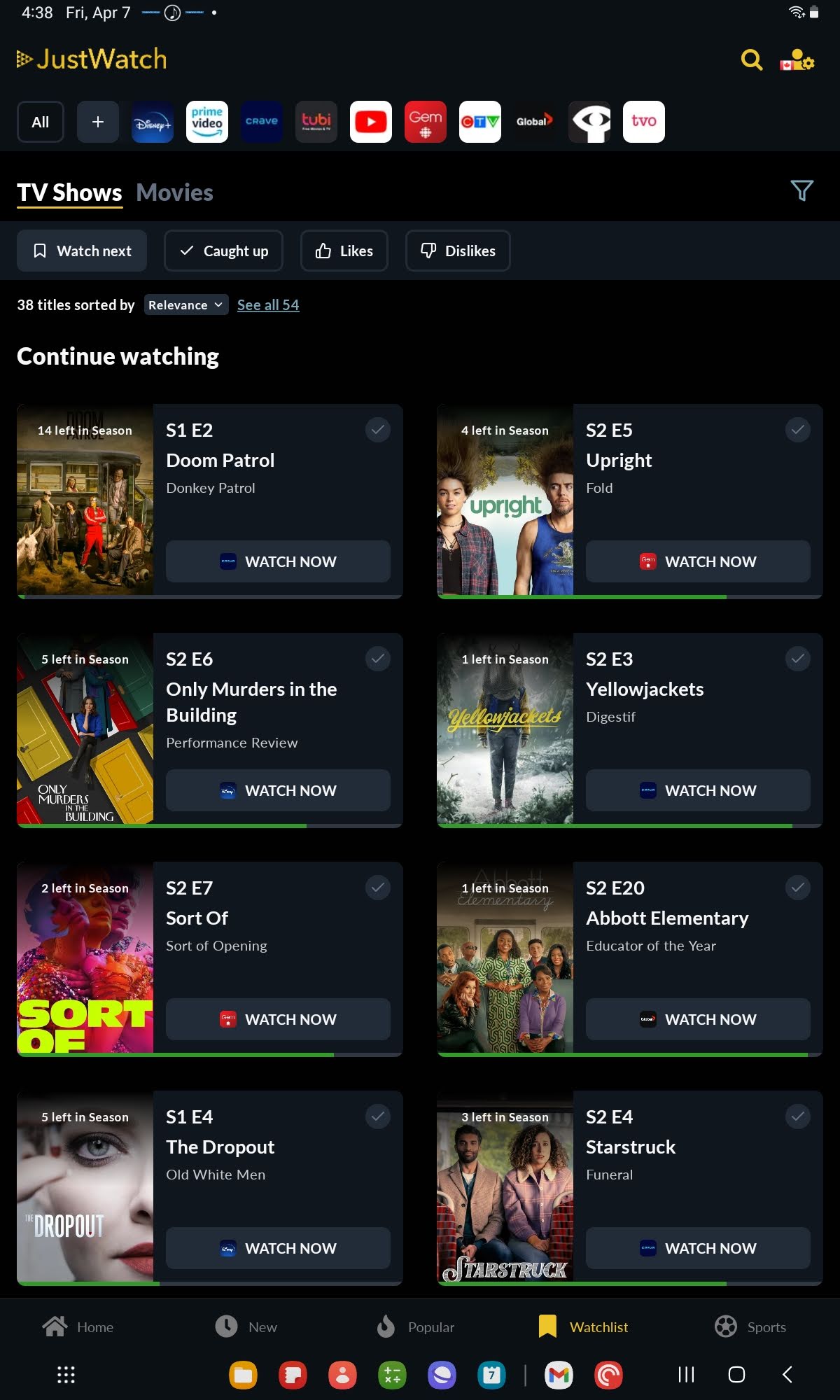
JustWatch Watchlist page

It’s even more confusing for Canadians, since US media will tell us a show is on a service we don’t have in this country (Hulu, Peacock, HBO+)—but that doesn’t always mean we can’t get it on a service we do have. Even more confusing, just because it’s on an American version of a service we have (like Netflix or Prime) doesn’t mean it’s also on the Canadian one. Could be on some other service entirely here.

This is why I love the JustWatch app. You select the streaming services you have access to and it serves up what’s on each. You can set up a Watchlist of every TV show or movie you’re currently watching, or plan to watch, and have one-page look of everything you’re currently caring about. You can mark off episodes or movies as you watch them. It will notify you when new episodes or a new season become available. And it has a pretty good recommendation engine if you need more to watch.

Of course, you can also use it to look up some show you’ve heard about, to find out if it is available to you at all, and if so, where.

…Watch Poker Face

Solid as I generally find the JustWatch app to be, one thing it doesn’t quite get is conventional cable. Particularly when it behaves unconventionally.

Continue reading “Bosch, Poker Face, Fleishman, and more: Tips and recommendations”

Yet another Ontario vacation

I had more vacation days left than I needed for Christmas time, and there seemed little point in carrying them forward into the first three months of next year. So we took the first week of November off, and visited Niagara-on-the-Lake and the north shore of Lake Erie.

Beautiful tree on a sunny day in Niagara
This is November?

Fortunately the weather proved cooperative. We had a warm late October in southern Ontario, and while it got cooler this first week of November, it was very sunny—and that warm October meant that a lot of trees still had their colourful leaves. So not a “dreary” November week at all.

In Niagara-on-the-Lake, we stayed at Harbour House, which is a pretty nice spot. It was not a huge room, but the space was very well organized, and it came with little perks like a bathrobe and a wine-and-cheese hour. I was a bit surprised that we had to show proof of vaccination upon checking in, but that was for the included indoor breakfast, which was quite good—granola, fruit, and yogourt, followed by a hot item such as quiche.

It was also on the lake, which meant some great walks were right there.

Continue reading “Yet another Ontario vacation”

Killarney Mountain Lodge

Originally we’d been thinking about flying to Nova Scotia in August, but then noted that there wasn’t a single car available for rent in the entire province that month. (This is due to the pandemic-caused chip shortage.) Then, we considering going there in early September, but we ran into the issue that our catsitter had a similar thought, and was flying to New Brunswick. Scary Covid projections for Fall were also starting to fly about then as well, and we got a little weirded out about being reliant on airlines to get us back home.

So switched it all up and decided to just drive to Killarney Mountain Lodge for four nights.

Killarney Mountain Lodge at night
Continue reading “Killarney Mountain Lodge”

Traveling to all the hot spots

Remember when a place being a hot spot was a good thing? Lively and exciting? (Or possibly a way to connect to wifi?) Now it’s describing villages with abnormally hot temperatures caused by global warming “heat domes”, and in COVID terms, regions with a large number of cases.

Ontario so far is having a relatively normal summer weather-wise, with a mix of hot, sticky days and cool, rainy ones—along with a few exciting thunderstorms, sometimes with hail. (Ontario is not the place for people who enjoy weather constancy.) And COVID-wise, Ontario—with definitely the slowest reopening plan in North America—is doing pretty well. Except for a few hot spots.

One of these was my original home town of Timmins, which until recently had weathered the pandemic really well. But the Delta variant just tore through the place—and more alarmingly, through the remote northern villages up there—in May / June time frame.

We nevertheless decided to visit. Their plight had led to an extensive local vaccination effort, and as a result, almost all our family ended up fully vaccinated sooner than expected. And we hadn’t been there in nearly a year. Felt like time.

Also felt like a bit of déjà vu of last summer’s July visit…

Continue reading “Traveling to all the hot spots”

Pandemic vacation in Quebec

That it did wonders for my mental health, there’s no doubt. Despite the constant consideration of risk to physical health in everything we did.

Jean wanted a vacation that actually felt like a vacation, which to him, meant getting out of the province. We weren’t up for flying, though, and of course wouldn’t have wanted to go to the country to the south even if we were allowed to, which we weren’t. In a week, the only “outside Ontario” destination that was possible was Quebec.

We did start in Ontario, with a couple days in Ganonoque. Then it was three days in Quebec City, and two in Montreal to finish. In the days leading up, I became obsessive about reading the daily Covid case counts—which at that point, were actually pretty good. And while away, Ontario trended up a bit, but Quebec was still on a downswing.

It did feel like a vacation. Though one unlike any other. (Including the slightly uneasy feeling about blogging about having managed a pretty good vacation in these times… )

Continue reading “Pandemic vacation in Quebec”

Moving through the stages

It was rather heartening that as Ontario moved more and more regions to stage 2 of reopening, that cases continued to trend downward. In stage 2, restaurants could serve food and drinks on outdoor patios; one could get haircuts, manicures, and tattoos (but not facials); and malls could open their doors.

Now areas are moving into stage 3: indoor dining (with spaced tables and occupancy limits); bars (!!!)—though only seated, no dancing, live music only behind plexiglass; gyms; and facials (for those who care, which isn’t me). Indoor limits increased to 50, not counting staff. And the case trend? Has become a bit of a roller-coaster.

No doubt this is all rather trickier than the earliest stage of, basically, hiding in your basement.

Continue reading “Moving through the stages”

Finding fiction

A tip on reading more books that I’ve found useful is to just embrace having more than one on the go at a time. Prevents any one book from feeling like a slog that is stopping you from moving on to your new, shiny books.

Personally I aim to have at least one fiction and one non-fiction book in progress. Non-fiction isn’t so hard to line up—just go with subjects I’m interested in. Fiction is tougher. I now see why so many people love genres of fiction: makes it easier if your aim is to have a bunch of mysteries, romances, or sci fi novels at the ready.

But if your genre is, basically, General Fiction? Quite a bit tougher to narrow that down. I seek inspiration everywhere.

The Music Shop by Rachel Joyce

Source: Spotted it in a book store (but later bought the ebook)

A love story, of sorts, between an eccentric owner of record store—as in LPs, at the time when everybody was buying CDs (and maybe cassettes)—and a mysterious young woman who swooned outside the shop one day. She claims to know nothing about music. He agrees to teach her about it.

That’s the best part of this book, to me—the in-depth discussions of great exemplars of different types of music: jazz, rock, classical, R&B… Makes you want to rush out and listen to what’s being discussed. Fortunately, the book comes with a Spotify playlist:

I do not know what the book’s main character would have thought of Spotify…

An American Marriage by Tayah Jones

Source: Barack Obama recommendation

A novel about a recently married couple in which the husband is wrongfully convicted of sexual assault. The wife has no doubt of her husband’s innocence; nonetheless, he faces a long incarceration away from her. How do you manage that?

Much of the novel is told as a series of letters. The story does not proceed on a predictable path, but it is plausible one. Thanks, Obama.

Young Jane Young by Gabrielle Zevin

Source: Kobo (ebook seller) recommendation

A work of fiction built around the story of a young woman who has an affair with the older, married, male Senator she’s an intern for. Shades of Monica Lewinski, yes, though that affair is mentioned in the novel as the news that drives her own story out of the headlines.

What’s interesting is that the story is told exclusively from the point of view of the women involved: the intern, her mother, her daughter (the story covers many years), and the Senator’s wife. And you’re not always sure who is who, at least not right away. I loved the approach and really got caught up in this novel.

Asymmetry by Lisa Halliday

Source: New York Times best books of 2018

This one didn’t work out!

The novel is in three parts. The first two seem unrelated. The third is supposed to bring them together. I read the first part, about a love affair between a young woman and much older man (a writer). They were interesting characters, but they didn’t really do much. There wasn’t much plot happening.

Before proceeding, I look into other reviews. They said that the second part was less interesting than the first, and that the supposed connection you find out about in the third is tenuous, maybe unfathomable. So, I gave up on this one.

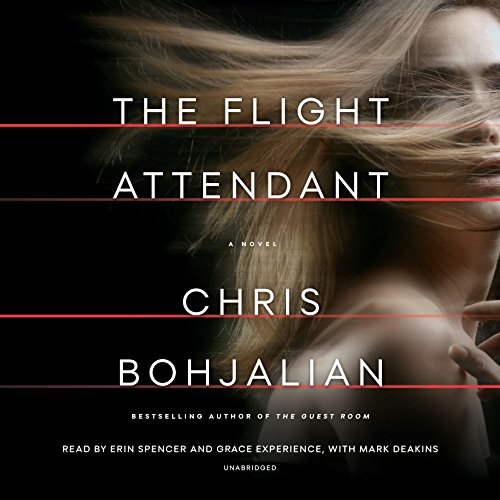
The Flight Attendant by Chris Bohjalian

Source: Recommendation from The Washington Post

Cassandra Bowden, a flight attendant and a binge drinker, wakes from drunken stupor to find that the man she spent the night in Dubai with has been murdered. What to do?

If there’s one genre I do tend to return to, it’s the thriller, and this one is somewhat reminiscent of The Girl on the Train. Unlike that novel, however, it’s clear early on in this story that Cassandra did not murder her lover. But her lack of memory about what happened complicates her situation. And her frequently poor judgment often makes things worse.

This was a pretty fun read. I got it as a library ebook and had to binge read through the last parts because someone else had put a hold on it and I wanted to know how it ended.

Non-fiction

I’ve been in a bit of a rut here, of musician bios.

Thanks a Lot, Mr. Kibblewhite is Roger Daltrey’s breezy, easy-reading autobiography. You can tell that it was built from Roger telling his story to the writer he worked with, who assembled the pieces into a coherent narrative.

It is an interesting story, starting in the deprivations of post-war London and continuing up to closing out the Olympic Games, making a triumphant return to Hyde Park, and nearly dying of viral meningitis. With many entertaining anecdotes on the way, from Keith Moon’s antics to the many women in his life (and a number of surprise children) to The Who’s financial challenges and musical triumphs.

I can recommend this one as being appealing even to more casual fans of The Who, as Jean and I listened to the audiobook version (read by Roger Daltrey) and Jean was approving. He had a much higher opinion of Mr. Daltrey by the end of reading this than he had going in.

Unlike with Roger Daltrey’s book, which I preordered and read pretty promptly, this one has been sitting on the bookshelf for a while. I ended up quite enjoying it, though.

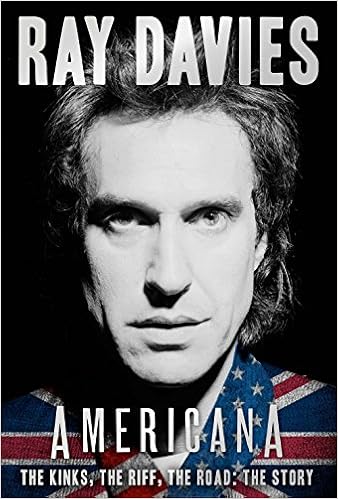
This Ray Davies’ second autobiography. Though it does some moving back and forth in time, it’s told in a much more straightforward fashion than his first, which employed a faux, third-party narrator. Here, Ray just writes his own story, focusing on The Kinks relationship with America, and therefore covering the period starting in the early 1970s when the band’s work ban was lifted. It includes the whole 1980s “arena rock” period during which I discovered The Kinks and became a fan, so was of particular interest.

Ray discusses some of his relationships he was in during this time, but with considerable discretion, so if you’re hoping for dirt on his volatile relationship with Chrissie Hynde, you’ll be disappointed. It’s mostly about the music, the band, and his uneasy relationship with the US itself—culminating in his shooting by a mugger in New Orleans. Getting shot is no joke, it turns out…

Another book with a soundtrack (yes, there’s also a Part 1; I just prefer Part 2)

Meditation

Many years ago I read (at least some of) Wherever You Go, There You Are by John Kabat-Zinn. The point that stayed with me all this time is that if you’re not really fully present and engaged with the now, you’re not really living.

Which doesn’t mean that I am always, or even particularly frequently, fully engaged with the present. I am a hopelessly plan-y person, which makes for a lot of thinking ahead! But I at least had that idea, in the back of my mind, that if you’re going to do a thing, you do that thing, you focus on it, and you really appreciate it. And at least occasionally, I would actually do that.

Kabat-Zinn’s technique for getting better at being present and mindful was (and still is) meditation. That practice, I never adopted. I think I tried a few times, but it never stuck.

silhouette of man at daytime
This is not me. (Photo by Prasanth Inturi on Pexels.com.)

Jump ahead to January 2018. TV journalist Dan Harris is the guest on The Daily Show, talking about his new book Meditation for Fidgety Skeptics: A 10% Happier How-to Book. A lot of people are interested in trying meditation, he says, but think they don’t have the time. His pitch to them? Five to ten minutes, he says—that’s enough. Don’t even have five minutes? One minute will do.

Then he adds that it’s nothing complicated, that it doesn’t require wearing of yoga pants and becoming a mystic, and that you’re not failing if you don’t manage to clear your head. The attempt to clear your head is what matters.

I finally bought the book this spring, and after a few bouts of anxiety left me wishing I had some better coping techniques, this summer I actually read it.

After an introduction to what meditation is and what its benefits are, the book is divided up into chapters based on people’s excuses for not doing it. I thought I’d only have to read the first two: “I can’t do this” and “I don’t have time for this.” Then when I actually started trying it, it was a bit uncomfortable, so I figured I should also read the third chapter: “People might think I’m weird.” (What’s actually weird? That so many people find being alone with their thoughts so off-putting they are actually willing to give themselves electric shocks as a distraction.)

In the end, I found something of value in each chapter, even the ones that appeared to have nothing to do with me: “Meditation is self-indulgent”—as if I have any trouble with self-indulgence. Or, “If I get too happy, I’ll lose my edge”. Yep, that’s me all right, miserable and edgy, and wanting to stay that way!

But the “self-indulgent” chapter included tips for if you thought you maybe had the opposite problem (of perhaps being a little selfish), and the “edge” chapter included some great techniques from managing worries (the “Is this useful?” mantra).

Furthermore, the book was just more interesting and fun to read than I expected from a “self-help” type. There was a running story-line of going on a meditation tour and trying to gain recruits. Meditation techniques are not “one size fits all”, it turns out.

But did the book work? Yes, absolutely, in that for the first time in my life, I am meditating regularly. (Turns out that my office has a meditation room! Who knew?)

And am I now 10% happier? Is the meditation itself working? Well, that’s hard to say. The whole thing is subtle (the promise is about a 10% happiness increase, not a complete transformation of your entire outlook) and the effects take time. At first it just seemed weird and a bit pointless. Now, sometimes I actually look forward to it. I can’t say for sure, yet, whether I’m developing better long-term coping strategies. But maybe?

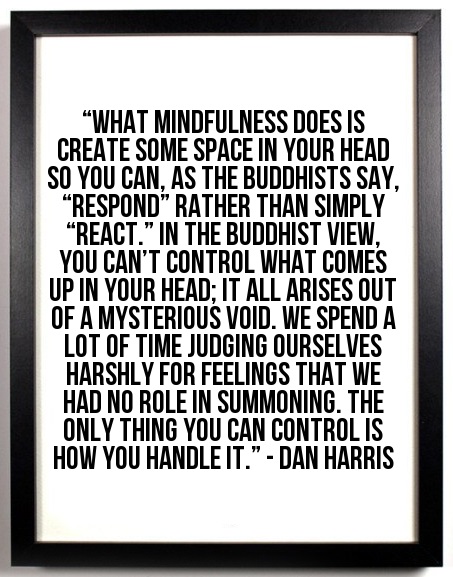
Quote-2.jpg