A Barenaked Christmas

My rather excellent run of live concerts this year was capped off with The Barenaked Ladies, performing “Hits and Holiday Songs” with the KW Symphony, at Centre in the Square last Sunday.

Barenaked for the Holidays

Jean was a bit puzzled at my interest in this one, as I don’t exactly idolize this band. But I had been thinking for a while that I wouldn’t mind seeing them in concert. I definitely like the albums and songs of theirs that I have (which is probably only the obvious ones), and I figured their humorous approach to performance would make their live show fun. So when a local concert was announced, I didn’t wait long to get tickets.

Continue reading “A Barenaked Christmas”

Movie reviews: Bubble and Stories We Tell

Back in the true art house realm here with Bubble, a documentary-like drama, and Stories We Tell, a partly dramatized documentary.

Bubble poster*** Bubble (January 2006) – Rental

Directed by Steven Soderbergh. Martha and Kyle are coworkers at a doll factory whose relationship is disrupted by a new arrival at the factory, Rose.

She says: Except for the big-name director, movies don’t get much smaller than this. (I would never even have heard of this one if not for Roger Ebert highlighting it recently.) Its stars are not actors, but locals. The story was plotted, but the dialogue was not scripted. Its a mere 73 minutes long.

These people lead very simple lives, yet its weirdly fascinating, as we just don’t see people like this in movies. They look and talk like real people. They aren’t dramatically poor (not homeless, not starving), but basically have no money, no real prospects. Their job of assembling dolls makes for some really odd images, of doll parts molded, assembled, decorated.

Martha and Kyle have a comfortable, non-romantic relationship. Rose disrupts that, creating a strange triangle. A murder occurs. Who and how that happens is the central mystery of the film.

He says: This one moves at the pace of real life… I don’t really know what to make of it.

Stories We Tell*** Stories We Tell (November 2012) – Theatre

Documentary by Sarah Polley. She explores the family secret that the man who raised her is not her biological father.

She says: Though it lags a bit toward the end, there are a surprising number of twists in this documentary about Sarah Polley’s decision to explore the truth about her parentage. She does this by interviewing everyone in her family, along with family friends, while interspersing old family footage along with dramatic re-creations of certain key events (and it was occasionally difficult to tell which was what).

It’s not all that unusual, apparently, that men end up raising children they think are their own, but aren’t. But it really struck how differently an artistic family and circle such as the Polley’s react to this, with everyone almost tripping over themselves to be the ones who get to own the narrative. And hence, Stories We Tell becomes Polley’s framework.

A bit pretentious, I guess, but as I said, mostly engaging.

He says: Well, there were parts when I was pretty bored. But it could have been worse. I’m still not totally sure what was acting and what were actual inteviews, though.

Ladies and gentlemen, Ms k.d. lang

I had all good intentions of getting a list a few tracks from k.d. lang’s new album, Sing It Loud, before seeing her in concert last Wednesday. But with the renovations going on, that just didn’t happen. So it occurred to me that I didn’t really know that many k.d. lang songs. I have the Ingenue album, and Hymns of the 49th Parallel, a few more versions of her singing “Hallelujah”, and her duet of “Crying” with Roy Orbison. That’s it.

Turns out my three companions to the concert were pretty much in the same boat. We were joking how we’d all just be sitting there, waiting for “Hallelujah”. But that voice, right? It should be great on any tune, whether we knew the song or not.

Continue reading “Ladies and gentlemen, Ms k.d. lang”

Movie reviews: Never Let Me Go, One Week

Never Let Me Go posterWithout intending this, last weekend we ended up watching two movies on the cheery subject of human mortality, as depicted through the prism of young adults facing a death sentence:

Never Let Me Go, 2010, starring Keira Knightly, Andrew Garfield, and Carey Mulligan

One Week, 2008, starring Joshua Jackson and Liane Balaban

Based on a novel, the premise of Never Let Me Go, a British film, is an alternate world where cloning technology was perfected in the 1950s, leading to a world where clones are created for the purpose of providing life-extending organ donations to everyone else. We first meet the donors as children in a British boarding school, then move ahead to their lives as young adults. The focus is on three characters who form a love triangle.

One Week is a Canadian movie in which the protagonist receives a terrible cancer diagnosis in the first scene. Instead of immediately going into treatment, as recommended, he decides to take a motorcycle road trip across Canada first, to take stock of his life.

As you might imagine, Never Let Me Go is sad. But at least, blessedly, you’re never made to wallow in the sadness. It’s there, it’s built into the story, but it’s all underplayed, somewhat interior, all very British. It never brought me to tears. It’s very well-made, with a lot of attention to the look, the dimmed color palette. It moves along at an appropriate pace. Both the child actors and the young adults in the film are quite good in their roles.

Most striking about how the story plays out if how accepting all the clones are of their fate. It never seems to occur to anyone to run and try to escape the transplant surgeries that will ultimately kill them. If they had, that would have been a whole other movie. (I think it was called Logan’s Run.) If still wondering why this story was told in these terms, watch the extras! It is explained there.

One Week movie posterI was going to say that One Week is therefore a contrast, as it’s all about escape, but that’s not really true. Lead character Ben knows perfectly well he can’t outran cancer. He’s just looking for a slice of time before he becomes a patient.

Everything in this movie takes place with Ben basically still feeling well, so it’s much less sad than Never Let Me Go. The whole story is approached with wry humour.  It’s also a real love letter to Canada, as you see a lot of the iconic and beautiful Canadian sites Ben travels through, including the Big Nickel, the Terry Fox statue, the rolling prairies, the gorgeous beaches of Tofino.

The script does not have the fullness and depth of Never Let Me Go‘s, but I still found it interesting to participate in Ben’s examinations of the choices that had led him to a job he isn’t passionate about, and into an engagement with a lovely woman who nevertheless may not be The One. And of course, leads you to wonder why you might do if you had a week before entering into likely hopeless cancer treatment.

Jean’s take? He found Never Let Me Go really sad, and overall thinks I should rent more comedies. As for One Week, he was strongly critical of Ben’s treatment of his fiancee, but did enjoy the travel through Canada aspect. I think his attention reasonably well, for another movie that is more about self-realization than plot twists.

Movie reviews: Take This Waltz, Avengers

The first is a rare instance of us seeing a movie on its opening day. This one would be a split vote. (So the overall ratings are mine.)

**** Take This Waltz (June 2012) – Theatre
Michelle Williams, Seth Rogen, Luke Kirby. Young couple meet and are instantly attracted. Unfortunately, she’s already married to a great guy.

Take This WaltzShe says: This movie took me on a journey.

The beginning was rocky: slow, presenting the initial meet of Margot and Daniel, but then focusing more on the quirks of her marriage with Lou. The couple comes off as really annoying. At this point, I didn’t particularly like the movie.

But most of the movie focuses on the “in between”, which Margot confesses, in the beginning, is a state she can’t stand. During this part, I got caught up in her dilemma: Will she or won’t she give in to her passion? Should she or shouldn’t she? Margot and Daniel circle around each in a desirous dance that could hardly be sexier (though that response may be a girl thing)…

And the way the movie concludes, which I won’t spoil, made me love it. The cinematography, the music, the story progression… Fab.

He says: I knew before you said that you liked that one, but I just didn’t get it. I didn’t understand them, I didn’t understand the point.

Michelle Williams was adorable, though. I love her look.

——————————-

Whereas this next one, we saw only after it had been out for weeks…. Interestingly, another split vote.

*** Marvel’s The Avengers (May2012) – Theatre
Robert Downey Jr., Mark Ruffalo, Scarlett Johanesson. The unlikely team of Iron Man, The Incredible Hulk, Thor, Captain America, Hawkeye, and Black Widow team up to battle a threat to humanity.

She says: Though not a big comic book person, I did really enjoy the interplay of these very different characters: the 40s-era Captain American with the ultra-modern Iron Man; or the god Thor and the Incredible Hulk. And I appreciated the humor and pacing that Joss Whedon brought to this special-effects extravaganza.

And now I kind of want to see Iron Man, because he was my favorite.

He says: That wasn’t that great, was it? I mean the story wasn’t much. There was no mystery to it.

I don’t know what happened. I should have liked this one.

The Queen Extravaganza

The Canadian locations for The Queen Extravaganza tour consisted of the usual suspects—Toronto, Montreal, Vancouver, Calgary, Edmonton—and one outlier: Québec City.

The Queen Extravaganza is a project of Roger Taylor of Queen. He held an online competition to find, essentially, the ultimate Queen tribute band. And of the nine winners, a full third are from Québec: Québec City native son Francois-Olivier Doyon on bass, Yvan Pednault—familiar to many from his long run starring in Toronto’s We Will Rock—on vocals, and Marc Martel, YouTube sensation for his uncanny physical and aural resemblance to Freddie Mercury, also on vocals.

Yvan Pednault

Yvan Pednault, apparently not yet tired of singing Queen songs for a living

So odd a choice as Québec City might have seemed for tour opener, it was probably a wise choice. The show sold out (trying to get my two tickets that opening day was a challenge, let me tell you), and the crowd was super-enthusiastic.

And yes, I was there. Naturally, Toronto would have been closer and easier—but it was on a Tuesday, and we hadn’t been to Québec in a while, so there we were. In Québec for the Queen Extravaganza.

Continue reading “The Queen Extravaganza”

The trifecta: Big bands, a night at the opera, and war horse

trifecta, n. (traɪˈfɛktə)

Any achievement involving three successful outcomes

Our self-created “culture weekend” began Friday night with the KW Symphony’s salute to big band music, featuring In the Mood, Take the A Train, It Don’t Mean a Thing (If It Ain’t Got That Swing), Come On-A My House, As Times Goes by… Songs like that. Songs that swing.

Guest conductor Matt Catingub, who’s from Hawaii, brought along some guest saxophonists, guitar and bass, and drummer. He himself at various time played sax, sang, and played piano. The symphony were able to keep up with the challenging arrangements—ones that taxed the horn section in particular.

It was a very fun night out. The only thing that would have made it better was if the Centre in the Square had a dance floor we could have used. This music was made for dancing, not sitting.

A Night at the Opera cover

Saturday we made our way to Toronto for Classic Albums Live: Queen—A Night at the Opera. This was our second time seeing a Classic Albums Live presentation, and we were both a little dubious about it, having been underwhelmed by the first. But I just couldn’t resist seeing how they would possibly tackle this very challenging album, “cut for cut, note for note”.

As the liner notes for the show said, “with Queen, the key word was more. More singers. More guitars. More sound.”

So to handle Brian May’s multi-layered guitar sound, they had six guitarists (one of whom focused on the acoustic and the koto). Lead vocal duties were handled by three different singers: one for Freddie’s higher vocal parts (that was a woman), another for his lower range, and one more singer to present Brian and Roger’s vocal leads. And another singer (another woman) who did lead backup.

That not being enough, there was also a full choir. (“We had all of Toronto up here on stage”, the announcer said.) Somehow, though, they did manage with just one each of drums, bass, and piano.

Classic albums live for Queen

“It takes a village” to perform Queen music. (And this doesn’t even include the choir.)

It was really an awesome show. Why did it work so much better than The Beatles one, which felt a bit pointless and lifeless to me?

  • You can’t suck the life and fun out of Queen sings by playing them as recorded, because fun is built into the songs. Doing this whole album meant singing a passionate love song to a car, doing an entire musical break on kazoos, and embracing lyrics like “You call me sweet like I’m some kind of cheese” and “Thursdays I go waltzing to the zoo”.
  • By playing live what were purely studio effects (just four musicians and three singers, massively overdubbed), you aren’t reproducing what was on the record. You are re-creating it. And as an audience, we are hearing it in a new way, for the first time.
  • Queen were show-offs, and the musicians managing to pull off all those notes, and guitar chords, and that crazy intricate timing, was truly impressive. We were in the second row, and you could almost see them sweating blood trying to get everything in at the right time, in right pitch. The announcer said it was the most difficult one they’d ever tackled, and I believe it.

I’m in Love with My Car performance (video)

The second half featured more Queen songs, some quite well known (We Will Rock You, We Are the Champions, Under Pressure, Bicycle Race—complete with bike bells, Somebody to Love), and some not as much (Brighton Rock, Keep Yourself Alive, Get Down Make Love). The show seemed to go by in a flash.

Brighton Rock performance (video)
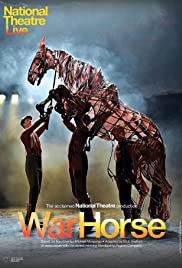
warhorse

And on Sunday, still in Toronto, we saw the Mirvish production of War Horse, which really deserves all the praise it has received.

The puppetry used for the horses (and a goose!) is just incredible. Despite seeing people legs and bodies beneath and around the horses, they really seem very horsey, and you gradually don’t even really notice the puppeteers.

The story, of course, is not a totally cheery one, as nothing about the First World War is cheery. It’s interesting, though, how Joey’s encounters with British, Germans, and French in turn shows all in an ultimately sympathetic light. The plot is very well constructed and emotionally compelling.

Toronto Star review: War Horse is bold, brave and heart-stoppingly wonderful

That’s about right.

Toronto building

Photo taken on our walk over to see War Horse

Symphonic prog rock

Last night’s Intersections concert by the KW Symphony was called Prog Rock. But this was not symphonic versions of rock songs, per se. It was symphonic music that either inspired, or was inspired by, heavy rock. For example, there was a composition by Matthew Hinson called, I kid you not, “Homage to Metallica”. It contained not a lick of Metallica music, but definitely had the Metallica spirit.

There was also Grieg’s In the Hall of the Mountain King, which has been covered by tons of rock bands, including The Who. And Anton Mosolov’s Iron Foundry, which was inspired by actual heavy (industrial) metal. And a more modern piece by Paul Stanhope called Throbbing, evoking the sound of a police car chase around the neighborhood.

All of this loud, heavy music was a challenge. (Definitely the first time I was handed ear plugs at a symphony concert—though I didn’t find I needed them.) In fact, Edwin Outwater included a couple lyrical Satie Gymnopédie numbers as interludes. “This concert,” he said, “needs a palate cleanser”.

The grande finale of the evening was a piece by Nicole Lizée commissioned for the KW Symphony: 2012: Concerto for Power Trio. This one was inspired by, and did include bits of, Rush music, but elaborated upon, distorted, sped up… Like hallucinogenic Rush, Lizée (who was there) said. It included the classic Rush music trio of guitar, bass, and drums.

It was my favorite piece of the evening. And Jean’s least.

I guess Rush is always polarizing.

————————————-

Also, some interesting material about the last Intersections concert, Quantum: Music at the Frontier of Science.  First, Paul Wells, from Macleans Magazine, has written an article about it, and the positive response to it from the people of KW (two sold-out shows).

And you can sample of it yourself, from YouTube. Excerpts from the show:


And a documentary about the making of the show:

Genies vs. Oscars

I skipped watching the Oscars this year, but I did watch The Genies, which give out awards for Canadian films. What made the Genies a better bet for me:

  • Show was just 1 hour long, vs. whatever crazy length the Oscar show is. They do this by not covering all the categories on air; just the interesting ones. Hello. That’s reason enough all by itself.
  • It’s not preceded by tons of other Canadian movie award shows, so I had no idea who would win. With the Oscars, thanks to the Golden Globes, the SAG, the Director’s Guild, etc. you pretty much knew who’d be clutching the trophies.
  • I’d seen 3 of the 5 nominated Genie movies, vs. only 5 out of 10 of the Oscar ones. So percentage-wise, higher. (I realize that’s unusual.)
  • Musical performances that weren’t lame, because, as far as I could tell, they had nothing to do with movies. But they were by Canadian performers.

So there you be.

I was totally thrilled to see the young actress from M. Lazhar win the Best Supporting Actress award, as she was really was amazing in the role. And gave quite a delightful acceptance speech.

And it’s alway fun to see Viggo Mortenson, winner of Best Supporting Actor for A Dangerous Method, who was also very charming in his acceptance  speech.

For Best Picture, though, I have to see that I was really pulling for Cafe de Flore. Monsieur Lazhar won, and I can’t really complain about that, as it was quite a fine film, and it gave the director a chance to give the Oscar speech he couldn’t. But Cafe de Flore spoke to me in a more compelling way. At least Vanessa Paradis was recognized for her work as the lead of that film.

Music as weirdly beautiful as the universe itself

Kitchener Waterloo Symphony’s performance of “Quantum: Music at the Frontier of Science” began with a warning from conductor Edwin Outwater:

Some of the music we’re about to play may drive you nuts. You may not like it.

But that’s OK.

Part of the Intersections series, this concert was meant to explore how the work being done in theoretical physics influenced classical music. It was a collaboration with KW’s Institute for Quantum Computing. It featured a narrative and some visuals giving a brief history of physics, particularly the quantum part, with additions from Outwater explaining how these had influenced the piece we were about to hear. Raymond Laflamme, Director of the Institute for Quantum Computing, also participated.

Quantum Mechanics scoreWe were eased into the whole thing with Newtonian physics, solid and elegant, as represented by the first movement of Mozart’s Symphony No. 29 in A major. Then, it was explained, delving into the realm of quantum mechanics seemed to put all that in doubt. We had particles that could be both here, and there. Elements that didn’t behave in a mathematically cohesive way. Physics theories that no longer aligned.

This uncertainty affected the artists of the times. As an example, we heard an early piece by Anton Webern, excerpt from Langsamer Satz, which was very grand and beautiful in a Wagerian way. Then a later one, in which he starts to explore dissonance—Ruhig schreitend. You wouldn’t guess it was the same composer.

More directly exploring this opposition was Charles Ives’ The Unanswered Question, in which most of the orchestra plays a beautiful melody, but it is interrupted by a trumpe, moved to the back balcony, asking questions that the woodwinds, from the side balcony, then try, but fail, to answer. It was a great piece to listen to, really; I’d like to get a recorded version of that one.

After the break we were introduced to a piece by Henry Brant, On the Nature of Things (after Lucretius). The theme at this point was composers coming to terms with, and indeed embracing, the weirdness of quantum physics. Brant’s contribution was to add another dimension to orchestral interpretation: geographic space. He was very concerned with where the musicians were located in the room. So the piece had some of the symphony in their usual locations on the stage, others were placed above, beside, and behind us.

And it does make a difference, hearing the music in “surround sound”.

Up next was a John Cage piece called the Atlas eclipticalis, which was inspired by the cosmos itself. He created the score by superimposing musical staves over the star-charts in an atlas. Brightness of the stars was translated into the size of the notes in the composition.

Finally, we came to Iannis Xenakis, who was both a scientist and a musician. He would start with mathematical equations, and convert these into stanzas. And he would assemble his pieces with the aid of a Fortran computer, lending the final result a little randomness. The resulting piece, called ST/48-1,240162—did have repeating musical themes, but they didn’t move around the symphony in the expected, “classical” way. It did have sort of computer, sci-fi feel to it. Though it went on for 11 minutes, it was not unpleasant to listen to.

So despite the warnings, it was actually a very enjoyable evening at the symphony, one that worked the brain cells in a new way.