The Queen Extravaganza

The Canadian locations for The Queen Extravaganza tour consisted of the usual suspects—Toronto, Montreal, Vancouver, Calgary, Edmonton—and one outlier: Québec City.

The Queen Extravaganza is a project of Roger Taylor of Queen. He held an online competition to find, essentially, the ultimate Queen tribute band. And of the nine winners, a full third are from Québec: Québec City native son Francois-Olivier Doyon on bass, Yvan Pednault—familiar to many from his long run starring in Toronto’s We Will Rock—on vocals, and Marc Martel, YouTube sensation for his uncanny physical and aural resemblance to Freddie Mercury, also on vocals.

Yvan Pednault

Yvan Pednault, apparently not yet tired of singing Queen songs for a living

So odd a choice as Québec City might have seemed for tour opener, it was probably a wise choice. The show sold out (trying to get my two tickets that opening day was a challenge, let me tell you), and the crowd was super-enthusiastic.

And yes, I was there. Naturally, Toronto would have been closer and easier—but it was on a Tuesday, and we hadn’t been to Québec in a while, so there we were. In Québec for the Queen Extravaganza.

Continue reading “The Queen Extravaganza”

Hurrying toward dictatorship

Our so-called leaders speak
With words they try to jail ya —
They subjugate the meek
But it’s the rhetoric of failure

–The Police, Spirits in the Material World

This week I heard the KW Symphony and Jeans’n’Classics play the music of Sting and The Police. That was fantastic.

I also read a lot of political columns about the federal Conservative government is up to. That was the opposite of fantastic.

Earlier in their majority mandate, pundits wondered, why the rush? Why push so many bills through, and why impose time allocation on all of them?

Now that their agenda is becoming clearer, I think we know:

The Harper revolution has never been about abortion or gay rights. This prime minister has little interest in social conservatism.

Rather, the revolution is economic. It is aimed at eliminating regulations—particularly environmental regulations—that interfere in profit-making. It is aimed at reducing wages (which is why the Conservatives take swipes at unions whenever possible). It is aimed at scaling back any social programs—from Old Age Security to Employment Insurance — that help keep wages up.

–Thomas Walkom, Stephen Harper’s stealthy war against wages and the environment

Not quite what they campaigned on, eh? And even though true believers may applaud the efforts to plunder the natural world—they seem to feel that, with fervent enough belief in the capitalist system, one can overcome those pesky biological needs for clean water, air, and food—I’m not sure they’d be as happy about efforts to impoverish them.

So, the Conservatives really have to get all this done as quickly as possible, stifling debate wherever they can, before opposition can really mobilize. Before most people even notice.

Let’s see how many different outrages we heard about—just this week!

1 Denying medical coverage to refugees

2 Working to increase crime rates by cutting rehabilation programs and encouraging prison overcrowding

When the emphasis moves away from corrections toward more and harsher punishment of both the physical and psychological variety, recidivism rates will increase and real correction will become more difficult. That will likely mean more crime over the long haul in a country that, apart from the United States (which is in a league by itself), has one of the highest incarceration rates in the world.

— Jeffrey Simpson, Globe and Mail

3 Rejecting all amendments to the new Copyright Act

This is—believe it or not—a largely good piece of legislation, except for a problematic clause on digital locks. Why not consider amending that?  Far as we can tell, only because the opposition parties brought them forward. I mean, God forbid opposition members actually get to do anything for us in return for our tax dollars.

None of [the defeated] amendments were radical or undermined the goals of the legislation. There is much to like in Bill C-11 but the defeat of provisions designed to improve access for the blind, preserve fair dealing, enhance education, and open the door to innovative services hardly seems like something to celebrate.

— Michael Geist

4 Admitted to dismantling an Environmental advisory group because it recommended a carbon tax

The fact is, a carbon tax is the best way to deal with climate change, so any group serious about it has to advocate for one. The Conservatives have, of course, demonized carbon taxes, so they can’t impose them now. So instead they are trying a “regulatory” approach, Communist style, which as we see, doesn’t work. Canada’s carbon emissions just keep going up. Do they care? Apparently, no.

So that’s four pretty big things in one week—but none are the biggest thing. Not by a long shot. No, the biggest thing, quite literally, is the 420-page Omnibus Bill supposedly to “implement the budget”, but in fact, doing a whole lot of other things as well.

(Which, of course, they immediately imposed time allocation on. Why would anyone need any extra time at all to review 420 pages of confusingly worded new laws?)

This bill, among so other things:

  • Repeals the Fair Wage act.  [You didn’t want a fair wage, did ya?]
  • Repeals the Environmental Assessment act.
  • Makes some kind of changes to EI. We’re not sure what, really. We’ll tell you eventually, after this bill is passed. Trust us. It will be great.
    (Rick Mercer: “How can the gov say we will find out what is in the budget after the budget is voted on? Does that work on other planets?”)
  • Re-writes the Fisheries Act, the Species at Risk Act, and the Navigable Waters Protection Act.

There’s a ton of environmental law changes in here. The thrust of most, from what I can tell, is to get rid of informed government bodies who currently regulate these matters, and move them to uninformed Harper Cabinet to decide . I’m serious.

Writer Richard Poplak wonders why Canadians aren’t angrier about this. Why we aren’t mobilizing.

There’s a bill, called C-38. It’s driven to Parliament on forklifts retrofitted for maximum stealth. This bill, similar at 420 pages in weight and heft to a small pony, is delivered to dead-eyed MPs, behind whom stands the chief whip, taser in hand. The drool-drenched backbenchers nod in unison, and put the bill back on the forklifts for rubber-stamping further down the line.

By not making this the issue of our generation, by not linking this with other efforts calling for responsible governance and respect for democratic institutions–and by not understanding that this trend is not just local, but global–Canadians are rolling over and playing dead.

And why is that?

Well, maybe we’re just a little exhausted from the constant barrage of appalling behavior from our federal government.
Maybe we’re overwhelmed. We just don’t know which of the many outrages to go after first.
Maybe we don’t know how to protest. What would actually work?
Maybe we’re just sick of whole thing. We’ve tuned out. It’s nice out. We have gardening to do.

Unfortunately, that is exactly what Stephen Harper wants.

Speak out against Harper’s budget (NDP)
Harper is ending environmental protection (Liberal)
Environmental Devastation Act (Green Party)
Black Out Speak Out (Environmental groups)
Apologize to the rest of the world

The trifecta: Big bands, a night at the opera, and war horse

trifecta, n. (traɪˈfɛktə)

Any achievement involving three successful outcomes

Our self-created “culture weekend” began Friday night with the KW Symphony’s salute to big band music, featuring In the Mood, Take the A Train, It Don’t Mean a Thing (If It Ain’t Got That Swing), Come On-A My House, As Times Goes by… Songs like that. Songs that swing.

Guest conductor Matt Catingub, who’s from Hawaii, brought along some guest saxophonists, guitar and bass, and drummer. He himself at various time played sax, sang, and played piano. The symphony were able to keep up with the challenging arrangements—ones that taxed the horn section in particular.

It was a very fun night out. The only thing that would have made it better was if the Centre in the Square had a dance floor we could have used. This music was made for dancing, not sitting.

A Night at the Opera cover

Saturday we made our way to Toronto for Classic Albums Live: Queen—A Night at the Opera. This was our second time seeing a Classic Albums Live presentation, and we were both a little dubious about it, having been underwhelmed by the first. But I just couldn’t resist seeing how they would possibly tackle this very challenging album, “cut for cut, note for note”.

As the liner notes for the show said, “with Queen, the key word was more. More singers. More guitars. More sound.”

So to handle Brian May’s multi-layered guitar sound, they had six guitarists (one of whom focused on the acoustic and the koto). Lead vocal duties were handled by three different singers: one for Freddie’s higher vocal parts (that was a woman), another for his lower range, and one more singer to present Brian and Roger’s vocal leads. And another singer (another woman) who did lead backup.

That not being enough, there was also a full choir. (“We had all of Toronto up here on stage”, the announcer said.) Somehow, though, they did manage with just one each of drums, bass, and piano.

Classic albums live for Queen

“It takes a village” to perform Queen music. (And this doesn’t even include the choir.)

It was really an awesome show. Why did it work so much better than The Beatles one, which felt a bit pointless and lifeless to me?

  • You can’t suck the life and fun out of Queen sings by playing them as recorded, because fun is built into the songs. Doing this whole album meant singing a passionate love song to a car, doing an entire musical break on kazoos, and embracing lyrics like “You call me sweet like I’m some kind of cheese” and “Thursdays I go waltzing to the zoo”.
  • By playing live what were purely studio effects (just four musicians and three singers, massively overdubbed), you aren’t reproducing what was on the record. You are re-creating it. And as an audience, we are hearing it in a new way, for the first time.
  • Queen were show-offs, and the musicians managing to pull off all those notes, and guitar chords, and that crazy intricate timing, was truly impressive. We were in the second row, and you could almost see them sweating blood trying to get everything in at the right time, in right pitch. The announcer said it was the most difficult one they’d ever tackled, and I believe it.

I’m in Love with My Car performance (video)

The second half featured more Queen songs, some quite well known (We Will Rock You, We Are the Champions, Under Pressure, Bicycle Race—complete with bike bells, Somebody to Love), and some not as much (Brighton Rock, Keep Yourself Alive, Get Down Make Love). The show seemed to go by in a flash.

Brighton Rock performance (video)

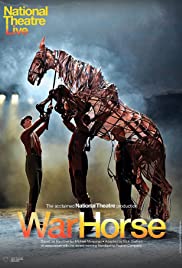
warhorse

And on Sunday, still in Toronto, we saw the Mirvish production of War Horse, which really deserves all the praise it has received.

The puppetry used for the horses (and a goose!) is just incredible. Despite seeing people legs and bodies beneath and around the horses, they really seem very horsey, and you gradually don’t even really notice the puppeteers.

The story, of course, is not a totally cheery one, as nothing about the First World War is cheery. It’s interesting, though, how Joey’s encounters with British, Germans, and French in turn shows all in an ultimately sympathetic light. The plot is very well constructed and emotionally compelling.

Toronto Star review: War Horse is bold, brave and heart-stoppingly wonderful

That’s about right.

Toronto building

Photo taken on our walk over to see War Horse

Symphonic prog rock

Last night’s Intersections concert by the KW Symphony was called Prog Rock. But this was not symphonic versions of rock songs, per se. It was symphonic music that either inspired, or was inspired by, heavy rock. For example, there was a composition by Matthew Hinson called, I kid you not, “Homage to Metallica”. It contained not a lick of Metallica music, but definitely had the Metallica spirit.

There was also Grieg’s In the Hall of the Mountain King, which has been covered by tons of rock bands, including The Who. And Anton Mosolov’s Iron Foundry, which was inspired by actual heavy (industrial) metal. And a more modern piece by Paul Stanhope called Throbbing, evoking the sound of a police car chase around the neighborhood.

All of this loud, heavy music was a challenge. (Definitely the first time I was handed ear plugs at a symphony concert—though I didn’t find I needed them.) In fact, Edwin Outwater included a couple lyrical Satie Gymnopédie numbers as interludes. “This concert,” he said, “needs a palate cleanser”.

The grande finale of the evening was a piece by Nicole Lizée commissioned for the KW Symphony: 2012: Concerto for Power Trio. This one was inspired by, and did include bits of, Rush music, but elaborated upon, distorted, sped up… Like hallucinogenic Rush, Lizée (who was there) said. It included the classic Rush music trio of guitar, bass, and drums.

It was my favorite piece of the evening. And Jean’s least.

I guess Rush is always polarizing.

————————————-

Also, some interesting material about the last Intersections concert, Quantum: Music at the Frontier of Science.  First, Paul Wells, from Macleans Magazine, has written an article about it, and the positive response to it from the people of KW (two sold-out shows).

And you can sample of it yourself, from YouTube. Excerpts from the show:


And a documentary about the making of the show:

Movie review: The Artist

We got out to see this one the day before the Academy Awards were on.

*** The Artist (November 2011) – Theatre
Jean Dujardin, Bérénice Bejo. The advent of “talking pictures” spells the end of one star’s career and the rise of another’s.

Image from The Artist

She says: Strictly speaking, this is not a “silent” film. There is sound all the way through (mostly music), and the way the sound is used is one of the most interesting aspects of the movie. Because the story is pretty simple—pretty much A Star Is Born, where the older male movie actor’s career declines as the young woman’s rises. And they happen to be in love, and that makes it all very awkward.

It’s quite enjoyable, though. Although not necessarily more than so than the other Oscar-nominated movies I’ve seen this year: Midnight in Paris, Moneyball, The Descendants, and The Help, all of which I probably liked at least slightly more than The Artist.

He says: I didn’t like it that much. Not using spoken dialog made the whole thing seem stretched out, and I got tired of the main character’s self-pity. I think my favorite Oscar-nominated movie was Midnight in Paris, though the other four were also good.

Music as weirdly beautiful as the universe itself

Kitchener Waterloo Symphony’s performance of “Quantum: Music at the Frontier of Science” began with a warning from conductor Edwin Outwater:

Some of the music we’re about to play may drive you nuts. You may not like it.

But that’s OK.

Part of the Intersections series, this concert was meant to explore how the work being done in theoretical physics influenced classical music. It was a collaboration with KW’s Institute for Quantum Computing. It featured a narrative and some visuals giving a brief history of physics, particularly the quantum part, with additions from Outwater explaining how these had influenced the piece we were about to hear. Raymond Laflamme, Director of the Institute for Quantum Computing, also participated.

Quantum Mechanics scoreWe were eased into the whole thing with Newtonian physics, solid and elegant, as represented by the first movement of Mozart’s Symphony No. 29 in A major. Then, it was explained, delving into the realm of quantum mechanics seemed to put all that in doubt. We had particles that could be both here, and there. Elements that didn’t behave in a mathematically cohesive way. Physics theories that no longer aligned.

This uncertainty affected the artists of the times. As an example, we heard an early piece by Anton Webern, excerpt from Langsamer Satz, which was very grand and beautiful in a Wagerian way. Then a later one, in which he starts to explore dissonance—Ruhig schreitend. You wouldn’t guess it was the same composer.

More directly exploring this opposition was Charles Ives’ The Unanswered Question, in which most of the orchestra plays a beautiful melody, but it is interrupted by a trumpe, moved to the back balcony, asking questions that the woodwinds, from the side balcony, then try, but fail, to answer. It was a great piece to listen to, really; I’d like to get a recorded version of that one.

After the break we were introduced to a piece by Henry Brant, On the Nature of Things (after Lucretius). The theme at this point was composers coming to terms with, and indeed embracing, the weirdness of quantum physics. Brant’s contribution was to add another dimension to orchestral interpretation: geographic space. He was very concerned with where the musicians were located in the room. So the piece had some of the symphony in their usual locations on the stage, others were placed above, beside, and behind us.

And it does make a difference, hearing the music in “surround sound”.

Up next was a John Cage piece called the Atlas eclipticalis, which was inspired by the cosmos itself. He created the score by superimposing musical staves over the star-charts in an atlas. Brightness of the stars was translated into the size of the notes in the composition.

Finally, we came to Iannis Xenakis, who was both a scientist and a musician. He would start with mathematical equations, and convert these into stanzas. And he would assemble his pieces with the aid of a Fortran computer, lending the final result a little randomness. The resulting piece, called ST/48-1,240162—did have repeating musical themes, but they didn’t move around the symphony in the expected, “classical” way. It did have sort of computer, sci-fi feel to it. Though it went on for 11 minutes, it was not unpleasant to listen to.

So despite the warnings, it was actually a very enjoyable evening at the symphony, one that worked the brain cells in a new way.

Jordis Unga

If there are any other Rock Star: INXS fans out there: Jordis Unga, who started out really strong on that show, then kind of fell apart in the later stages, made quite the splash on the last episode of The Voice. Her energetic performance of McCartney’s “Maybe I’m Amazed” had three judges fighting over her, and she ended up on Team Blake.

Rock Star and The Voice had similar qualities that made me prefer them over Idol (which I don’t watch now—but I did see a few seasons of the Canadian one):

  • No hopelessly delusional, bad-singer contestants. If they’re on air, they’re at least pretty good.
  • Many ages represented, not just kids.
  • An appreciation for a variety of voices and a focus on developing their own style, not on being able to sing everything.
  • The judges get a say in who stays and who goes. (The people aren’t always right.)

The Voice‘s blind audition format also means that you end up with a wider variety of looks, and they cover a broader range of music than rock. Both shows had fairly insipid hosts, but you can fast-forward them. (Or, with PVR you can.) It remains difficult to warm to Christina Aguilera, she of the always over-tight tops and strangely mannered air, but the other judges are cool. And at least Christina really can sing.

Anyway, I’m really happy to see Jordis again, and hope with greater maturity, she can hold it together better this time. The video is of probably her best performance on Rock Star, singing Bowie’s “The Man Who Sold the World”:

Classical Mystery Tour

When asked who they’d like to go back in time to see in concert, a lot of people say, “The Beatles”. Which would be such a wasted opportunity to break the laws of physics!

The Beatles were a great band, obviously, but live? Pick The Who, The Stones, or Hendrix instead. Or even The Kinks. Heck, pick Paul McCartney and Wings! Any of those would be so much better than the mass hysteria and constant high-pitched screaming that was a Beatles concert. You’d barely be able to see and certainly couldn’t hear the band. They couldn’t even hear themselves. There is a reason they stopped touring.

Beatles on Ed Sullivan

And so, The Beatles leave a legacy of great albums that they never performed live, or performed only poorly. A great big, blank canvas into which many a tribute act has followed.

As a teenager, I saw Beatlemania in Toronto, a tribute that mixed film with live music to cover the history of the Beatles. And in Timmins, I saw another, more straight-up Beatles tribute band, just playing a concert at a hockey arena. More recently, one of the best Jeans’n’Classics concerts I’ve ever seen was based around the Beatles Abbey Road album, featuring Rik Emmett and Alan Frewe, among others. Las Vegas’ Beatles Love show, by Cirque du Soleil, was both touching and astounding. Less successful was Classic Albums Live tribute to Sgt. Pepper, as the efforts at reproducing the album so exactly seem to take all the life out of the live performance.

So I was a little worried about Classical Mystery Tour, as the pre-show interviews emphasized how they went back to the original albums and tried to re-create the symphonic score. I also wasn’t too sure what to think when I saw the odd stage setup, with the symphony fairly far back on the stage, behind sound barriers.

But from the opening notes of “Got to Get You into My Life”, the cast quickly put my fears to rest. They were interactive, relaxed, somewhat improvisational—all around very entertaining. They did provide a reasonable simulation of what might have happened had the actual Beatles ever been able to play their songs live with a symphony, and without all the squealing.

They came out initially garbed in Ed Sullivan Show-style suits, then during “Yesterday”, everyone but “Paul” left the stage, and came back in Sgt. Pepper gear. (“Paul” caught up with them partway through the next number.) Highlights of the first half included hearing the amazing Larry Larson on the “Penny Lane” trumpet solo; “A Little Help from my Friends” as sung by their drummer, a much better vocalist than Ringo; and a searing performance of my favorite Beatles song, “A Day in the Life”, which closed out the first half.

Beatles in Pepper gear

It was a pretty good turnout for the show, but it seemed to me that the crowd was a bit subdued—at least those in front and beside me. Who were probably mostly symphony subscribers first, Beatles fans second.

Nevertheless, everyone really seemed to get into it during the second, with “Ob-La-Di, Ob-La-Da” turning into a major clap-along, singalong, fun-fest that mostly continued into “Yellow Submarine”. Since I’ve been reporting on clothes, I’ll say that this half featured the hippie Beatles look, complete with John’s white suit, long hair, and mustaches.

They also broke out of the strictly Beatles format and gave us “Live and Let Die”, one of the numbers that best took advantage of the symphonic power available. For fairness, we also got “Imagine”. We weren’t sure if there would be encores at this type of show, but there were 2 or 3, actually. The first was “Hey Jude” (after a bit of a humorous false start, as “George” struggled to get guitar plugged in, prompting a do-over: At least we know it was all live), which of course become another singalong, men vs. women at one point. (“Paul” declared the women had it.)

Then we had just the band on “Twist and Shout”, for which the audience stayed on their feet dancing, and “whoo-ing” along at all the appropriate times. And “Can’t Buy Me Love” to close out the show.

Definitely one of the most fun symphony concerts I’ve ever been to.

——————–

Our programs didn’t include the set list, so the first half is approximate, based on what I recalled at intermission. The second half, I actually wrote down as we went.

Part I

  1. KW Symphony – Beatles medley, including “Lucy in the Sky with Diamonds”
  2. Got to Get You Into My Life
  3. I Saw Her Standing There
  4. A Hard Day’s Night
  5. Yesterday
  6. All You Need Is Love
  7. Eleanor Rigby
  8. Penny Lane
  9. Here Comes the Sun
  10. Sgt Pepper’s Lonely Hearts Club Band / A Little Help from My Friends
  11. A Day in the Life

Part II

  1. Magical Mystery Tour
  2. I Am the Walrus
  3. Ob-La-Di, Ob-La-Da
  4. Yellow Submarine
  5. Come Together
  6. Dear Prudence
  7. The Long and Winding Road
  8. Live and Let Die
  9. Imagine
  10. Golden Slumbers / Carry That Weight

Encores

  1. Hey, Jude
  2. Twist’n’Shout
  3. Can’t Buy Me Love


His name is Prince. And he is funky.

Without intending this all to coincide, I’ve been plunged into a world of 1980s music nostalgia this week. I saw Rock of Ages Thursday, I began reading a book called Talking to Girls about Duran Duran (possibly more on that later), and I saw one of my favorite artists of the 1980s, Mr. Prince Rogers Nelson, in concert on Saturday, at Toronto’s Air Canada Centre.

I’ll cut to the chase on that last one: This was quite possibly the best rock concert, category “Hockey Arena”— that I’ve seen. The only real competition is U2 back in Montreal during their Joshua Tree tour. As my memory is not quite good enough for a true comparison, let’s call it a tie.

Prince has continued to record quite prolifically, up to two years, but I have to say I stopped listening to the newer material after 1992. But this show obviously focused on that earlier material, because I knew almost every song.

It started about 45 (?) minutes late (no opening act), immediately got us up singing and clapping along to “Purple Rain”, and never really stopped. The seated moments were few, as the energy coming from the stage kept compelling us back to our feet to dance and attempt to sing along to Prince’s complex vocal gymnastics. It’s difficult to believe this guy is 53 or whatever, as he pretty much looks, sounds, and moves as he did in the 80s. He can still hit all the high notes, his dance moves don’t let up, and he remains a guitar virtuoso.

And despite the focus on older (and therefore better known) material, it never felt like a nostalgia fest. He often reinterpreted the numbers, bringing an added soulful-ness to “Little Red Corvette”, and even more funk (who knew it was possible?) to “Kiss”. He also often mashed songs together, segueing from one to the other in interesting ways, thus covering even more of his impressive canon of hits. He even included a version of “Nothing Compares to U”, written by him but made famous by Sinead O’Connor, which reminded me of the many other artists who had hits with Prince songs (Manic Monday, I Feel for You, The Glamorous Life, When You Were Mine, and on, and on…).

I’d heard that he wasn’t doing his “dirty”songs anymore, and I kind of wondered what would be left, but he seems to have a pretty loose definition of what’s “dirty”, since Controversy, Raspberry Beret, When Doves Cry, Take Me With U, and Cream were included. And he also simulated a great deal of, um, passion on the floor during Little Red Corvette. He even played the intro to Darlin’ Nikki during the encore—though did stop there with a “Nah-ah! You don’t get that!”

His band was wonderful, and I loved that now as always, most of them were women. (Prince seems to truly love women, not just sexually, but also spiritually and musically. Three spheres I don’t think he separates.) They also got to shine at times, including in a cover of Sarah MacLachlan’s “Angel”, one of a number of covers he included—such as Michael Jackson’s “Don’t Stop Til You Get Enough.”

The stage was in that male / female symbol shape that Prince once used as his name. We were sitting facing the round end, 22 rows up, which were pretty decent seats. Prince and band made their way around to all points throughout the evening, and we could always look up at the screen when they weren’t at our end. (I wish I could include a picture, but they made me check my camera, which seemed pretty peculiar, since nobody had to check their smart phones… But anyway.)

Friday night, from what I understand, he did six encores, resulting in a 3 hour, 15 minute show. We had to be content with just one encore (though an awesome and long one it was), and a show that was probably only, 2 and a half hours? There was an after-party at a bar, though. My sister and I decided not to attempt attending that, though, because a) We figured the crowds would be insane b) We don’t have the energy of Prince, so we were tired and c) We really couldn’t make out the name of the bar, which was announced on the loudspeaker at the end in a bid to get us to leave, already.

Other reviews:

Toronto Star
National Post
Scotchneat

The curious appeal of Rock of Ages

Rock of Ages is a musical built around rock anthems of the 1980s. It had a run in Toronto, and is playing at Kitchener’s Centre in the Square this week.

But despite good notices, I’d been dragging my feet about seeing this one. I was a teenager in the 1980s, but musically, I was into the New Wave British stuff: Duran Duran, Adam Ant, Spandau Ballet, Billy Idol, U2, Culture Club, Howard Jones… The stuff in this musical? Journey, Whitesnake, REO Speedwagon, Poison… That would be the 1980s music I didn’t like. At all. The musical even includes possibly the worst rock song of all time, “We Built This City” by Starship.

Finally, though, I was lured in by a package deal involving the show + dinner at Verses. (Though note the advertising for this is deceptive; you don’t get any discount on the ticket, just on the meal.)

As the musical began, it became clear that a big part of the premise was trying to save the Los Angeles Sunset strip from being cleaned up and redeveloped. Seriously? Los Angeles? OK, I’ve never been there, but my impression, and what I’ve heard from people who have been, is that this isn’t a city that inspires great passion for preservation. The place seems like more of a necessary evil than anything else.

Still, I found I couldn’t help but be drawn in by the good-natured vibe of all the whole thing. Take, for example, the horrid “We Built this City”. This plays back as an echo from the chorus from the German developer who wants to tear everything down and start anew. “But we built this city on rock’n’roll!” It’s a short snippet, it’s performed better than the original (how could it be done worse?), and it’s funny.

And that sort of thing just keeps winning you over. It’s not taking itself seriously. One character keeps breaking the fourth wall (rather 90s, that) to comment on the play’s structure and how it plays with the musical conventions. That’s funny, and so are a lot of the other bits. A lot of the singers, particular strip club owner Mother and lead actor Drew, have fantastic voices. Only parts of the songs are performed, then you’re on to another.

And, well, not *all* the songs suck. I do have some fondness for “Hit Me with Your Best Shot”—much more comfortable here than in the original, as sung by male actor Franz, possibly the funniest character of all, and “Cum on Feel the Noize”, soundtrack to an exuberant moment at the rock club, and even “We’re Not Gonna Take It”—even though it’s used to protest the destruction of a sleazy rock club.

It’s also kind of a sexy musical, with the attractive young cast making the most of their assets. Male and female cast, I would add. (Even though I don’t really remember the 1980s as being so sex-drenched, but whatever.) And I did love the unexpected, big gay love story in the middle.

So, I clapped, I cheered, I wished I had bought tickets earlier so that I would have been in better seats. It is a pretty impressive achievement to put together such an appealing show on such an unpromising premise.