This new Spike Lee film is based on a true story. In the early 1970s, Colorado Springs’ first African-American police detective, Ron Stallworth, inadvertently begins an undercover operation into the KKK when his request for documents leads to regular phone calls with the organization. When it comes time to actually meet with members of the group, a white detective is conscripted to pretend to be him.
I went in knowing generally that Spike Lee had “dramatized” the real-life story somewhat, but no details. I looked that up afterward. I couldn’t quibble with his additions, as they did make for a more engaging story—and allowed for more interesting roles for women. But what’s particularly interesting is that some of the more outlandish scenes actually did happen.
The movie is as humorous as the trailer suggests, but it’s not flippant. There are moments when the horror of white supremacy is made very real. And while the movie has a very 70s look and feel, the references to today are overt. The final scenes, jumping ahead to Charlottesville, left the whole theatre dead silent.
Concerts, plays, stand-up, and movies are sometimes an escape from current events, sometimes a reflection of it.
Beethoven 9 / Mijidwewinan
The two final concerts of the KW Symphony’s season, featuring new conductor, Andrei Feher, were both sellouts. The draw, besides Feher himself, was the performance of Beethoven’s Symphony No. 9 in D minor, a choral piece better known as the Ode to Joy. It’s always a worry, when facing a 65-minute symphonic live performance: Will my pop-music brain be able to stay focused for that long?
I have found a new (to me) podcasting app Pocket Casts and it’s very good. It has solved all my podcasting problems: It gathers all podcasts in one app, whereas before I was bouncing between iTunes, Google, SoundCloud, and a browser. It keeps my spot in each podcast I’ve started, even when switching devices or playing through Sonos or Chromecasting. It can even cut silences out of each episode, making it each one slightly shorter.
Wait, did I say it solved all my podcasting problems? There’s one it’s likely only exacerbated, even with the seconds or minutes saved by cutting out silences: finding time to listen to all the ones I’d like to.
Some people do this by listening on what they call chipmunk speed, playing it at a faster speed than recorded. I tried that, but I just don’t like the weird sound that results, even at only 1.5x faster.
I can’t attend to a podcast while reading, or having a conversation, or working (because fortunately my job’s not that boring), or writing, or anything else in which I have to attend to my thoughts. My commute is extremely short, which is wonderful in most ways, but means that it’s really not enough time to make much of a dent in a podcast episode.
And I just don’t want to give up my daily habit of listening to music while making dinner. I also don’t think they would be as good as soundtrack to my Monday night cleaning routine as my “high-energy songs” playlists.
“Know what would make my life better? Listening to music less often.”
— No one, ever.
So I found myself seeking out extra chores I can do, for which a podcast would be a useful adequate. Now, anything that can motivate me to do some tidying up is beneficial. But I still prefer cooking to tidying, so I also find that I’m now trying out more dessert recipes. The value of that is debatable.
(On the other hand, you can definitely overdo this podcast thing, as revealed in this article: I Listen to 35 Hours of Podcasts Every Week. Is That … Bad? Answer: yeah, kind of… And towhich I say… 35 hours a week! Jesus. When do you do… anything else?)
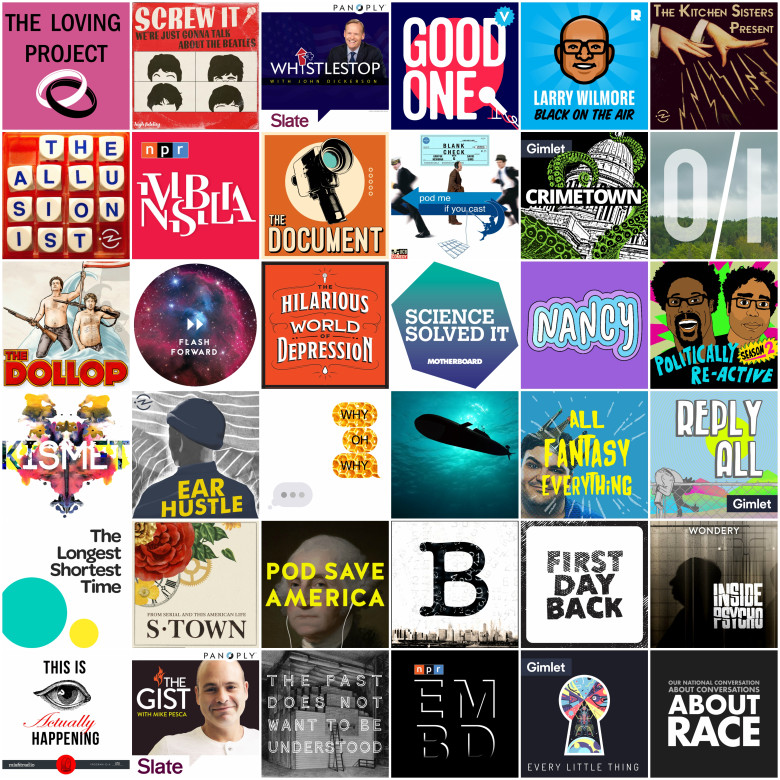
There seems to be podcasts about every topic under the sun, and I’m not always sure how I stumbled upon the ones I try to listen to semi-regularly. But here’s a sampling of them and what I like about them.
Psychology
These are nice because, being less attuned to current events, you can more cherry-pick through them and feel less pressure to listen to them soon after their posting date.
Good old CBC Radio—the original podcaster! This particular series is by Terry O’Reilly and is on the subject of advertising, or “the art of persuasion”. Recent episodes have covered jingles (with a WKRP reference), use of celebrities (early Ellen Degeneres!), brand myths (no, little Mikey from the Life cereal commercial didn’t die of pop rocks + coke. In fact, he’s alive and works in advertising). I’ve always loved this show, but rarely catch it on the radio. Podcasts to the rescue.
Hidden Brain is by NPR: the CBC of the US! This is how it describes itself:
Hidden Brain helps curious people understand the world – and themselves. Using science and storytelling, Hidden Brain reveals the unconscious patterns that drive human behavior, the biases that shape our choices, and the triggers that direct the course of our relationships.
One three-part series that actually changed my own behavior a little was on the subject of sleep: The “Swiss Army Knife” Of Health. It makes a pretty compelling case that while sleep feels like a waste of time, it’s really important. And that while those who routinely get only 5 or 6 hours of sleep a night might think they’re managing just fine, they actually aren’t. They just no longer notice how tired they are all the time. But they are chronically under-performing, both mentally and physically. To be at your best, you need an “uncompromising 8 hours of sleep.” Every day.
Pop culture
Pop culture stuff is timely, but not that timely, especially since I almost never see movies on opening weekends, read books when they first come out, or watch TV live (love my PVR). So I can go back a few weeks on the pop culture ones without them feeling irrelevant.
This one, hosted by two young women, looks at all aspects of pop culture—music, TV, movies, podcasts, books, magazines—from a feminist perspective. I’ve gotten some really good recommendations from it, along with some great insights; for example, their episode about the movie Get Out pointed out a whole lot of racial metaphors and symbols that I had missed, and made me admire the movie even more.
The only issue? And I don’t know how to say this without coming across as a disapproving granny, but wow, they sure swear a lot. I know, there’s a lot for American women to be angry about right now, and you gotta speak your truth. I just feel the arguments might be a bit more effective if the colorful language was applied more judiciously.
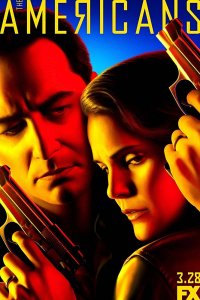
Where Backtalk is very broad; The Americans Podcast is super-specific. It’s not about all the people living in the country to the South, but about the FX TV series by that title that tells the story of Russian spies in 1980s who pose as an all-American couple, complete with all-American children. As previously reported, Jean and I love it.
It’s currently in its sixth and final season, and I have just discovered this podcast, which contains interviews with the cast, crew, and creators of the show, and thus is strictly a post-episode listen, as it’s rife with spoilers. This season is setting up to be epic.
Politics
Political stuff, especially American, is just moving with break-neck speed these days. These are the ones I don’t like to wait too long after post date before listening.
Crooked Media was a response to the election of Trump. Most of its members used to work for President Obama in some capacity. So they’re not unbiased, but the aim is to have “better conversations about politics.” They have a ton of podcasts, and I’ve sampled various ones. But my favorite is Lovett or Leave It.
Some sincerely cool Crooked Media merch
Lovett or Leave It is taped live Friday nights in front of an audience, who participates in some segments. It’s a humorous, improvised look at the week’s stories in US politics. To add to the many other sources of humorous looks at US politics. What’s different here, I guess, is that it’s a lot of super well-informed people cathartically doing things like playing a clip from Fox news, saying “OK, stop”, and responding to the stupidity. Or turning the ridiculousness into a game. Or spinning a wheel to decide which topic to rant about.
This is a relatively new one, and it’s about Canadian politics! I was drawn to it because they seem to be especially covering wonky issues I get somewhat obsessed with, like carbon pricing, why doesn’t the NDP seem more viable in Ontario, and what’s up with Sikh politics.
It features journalists Justin Ling and Jen Gerson, who are supposed to in “opposition” from left and right positions, but it took me two episodes to realize that was the idea, because neither of them is really that extreme or partisan. Which I think is good (and also kind of Canadian).
This Globe and Mail article, called I have forgotten how to read, was posted some weeks ago now, but the opening sticks with me [bold added by me]:
Turning, one evening, from my phone to a book, I set myself the task of reading a single chapter in one sitting. Simple. But I couldn’t. There was nothing wrong with my eyes. No stroke or disease clouded my way. Yet – if I’m being honest – the failure was also not a surprise.
Paragraphs swirled; sentences snapped like twigs; and sentiments bled out. The usual, these days. I drag my vision across the page and process little. Half an hour later, I throw down the book and watch some Netflix.
Out for dinner with another writer, I said, “I think I’ve forgotten how to read.”
“Yes!“ he replied, pointing his knife. “Everybody has.”
“No, really,” I said. “I mean I actually can’t do it any more.”
He nodded: “Nobody can read like they used to. But nobody wants to talk about it.”
I identified with the gist of the remainder of the article, which is that the Internet has rewired our brains and made it difficult for us to focus on extended text, such as a book. Heck, even a brief Internet outage (maybe 2.5 hours) one Sunday left and my husband and I feeling like lost, disconnected souls, missing our regular jolts of online distraction.
But still, that opening example… You literally can’t sit and read one chapter? That just seems impossible. Like, how boring was this book you were trying to read? Maybe don’t go for Moby Dick or Middlemarch. Try some hot fiction. A lively bio, maybe.
On the other hand, if actually true, it’s made me feel slightly superior, because despite my web-addled brain and Twitter addiction, I still manage to read a book chapter pretty much every single day.
Sure, it takes a bit of conscious effort. No screens in the bedroom (other than an eReader), TV off by a certain time. And quite deliberately having at least two books on the go, so that my Internet-addled brain has variety and choice. Normally, I try to make sure it’s at least one fiction and one non-fiction on the go.
Here’s a few I’ve gotten through—or am working on—recently.
Caught by Lisa Moore
Nobody I’ve talked to seems to have of this book, even though it was supposedly a best seller. It’s a Canadian novel, set in 1978, about a young man convicted of drug dealing who escapes from prison. He then connects with his former partner in crime, who evaded incarceration, for another possible job. But he might not be evading the law as well as he thinks….
This was a well-written novel, with each chapter acting like a short story in itself, with its own suspenseful arc.
I was pleased to see that CBC has adapted the novel as a mini-series, and even more pleased that they’ve changed some plot elements in an interesting way. Now I don’t know how this version will end, as I’m thinking it can’t be the same as in the novel…
The Handmaid’s Tale by Margaret Atwood
Yes, it was about time I read this, and yes, it came to mind because of the popular mini-series, even though I only watched the first episode of that, because then the free Bravo preview ended, plus I found it kind of dark.
Compared with that one episode of the mini-series, the novel was not as depressing as I’d expected. The episode quickly presents the story of Offred’s capture and “orientation” into the life of handmaiden; the novel spends more time with her immersed in that life, with flashbacks occurring only later on in the book. And it’s overall less graphic, I suppose.
I “enjoyed” reading it, if that’s the right word? It kept me engaged, anyway. And not having seen the rest of the mini-series, I didn’t know how everything would play out.
Mortal Error: The Shot That Killed JFK by Bonar Menninger
This a non-fiction work about what I think is the most convincing take on the Kennedy assassination: that the President was accidentally killed by one of his own security men. It documents the work of ballistics expert Howard Donaghue, who was asked to prove whether Oswald could possibly have fired three times in the necessary time span for him to have acted alone. Donaghue managed to replicate that feat, but wanted to do more research before giving his own stamp of approval on the official account. Hence begins years of research.
He discounts some of what conspiracy theorists insist prove their case; the “magic bullet” problem. He explains that by how Kennedy and Connolly were seated relative to one other, and by the type of bullet used. But he couldn’t buy everything about the official account, either, concluding, for example that the first shot did ricochet onto Kennedy but not Connolly. And he was especially troubled by the fatal head shot: both its trajectory and its effect. Leading to his eventual conclusion that it was actually fired from a different location and type of gun.
I know exactly nothing about gun and ballistics, of course, but the evidence laid out here just works better for me than any other I’ve heard. The official story, about one deranged man acting alone, makes it hard to explain why so many officials did act in such weird, suspicious, cagey ways—breaking Texas law by stealing away the body, later losing the President’s brain (!). But arguing that Oswald was either just a patsy or a party to some government conspiracy doesn’t work that well, either; he really did seem the deranged loner type to try something like this, and he did murder officer Tippet.
But that Oswald alone tried to murder the President, and that one of the security men reacting to the shooting tripped and accidentally fired? And that officials didn’t want the world to know that accident happened? Yes, that makes sense to me.
There was a documentary made about this theory in 2013. (The book was published in 1992.) Trailer below, but the whole thing seems to be posted on YouTube.
My Real Children by Jo Walton
Someone had recommended Jo Walton to me as an author, and I picked this particular novel because it was the only one immediately available for borrowing (as an ebook) from my library. It’s a novel about a woman whose life starts off on one trajectory, then splits off in two directions based on a pivotal decision. After the setup chapters, the book alternates between what happens when she says “yes” versus what happens when she says “no”.
It’s not only her own personal life that veers in different directions in each case, but world history itself. Early on we learn that in one case, President Kennedy (him again!) was killed, while in the other he was not. So you initially think that one life will take place in “our” world vs. an alternative one. But no. Kennedy is killed is different way, and a whole other history follows (such as his brother not being assassinated and instead becoming President himself).
With the mix of two personal stories and two alternative world histories, I got totally caught up in this. My original plan was to read what I could doing the three-week borrowing period then check it out again later, but no, I found I really wanted to finish it! The only downside to that was that it meant reading the later chapters in rapid sequence, which got pretty confusing—there was so many characters (friends, children, partners, grandchildren), not to mention varying historical facts—to try to keep straight in each “life” at that point.
I was wondering how this would all come together in the end. The answer wasn’t entirely satisfying, but I didn’t regret the journey one bit.
The Last Black Unicorn by Tiffany Haddish
The current read, one I am still working on. (Plus, it’s a book club book, so discussion is to come.) Early part is a really sad story, told by a very funny person.
Call Me by Your Name by André Aciman
Just anticipating this will be my next fiction read, as that is the Oscar-nominated movie that really had my heart this year. Whereas my brain said Get Out might have been the best in terms of ideas. But the Academy thought Shape of Water, of course—it was also good. Jean and I liked The Post also, but it was more conventional than the other five nominated movies I saw.
I did not watch the actual telecast, beyond the opening monologue. I had reading to do.
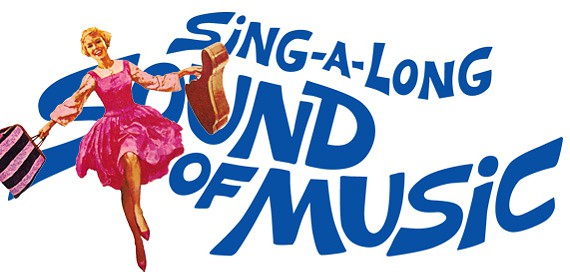
The KW Symphony recently presented “Sing-Along Musicals”! I got tickets even though Jean is not so big on “singing along”. When I saw the program, I wasn’t so sure how much of that I would be doing, either. South Pacific? Oklahoma? The King and I? Those are some old-timey musicals! Did I even know any of the songs from those?
Turns out I did, at least somewhat. “I’m Going to Wash That Man Right Outta my Hair” has not always been a shampoo jingle, it turns out. Oklahoma includes “Oh What a Beautiful Morning”, “The Surrey with the Fringe on Top”, “ I Can’t Say No”, and “People Will Say We’re in Love”. The King and I has “I Whistle a Happy Tune”, “Getting to Know You”, and “Shall We Dance”. And they projected the lyrics, so you didn’t need those memorized.
The second half got a bit more modern, with “Defying Gravity” (done as a solo, mind you), selections from The Sound of Music, and a surprise encore of “Let It Go” from Frozen. The whole evening was fun, the concert featuring a youth choir, two talented young singers leading the sing-along (when they weren’t solo-ing), and young dancers making an appearance during some numbers. Conductor John Morris Russell, of the Cincinnati Pops, was lively as usual. So Jean enjoyed it also.
It got me thinking, though: What would be my picks if programming a sing-along musicals concert? Excluding any musicals based on the works of great rock and pop artists (such as We Will Rock You, Tommy, American Idiot, Mamma Mia, and Jersey Boys), because that would be cheating. And I guess that also excludes Moulin Rouge, though kudos to Baz Luhrmann for truly re-imagining all those pop songs in that music.
But merely having mentioned Moulin Rouge, I can now include this Virtue and Moir dance video, right?
First up, musicals with multiple great numbers in them, so we could do a bit of a singalong medley with those. In no particular order…
Gone are the days where you go into a film without a whole lot of Internet chatter about it filling your brain…
The Disaster Artist
This is a movie about the making of a “so bad it’s good” movie, The Room. I’d never seen The Room, but I had heard of it, because it plays regularly at the local repertory cinema. Before going to The Disaster Artist, I listened to a How Did This Get Made? podcast that combined an older interview with Greg Sestero, a lead actor in The Room, and a new interview with James Franco, director and star of The Disaster Artist.
That did give me some insight, such that I, for example, understood faster why it was funny when Tommy Wiseau insisted on randomly throwing a football around with Greg Sestero. I don’t think that advance research is necessary to enjoy this film, though. That scene was funny regardless, thanks to Wiseau’s sheer incompetence at throwing the ball.
Indeed, overall, this movie was one of the funniest I’ve seen in a while—particularly the part where The Room is premiered to an incredulous, sold-out audience. But it’s an interesting story as well, because Wiseau is such a mysterious and eccentric character, and his friendship with all-American Greg is unexpected.
As for the acting, well, James Franco lost himself so much in the character of Tommy Wiseau that Jean didn’t even realize that’s who it was; he thought that James played the character of Greg (in fact played by James’ brother, Dave). And it’s chock full of cameos by the likes of Sharon Stone, Megan Mullally, Nathan Fielder, and Judd Apatow.
[At least some of the reports of James Franco’s “bad behavior” had come out just before I went to see this. Obviously, I concluded that I still wanted to go. Your mileage may vary.]
Blade Runner
This would be the original 1982 Blade Runner, which I thought we should see before seeing Blade Runner 2049, given that Jean had never seen the original, and I had forgotten almost everything about it—other than it starred Harrison Ford and involved androids.
The version we watched was the “Final Cut”, so it lacked the explanatory voice-over and slightly extended ending of the original. Mid-way through, we were both a bit confused about what was going on. But the story does come together, and the movie as whole is thought-provoking and engaging and has a great look. Interesting that it’s set in 2019. We aren’t as far along as that with androids (I don’t think?), but we have much thinner monitors. (This world was still full of cathode ray tubes.)
What else clangs a bit with modern sensibilities? Jean and I were both taken aback at the “seduction” scene between Deckard and Rachael—because it’s actually a rape scene (albeit one that fades to black). She tries to run away from him. He physically stops her. He insists that she say she wants to be kissed. She never looks anything but frightened.
But I don’t think we’re supposed to read it as an assault, given that later in the movie, Rachael declares that she loves Deckard, and they leave together. Reminding me that Pretty in Pink sees nothing wrong in boys having sex with a passed-out drunk teenage girl, and that Grease has a disastrous message for women in general (“Did she put up a fight?”). How many movies of my youth contain similarly jarring scenes? On that topic, check out Maclean’s column James Bond was a rapist.
Star Wars: The Last Jedi
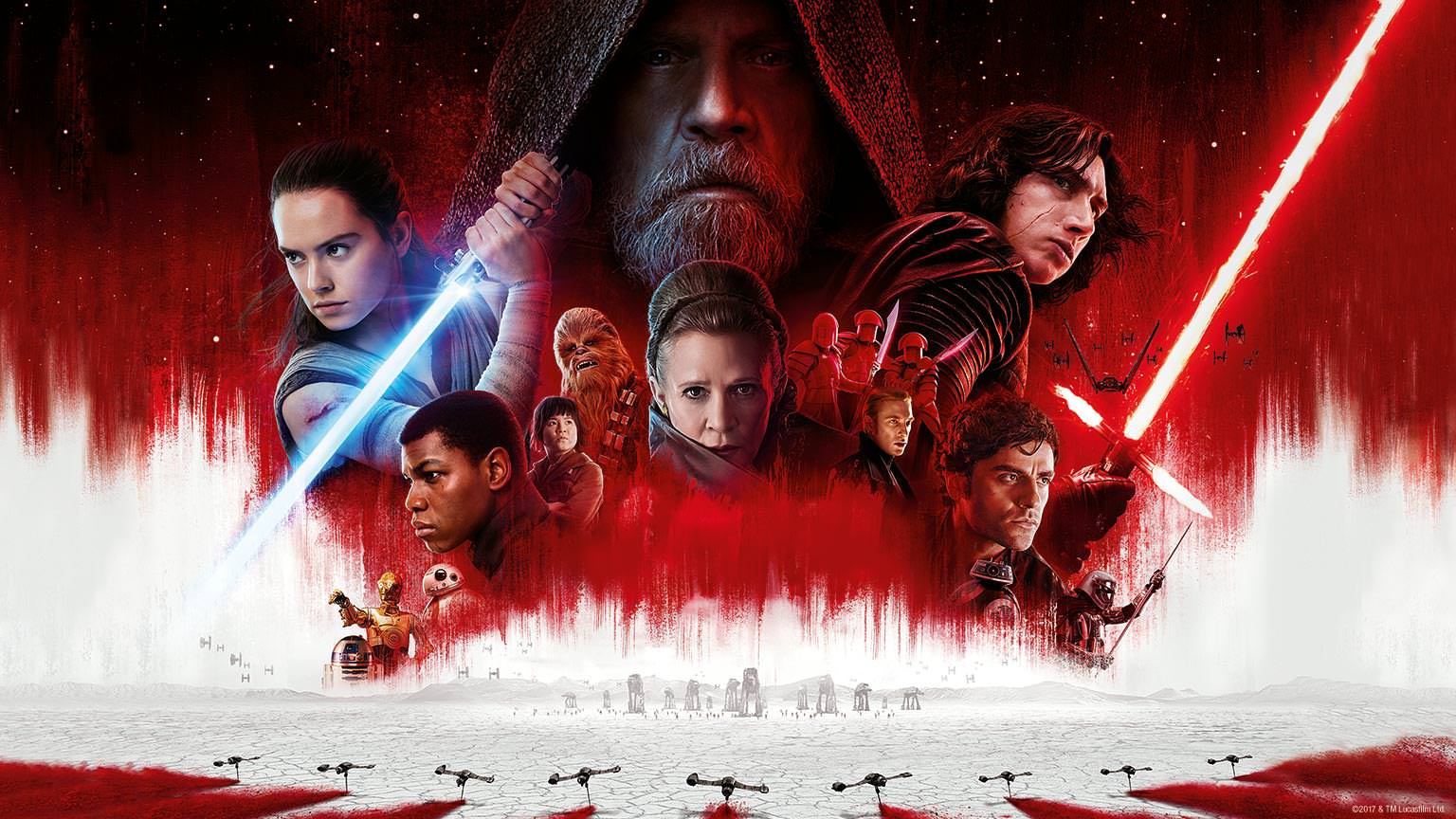
I’m not a “Star Wars person,” and I’m a bit mystified by those who are, really. Still, I got curious about the low fan vs. critics ratings of this movie on Rotten Tomatoes—you’d expect that to be the opposite, if anything. But I also knew that a lot of “Star Wars people” liked this one very much.
I figured I should go see it for myself.
I liked the movie well enough, as did Jean. I was pleased that it did have its own plot, instead of borrowing storylines from the older films as The Force Awakens had. I liked that it bounced between three different stories for much of its run-time; preventing any one from getting too tedious. Having all those strong female characters was great. It was pretty long, but it kept me engaged.
After seeing it, I did some reading on why some super-fans didn’t like it. Certainly for a minority it’s just a matter of sexism and racism (as in, ha ha ha, the men’s right activists who created a nonsensical “no women” edit). But for other critics, seems to me, they just cared too much. That is, they had preconceived notions of what this movie should be and couldn’t handle having those expectations thwarted. They wanted Luke to be a certain way (heroic!), they had their ideas of what was possible with the Force (no astral projection!), they wanted the plot to follow an expected arc (plans should work out!). The movie itself told them to move on from the past, and they didn’t like that.
Whereas I didn’t particular care what happened to Luke (sorry Luke), have no theories of the Force, and found it rather interesting that the plans didn’t work out! (Is the lesson here that you can enjoy the world more if you care less? Hmm.)
That movie is phenomenal on all counts.
Another thing we get is plans NOT WORKING OUT!!! AYYYYYY!! When the fuck do we ever get to see that happen! That was amazing! Shit always works out!
I would note that despite its 48% audience score on Rotten Tomatoes, The Last Jedi was a huge box office success.
Call Me by Your Name
We settled into our theatre seats. The lights lowered as the first of the upcoming attractions was queued up.
“Hey,” Jean whispered to me. “What movie are we seeing?”
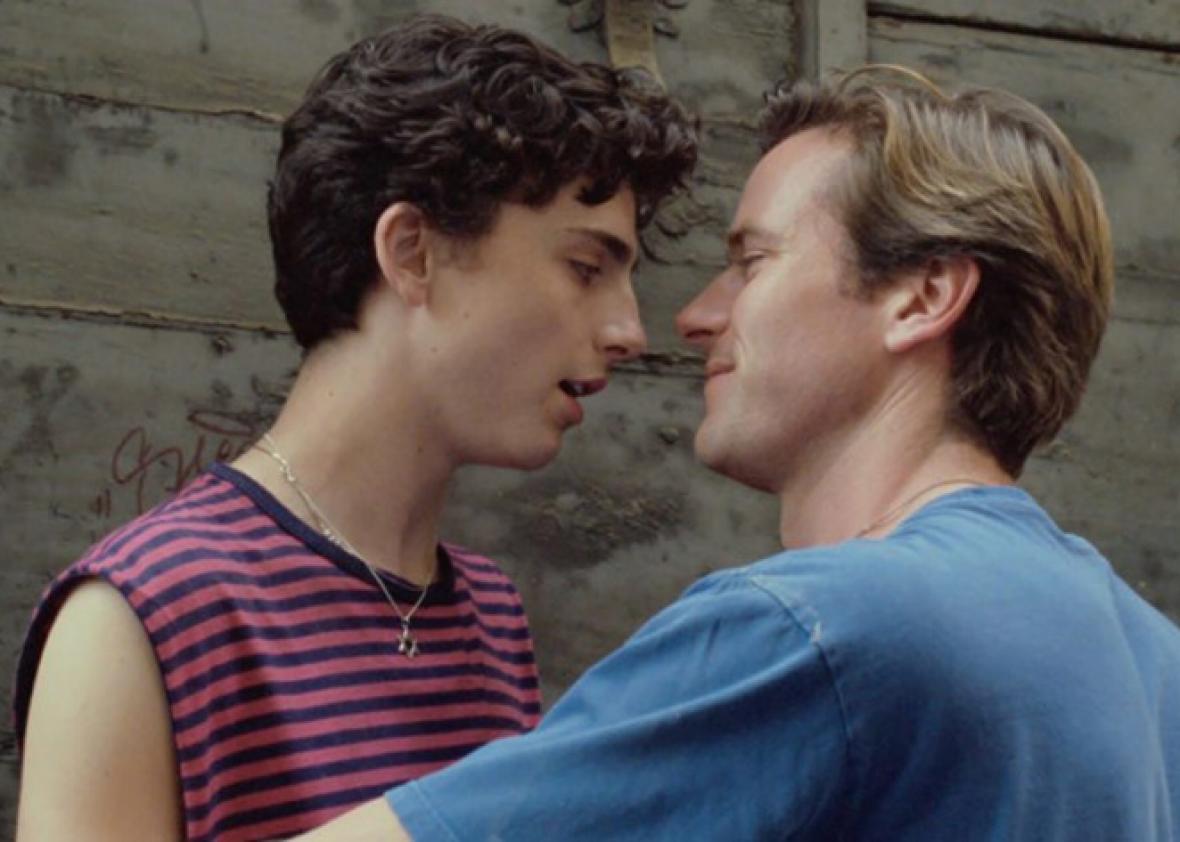
Truthfully, I wasn’t sure this would be Jean’s kind of movie. The issue wasn’t that it’s a gay love story. It’s that it’s not much more than that. It’s a slow-paced, character-driven exploration of growing attraction over one summer, between 17-year-old European Elio and the handsome American doctoral student, Oliver, who travels over to work as a intern for Elio’s father. The kind of movie Jeanoften finds boring.
To both our surprises, he didn’t hate this one—though “it was deadly slow,” as he pointed out.
(I personally would have described it more as “languid”.)
But the issues raised by the relationship kept it interesting, and led to quite a discussion afterward. Like the young woman that Elio starts a relationship with as a distraction from the one he really wants. The movie really lets us off the hook in feeling bad for her, with her sincere expression that she’s fine and that she and Elio will always be friends. Big of her!
Then there’s the age difference. The movie is fuzzy on exactly what that is—Jean guessed that Oliver was 30 (accurate to the actor’s age), but according to the novel it’s based on, the character was 24. At any rate, one’s a teenager, one’s a man. “What if that had been a 17-year-old girl?” asked Jean.
That feels like a bit of a straw man argument, as a movie about a 17-year-old girl and handsome older man would be another movie entirely, one telling a completely different story. The whole point of Call Me by Your Name is that the relationship is not socially sanctioned (it’s set in 1983). That informs everythingabout it.
And for my part, I felt fine about the relationship, as it was so clearly consensual, and initiated, really, by Elio and not Oliver. It’s a lovely movie, one with a twist at the end that I didn’t see coming, and indeed didn’t really understand until I reflected on it a bit later.
Quick takes: Coco and The Third Man
While you can’t count on every Pixar movie being a classic anymore, it’s nice to know that they can still put out great films, as with Coco. I really liked the Mexican concept of the afterlife—one I hadn’t known anything about, going on. And as Jean said, this movie “had a really good message” about the importance of family over personal ambition, about the power of forgiveness. And it looked amazing! Well worth seeing on a big screen.
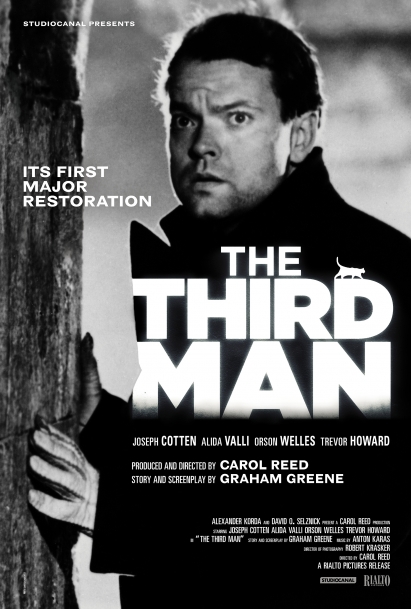
The Third Man is a classic film from 1949, but Jean and I had never seen it. Turns out it’s one of those that does hold up. It helps that it’s set in a particular time and place, post-World War II Vienna. And also that the moral issues it grapples haven’t gone stale. But mostly that it’s an engaging story about an American writer whose convinced there’s more to his friend Harry’s death than he’s being told. He’s not wrong…
We saw Lady Bird last weekend. This indie film is most famous for having attained a record 100% fresh rating on Rotten Tomatoes, meaning that it got positive notices from all 195 critics who reviewed it.
It would be nicely contrarian of me to report that I didn’t like it… but I did. Set in 2002, it’s about a young woman named Christine (who prefers to be called Lady Bird) negotiating her last year of high school in Sacramento, California. Nothing epic or bizarre occurs. She tries to boost her college changes with extracurriculars. She dates boys for the first time. She abandons old friends for new. She consistently fails to please her mother.
But it works because her character and the supporting characters are so strong and appealing, with great acting that makes them all believable. And, because it presents a time of life and experiences that most of us (at least most North Americans) can relate to. Even Jean, who definitely prefers plot-driven films over character-driven ones like this, was able to enjoy the ride. For me, it didn’t hurt that it was centrally a story of women: Christine, her mom, and her best friend are the main characters. Dad, the boyfriends, the brother, were all supporting cast.
Meanwhile, I’ve been reading a new-ish Freddie Mercury biography called Somebody to Love, by Matt Richards and Mark Langthorne. It’s hardly the first Freddie biography ever written (or that I’ve read) and I missed the fine print that this one would be particularly looking at his life in the context of the AIDS crisis. Which I pretty quickly decided was not the context I prefer to focus on. Sure, it was sort of interesting finding out just how far back the disease’s origins can be traced, and that Freddie had had an encounter with “patient zero”, and that Reagan wasn’t quite as bad on AIDS as they say (though he was pretty bad), but overall I found myself skipping over the pages discussing increasing death rates or what symptoms Freddie developed when, preferring the parts that talked about the music and the important relationships in his life.
Those parts were a reminder, though, of the extent of critical slagging Queen endured throughout their career. The reviews were not just negative—they were scathing.
A Day at the Races, 1976: “I hate this album…. All of these songs with their precious impotent Valentino kitsch mouthings on romance, their spotlight on a vocalist so giddily enamoured with his own precious image—they literally make my flesh creep.” NME. (Hey, NME: Homophobic much?)
The Game, 1980: “Less obnoxious than Queen’s last few outings, simply because it’s harder to get annoyed at a group that’s plugging away at bad rockabilly than with one blasting out crypto-Nazi marching tunes.” Rolling Stone (Yes, Nazi comparisons are always apropos.)
The Miracle, 1989: “Addresses the question how much bad taste it is possible to cram onto one album.” The Times.
Few critics at the time seemed to recognize that Queen wrote songs that would endure, become the soundtrack of people’s lives. That in the multi-layered vocals, they developed a sound unique to them. That they four song writers each capable of writing hit songs. That they had one the best rock vocalists. That this band would come to be seen as one of all-time greats.
Both of which got me thinking of the state of professional criticism today, compared with the pre-digital era. For movies, while the influence of any individual critic has diminished compared with the heyday of the likes of Pauline Kael, Anthony Lane, and Siskel and Ebert, as an aggregate, they seem to have Hollywood spooked!
Decades ago, the only way to evaluate a movie before its release was to read reviews in major publications such as the New York Times, the New Yorker or the Los Angeles Times. Today, moviegoers rely on the Tomatometer, a number that shows what percentage of critics recommend the film.
…
It’s no coincidence that the few breakout hits of the summer box office all have scores of 80% or higher… And for lesser films, a very low score can be fatal.
But for music? Aggregate sites do exist, like Metacritic—but I had to look up that fact, because I don’t use them, even though I do listen to music regularly. And the only thing I’ve read about recent music criticism is that it seems to be overly positive now. The original WSJ article is pay-walled, so here’s a report on (and critique of) that article: No, There Weren’t Only 8 Bad Albums in the Last 4 Years.
Why the difference? Well, movies are still something of an investment, aren’t they? Of time, if nothing else: two or so hours you won’t get back if you hated, hated, hated that movie. But often of money also: people still go to theatres to see movies, buy them on disc, pay to rent them, subscribe to movie channels. And they’re still expensive to make, so there’s only so many of them released each month. And there’s no Spotify of movies, really: Current movies are not in constant competition with movies of the past. If you’re into movies, you can focus on and make a decision about each.
But albums? They’re no longer distributed on vinyl discs you can play only on your home stereo system… And it’s really just about songs now, which are short, and you can listen to those anywhere, and (if you don’t mind the ads) it’s free to do so. Who needs to be warned away from a bad album when the skip button is right there? The danger isn’t in wasting time (or money) on bad music; it’s on missing out on great music because there is just so much music so easily available now. Of course music reviews are mostly positive: Recommendations are all we need.
So yeah, Rotten Tomatoes got me out to see Lady Bird, and I’m glad it did. I would point out that its 100% score doesn’t mean that all 195 critics thought it was the best movie ever, only that all agreed it was a good one. I would say that too. I liked it, but I don’t know if it’s the best movie I saw even this year: Get Out was so creative, The Big Sick did a great job of balancing the tragic and the comic. But Lady Bird was also a worthy two hours.
As for Queen, all those crappy reviews at the time never deterred me—I’m not sure how many I would have read, anyway, in the pre-digital era where British music magazines weren’t easily available. But the band read them, and yes, despite their success, it did bother them. So I’m glad that most of the group has survived to see the tide of opinion change, and that they can still play to sold-out arenas around the world (to positive reviews, at that). It’s just really tragic that Freddie didn’t live to see that, as well.
Fun way to end this:
Most of these kids actually have heard of Queen, which likely in itself says something of their legacy. But the most fun is the one little girl who hasn’t. “That’s the same band?” she comments, amazed, hearing “Killer Queen” right after “Radio Gaga”. “What is this?” she says, eyes wide, of “Bohemian Rhapsody”.
That, my dear, is probably the greatest rock epic of all time.
That post title could lead to a number of topics, I suppose, but in this case I’m referring to the movie of that title, built around the 1973 tennis match between Billie Jean King and Bobby Riggs.
The movie starts earlier than that, with a group of top women tennis players—led by Billie Jean King—protest the growing difference in the amount of prize money awarded to the top men tennis players versus the top women: the men were now earning 4, 8, or even 12 times as much as the women. Reason? The men’s game is just “superior.”
The women—initially a group of nine—decided to boycott the tournaments with such practices and launch their own tour, which came to be known as the Virginia Slims Circuit after their cigarette-making sponsor. In retaliation, the women are dropped from the US tennis association, which means they can’t compete in Grand Slams tournaments (Wimbledon, US Open). But also meant that those tournaments were lacking the top women tennis players.
Against that backdrop came the 56-year-old Bobby Riggs, offering a million dollars to a top woman tennis player willing to play him. Riggs needs the money debts, but also loves the attention, and plays it up by making the most sexist comments possible. First willing to take him on is Margaret Court, who gets rattled and loses fairly decisively. That’s when Billie Jean King decides she must take him on, and the publicity machine goes into overdrive.
When I told Jean we were going to see a “tennis movie,” he wasn’t exactly thrilled, but this movie doesn’t have much tennis. Most of it gives us a “behind the scenes” look at these historical events and the key people involved in them. Interspersed as well is the story (somewhat altered from reality) of Billie Jean King meeting and ultimately starting an affair with Marilyn Barnett, despite being married to a good man, Larry King. “There’s only ever been Larry,” she tells Marilyn.
When we finally do get some tennis, it’s to show the highlights of the Bobby Riggs / Billy Jean King match, one I found riveting, though I already knew who would win.
But the whole movie was well-cast (Emma Stone, Steve Carell, Sarah Silverman) and quite interesting. (Jean liked the movie, also, by the way.) Bobby Riggs wasn’t portrayed as a pure villain (that would be Jack Kramer, the tournament chair), but a more nuanced characters with a troubled but loving relationship with his wife, and who was playing a part for the cameras rather than expressing true beliefs. The afterwards of the film notes that Billie Jean King and Bobby Riggs became long-term friends after their historic match.
The saddest thing is how relevant this still seems, even though these events took place some 44 years ago. Yes—with much thanks to Billie Jean King and her contemporaries—things have improved for women in tennis and maybe in a few other sports? (Golf?) But in so many others (soccer, hockey, basketball), they are still such poor cousins to the men, even when they are playing at a higher calibre (as with US soccer). Not too mention the continuing gender wage gap in almost every industry there is.
I had every intention of seeing Wonder Woman at the theatre this summer—I fully expect I’ll enjoy it—but it didn’t stick around the major theatres as long as I expected, nor did it get the second round at the art cinemas I was expecting. (Especially as the Apollo Cinema did have it listed as “coming soon”, only it never did.)
So when Google offered a movie rental for 0.99, I thought Wonder Woman would be a great way to spend that, and was quite excited to see it listed in the Play store. But when we sat down to watch it, I realized it was only available for $20 purchase at this point, and I did not want to do that.
So I turned to my Netflix list to see what movies I had short-listed there, and hence we instead watched…
The Lobster
Holy doodle, that’s a weird and disturbing movie. The premise is an alternate world in which people who find themselves single have a couple unappealing choices. One is the officially sanctified approach of checking themselves into a hotel where they have 45 days to find a partner. If they fail, they are surgically converted into an animal (a lobster, a dog, a pony).
The other option is to illegally escape and join The Loners in the woods. While always at risk of capture, here you have more freedom, and no threat of having to become another species. But you are strictly forbidden any kind of romantic entanglement.
So, both those options are terrible, and as the movie shows, even those who manage to couple aren’t really in a great situation, necessarily, given the incredible incentives do so.
On Rotten Tomatoes, critics rated this movie as 89% positive, but only 64% of the general public agreed. I can see the critics admiring this—it’s definitely original and in many ways well-crafted. But it’s a tough one to enjoy. And I’m not completely sure what the point was? Perhaps some comment on our society’s antipathy toward singledom…?
I did survive that rather bleak movie, however, this weekend we buckled down and watched…
Still Alice
Which I’d been putting off because I thought it would be sad. And, I was right, it was sad. Very sad to see the highly intelligent and articulate Alice become increasingly incapable of hanging on to her memories, at the young age of 50. (Also scary—I couldn’t help trying to do all of Alice’s memory tests with her.)
But it is a good film, with a great performance by Julianne Moore and Kristen Stewart. And it doesn’t deliberately, manipulatively try to heighten the sentiment. It doesn’t have to.
And what were the art cinemas showing instead of Wonder Woman? Well, for one night anyway, it was
Deconstructing the Beatles’ Revolver
Which is a love it or hate it kind of a thing. In Deconstructing the Beatles, a music professor takes a deep dive into one Beatles album, in this case Revolver. He uses rare footage and audio archives to go track-by-track giving insight into the creation of each song, from inspiration to final mix.
Does that sound like something you might interesting? Then you’re probably right. Or does that sound like the most boring thing ever? You’re probably also right.
The only reason Jean joined me at this one was that we were also accompanied by a friend of his that was solidly in the “interesting” camp, and Jean didn’t want to miss out on the social aspect. But this sure wasn’t his cup of tea. I found it cute that he fell asleep during discussion of “I’m Only Sleeping” (“Please don’t wake me, no don’t shake me…”).
As for me, I learned quite a bit about Revolver, one of my favourite Beatles albums, which I think will only enhance future listening of it.
Just because I haven’t been blogging lately doesn’t mean I haven’t been thinking about stuff…
Not writing about news is good news
I’ve actually started a number of posts about current events, but it all gets so depressing. And it changes so fast.
Like after Charlottesville, I was going to write a thing about how Canadians could join the Sleeping Giant twitter campaign to discourage companies from advertising on the alt-right Rebel Media website. But within days, The Rebel seemed to be sort of falling apart anyway, and it no longer seemed, maybe, the best way to spend one’s limited amount of time for activism.
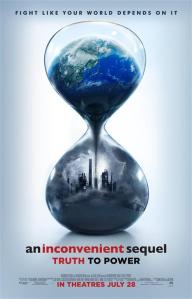
Then I went to see An Inconvenient Sequel, on climate change. That seemed a better target for activism. And then with Harvey’s severity clearly being an illustration of what climate change looks like… But me writing about that, seems like piling sanctimony on top of tragedy. Better to leave it to those who have studied it longer, and have more skin in the game like Eric Berger (This is probably the worst US flood storm ever, and I’ll never be the same) and Brian Merchant (Climate change denial should be a crime).
Whereas I will write more trivial stuff, like…
The chipmunk invader
“We have a chipmunk living behind our TV cabinets”, I wrote to our catsitter.
That was mid-July, and it had already been around for a couple weeks. Nearing September, the chipmunk was still with us.
Yes, they’re cute. But they’re still rodents.
It seemed to have a developed a routine of leaving its hiding place mid-morning to drink water from the cats’ bowls (handily kept right near the TV cabinets) and scrounge for food—which it was clearly doing successfully, given its longevity.
[Something I just learned from “Interesting facts about chipmunks: “Chipmunks are diurnal. In other words, they only come out during the daytime. The reason is not because they are blind at night, but because everything is too dark for their main defense system—their eyes—to work to their advantage.” Would explain why I never saw it in the evening.]
The chipmunk became increasingly brazen, stopping to give me a look to determine that I still appeared unable to catch (it was right; there is no catching a chipmunk!) before scurrying up the stairs to see what treasures could be found on the main floor. The cats occasionally decided to give chase, but more often just watched it, bemused.
The chipmunk was too big to be caught in mouse traps, too small to set off the squirrel trap, which we’d find untripped, bait missing. (“Great,” I said. “Now we’re purposefully feeding it.”)
We’d leave windows open a crack, but it showed no interest in exiting.
Maybe we need a rat trap, Jean suggested.
Before going that lethal route, we tried one more live trap, this one apparently designed for chipmunks: The Havahart Model #1025.
It took three days, but it actually worked: Chipmunk out for its rounds, almost immediately entered the trap, and… Trap door shut!
Chipmunk not happy.
I was a little freaked out by the success, especially as the little thing was making a terrible ruckus trying to bang its way out. Then I got it together enough to throw a pillow case over the trap (that’s supposed to calm the animal), and cary it out and over to the park, where I released it into the woods.
Herein ends your unrequested lesson in how to get a chipmunk out of your house. Now if only we could locate its entry point, so it can’t find its way back in…
Beyond the Lights or under the radar?
It was nominated for an Oscar and won some BET and critic’s awards, but I’m not sure how many people have heard of the movie Beyond the Lights. I was sort of looking out for it when it was released in 2015, but if it came around, it didn’t stay long.
I saw it recently as a DVD loaner from the library (it’s also on US Netflix). It’s about a young black woman, Noni, whose latest single is a big hit and whose first album is hotly anticipated. But after an award-winning night, she goes off alone and stands on the balcony of her fancy hotel room, thinking about jumping. She’s rescued by the young black officer on duty to protect her. They really seem to connect…
So yes, this is a romance, but better-written than most. Their challenges as a couple—the paparazzi, parental disapproval on both sides, conflicting career aspirations (the police officer also has political ambitions)—seem believable, not just plot contrivances. That Noni has a stage mom is a bit of cliche, but the character isn’t just a cartoon villain. The movie also offers a critique of the highly sexualized way young women are marketed in the music industry. (The film was written and directed by a woman, Gina Prince-Bythewood.) The actors are good, and lead Gugu Mbatha-Raw does have a lovely voice.
So if this sounds like your kind of thing, I think you’ll enjoy it. (And if not, like Jean, you’ll likely still admit it’s a decent film.)
Also recommended—but I assume most people have heard of this movie—the “still in theatres” The Big Sick. Making comedy out of the unfunny matters of race and illness.
Amazon pricing: Maybe it’s a game?
So back in November, the first-ever official live Queen + Adam Lambert blu-ray was released, initially sold only from a Japanese website. I most definitely wanted this thing, but when I did the conversion from Yen, it was $120 Canadian for the single disc + CD, plus shipping from Japan, which seemed… pricey, given that your average blu-ray is about $20.
So I waited for it to be available from Amazon as an import, whereupon it was listed for… $145. This was not going in the right direction. I kept checking it periodically, but the price remained stubbornly high, and nowhere else (including ebay) seemed to offer anything better.
Then one day Amazon emailed me to inform me that the price had dropped. Which it had… To $101.
I was considering that, but wasn’t yet convinced.
Then a little over a week ago, I had a random look Friday at lunch time and… It was $48.
So, fine, I ordered it. (And despite them telling me that by not choosing Prime, I’d have to wait til Thursday to get it, it arrived on Monday, Prime time!)
But the thing is, when I looked at the price again later that very same day—when I happened to be logged in as Jean—it was $62.
And right now, for both of me and Jean, it’s $67.
I’ve heard that Amazon has these sophisticated pricing algorithms that causes pricing to vary at any given time based on your past purchasing habits.
Which makes me wonder: Did I cave too soon? If I had kept checking at random times and days, would I have eventually acquired this item at $25?
And does this mean that all Amazon items are cheaper for me at lunchtime? Or on Fridays? Or have I ruined both now by going through with a purchase at that time and day?
And what’s up with the wildly different prices on the same piece of clothing at different sizes?
One dress, but each of its four sizes is a different price with a $140 range!
Anyway. The blu-ray is a gorgeous thing, with the best video and sound I’ve ever seen and heard on recorded Queen + Adam Lambert material. So I’m happy with it, even if the camera operator doesn’t always know when it’s important to focus on Adam (like, when he’s getting on his bike, and riding!).
Netflix: Giving us the sitcom revivals we didn’t know we needed
I don’t know that the world was clamoring for a remake of the Bonnie Franklin-starring 70s / 80s sitcom One Day at a Time, but Netflix has gifted it with one anyway. I was surprised to see how high it appeared on lists of best Netflix originals, so I decided to check it out.
What has it retained from the original? Well, there’s still a single Mom living in an apartment with her two teenage children, and a building supervisor named Schneider. Also, the same theme song, only re-recorded in a cooler version.
Other than that, not much. The family is Cuban-American; Mom Penelope is an army veteran; there is a daughter and son, not two girls; her mother lives with them, also; and Schneider is a wealthy Canadian ex-pat who never wears denim, carries a toolbox, or hits on Penelope. (See Why the New Schneider on One Day at a Time Is So Much Better Than the Old One.)
With its live studio audience and typical sitcom wisecracks flying, the series initially lulls you into thinking it will be super-light entertainment. But though it never gets too heavy, almost every episode touches on serious and often timely subjects: Dealing with PTSD. The challenges veterans have getting help from the VA. Figuring out your sexual identity. Raising boys in the age of online porn. Crackdowns on undocumented immigrants. Pay equity. Affirmative action.
(Hey, I somehow circled back to news, sort of.)
It wasn’t the sort of addictive thing that I had to keep watching, but I enjoyed every episode and grew quite fond of the characters. Despite that list of Serious Issues, it is a comedy, and a funny one. I was sad to see the end of Season 1. Fortunately, it has been renewed for a second season.






 Then I went to see An Inconvenient Sequel, on climate change. That seemed a better target for activism. And then with Harvey’s severity clearly being an illustration of what climate change looks like… But me writing about that, seems like piling sanctimony on top of tragedy. Better to leave it to those who have studied it longer, and have more skin in the game like Eric Berger (
 So back in November, the first-ever official live Queen + Adam Lambert blu-ray was released, initially sold only from a Japanese website. I most definitely wanted this thing, but when I did the conversion from Yen, it was $120 Canadian for the single disc + CD, plus shipping from Japan, which seemed… pricey, given that your average blu-ray is about $20.
 Cultureguru's Weblog