Legally Blonde: Feminism made fun

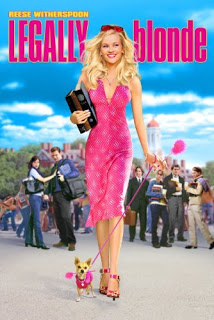
Legally Blonde posterWe somehow ended up with quite a few cultural activities booked in May, the most recent of which was an outing to see the Drayton Festival production of Legally Blonde: The Musical.

And it was heck-a enjoyable. Sure, as in the movie, the perky cheeriness of Elle and her sorority sisters can be a little too much at times, but overall it was really funny, the story moved along well, it still had that satisfying arc of female strength and friendship, all with catchy songs and great choreography mixed in. Not too mention two very cute dogs (one of whom nearly stole the show). What’s not to love?

(Jean quote: “I enjoyed that way more than I thought I would. I’m shocked how much I enjoyed that.”)

But it reminded me just how bad I am at remembering plots of movies (books, too). All I could remember about the movie (apart from the fact that I’d liked it, and that it wasn’t a musical) was that it was about a blonde sorority girl who gets into Harvard Law to try to win her boyfriend back, but who then discovers she’s way more intellectually capable than anyone had given her credit for.

All  of which happens in the musical as well, only with more songs. But the hairdresser character? The internship program? The exercise video queen on trial for murder? I had no recollection whatsoever of any of those plot details.

So yesterday I watched the movie again, courtesy iTunes. (By the way, it’s not on Netflix, not available on redbox rental, nor at zip.ca. And iTunes / Google Play / Rogers on Demand all charge the same $5 to stream it, which seems a bit expensive, given you can buy the DVD for the same price. Anyway…) I quite liked it, again. And it turns out that an awful lot of the movie did make it into the musical. But the differences were interesting.

The hairdresser, Paulette, is a more major character

In the movie, her part is pretty small and a bit sad. In the musical she’s one of the best characters, the center point of a couple very fun numbers. And it’s clearer that Elle helping her get custody of her dog back is motivation for Elle to become sincerely interested in the law.

The new love interest, Emmett, is a more major character

This one is a bit more of a hmm. In the movie Emmett’s part is really quite small, and their entire relationship takes place in the dying seconds of the movie, via “Where are they now?” captions. So I can see why they wanted more of a budding romance within the musical. Emmett is definitely fleshed out into an appealing and interesting character. Their subtextual shopping expedition is another highlight of the musical, one that wasn’t in the film at all.

The troublesome part, to me, is that in the musical Emmett is the one who coaches and encourages Elle to buckle down once at Harvard. In the movie, she’s completely self-motivated to do so at the same point: already suspecting it will never be enough to win back Warner, her ex, but wanting to prove herself capable anyway.

So it’s a bit of a dilution of her empowerment, I think.

Though I did like that, in the musical, she’s the one who proposes to him, at the end.

The musical is more gay-positive

Maybe that’s just the difference 13 years makes? Certainly the lesbian law student is much more likable in the musical, no longer seeming as militant and angry as she does in the movie. And the stereotypical gay pool boy earns an entire, completely hilarious, song about those stereotypes: Gay, or European?

Gay or European? Musical number from Legally Blonde on YouTube

Professor Stromwell is gone

The musical has only the one law professor character, Callahan—the one whose sexual harassment makes Elle doubt anyone will ever see her as more than a “piece of ass”. But the movie has another professor character, a woman, who meets Elle after this incident and motivates her to fight back with: “If you’re going to let one stupid prick ruin your life, you’re not the girl I thought you were.”

In the musical, Vivian, Warner’s fiancee is the one who talks her into fighting back. In both movie and musical, it’s great that the two rivals for Warner’s affection become friends, though this is given more time in the movie. And, it’s not that it doesn’t work for Vivian to be the motivator here; it’s just that Professor Stromwell was a great character also (albeit in another very small part).

In conclusion

Basically, Legally Blonde, musical and movie, is just meant to be fun, and it is. But behind that is a decent message about female power and independence. It’s not perfect feminism, but it’s feminism nonetheless. (Notably, original novel, film script, and musical book were all written by women.)

A guilty pleasure, only without the guilt. Oh, my God, oh my God, you guys!

See also: Legally Blonde: A little slice of feminist heaven

Looking after no. 1 — in France

At one point, Stéphanie, our guide, affectionately dubbed us “the toilet group.”

Because this particular walking group was heavily weighted toward women of a certain age, which meant that we all spent an inordinate amount of time waiting around until everyone had a chance to go pee.

Toilets sign

On the Amalfi walking tour we’d done previously, pretty much every walk included a stop in the middle of it at a cafe or convenience store where, for the price of a coffee or chocolate bar, anyone who needed to could also use the facilities.

But on these France walks, it seems you often had an opportunity only at the start, then at the end of the walk. Of course, at the start, the urgency tends to not be so great, but then there’s that concern: If I skip this chance, how bad will be the wait for the next one? Hence, the waiting around for the pre-emptive bladder emptying.

For me, though, other aspects factored into the decision of whether to go now, or wait it out. Because with French public toilets, you never really know what you’re going to get. And I don’t just mean missing toilet paper.

Flashback: It’s 1992, we’re in Dieppe, France, and I really have to go. So we stop in for a meal at a restaurant. After giving our orders, I head toward the facilities, have a look, and immediately head back to the table.

“I can’t use that,” I tell Jean.

He, mystified, heads to the facilities to see for himself what horrors await. He shortly returns, laughing.

It was my first encounter with a Turkish-style toilet.

We’ve been to France a number of times since, and I had never encountered another such facility—until this trip. In fact, calling it a “toilet” problem isn’t accurate, as all it is, literally, is a hole in the ground, with two spots for your feet.

And I still can’t use that, so when it was on offer, I was definitely skipping that “opportunity”.

The French also have a certain concern with cleaning the facilities between use, which of course is nice—unless you’re not aware of the method of cleaning. Like, that when you pull the cord to flush, it will also spray water around to clean the whole general area! Regardless of whether you’re still in there…

And no, I did not get caught in that, but others in my group did, having to spend some time in wet pants afterward.

Thereafter, I would skip that style of bathroom as well.

Then there were the pay toilets that require exact change, though that isn’t as bad when you’re in a group, because someone can usually help you out. Some of those also have a cleaning cycle between use, which—again—is nice, only it’s not a super-fast process, so you’re extending the group wait by lining up for those. One them actually conked out after two uses.

Another more modern example had a voice guiding me through the bathroom process (all in français, of course): thanking me for choosing the lower-water flush option and explaining the actual flush would occur after I exiting; warning that I had 20 minutes (20 minutes!) before the door would fly open; etc. It was sort of hilarious.

Then on one walk we actually did stop midway at cafe with a perfectly normal toilet, and what did I do? I became inexplicably unable to unlock the door until those outside told me I was just turning the lock the wrong way.

Nevertheless, I did not give up on cafe bathrooms.

I just left them unlocked. (Kidding!)

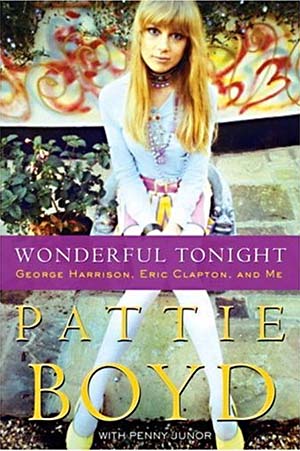
Wonderful tonight

I bought Wonderful Tonight, Pattie Boyd.s autobiography, very much on a whim, from a used bookstore. I was just curious about the woman who married George Harrison (of The Beatles), inspiring him to write “Something”, then left him for Eric Clapton, after he was inspired by her to write “Layla”. That George and Eric remained friends through all this was just one of the things that seemed odd.

Cover of Wonderful Tonight

When you hear that Pattie Boyd was a model when she met George Harrison, that gives you the impression (based on today) that she was already leading a glamorous life, but modeling wasn’t the same back then. She talks of having to do her own makeup and hair, and running around to various appointments on public transit. She enjoyed it, but it didn’t make her especially rich or famous.

Her childhood was even more austere. She grew up in Kenya, her father a damaged, injured war veteran who eventually abandoned the family. Her mother then remarried to an abusive, unfaithful man. Pattie and her siblings were shuffled off to boarding schools, and eventually were literally abandoned, left in Kenya while her parents moved to England.

Hence, the lack of life model for what a good marriage is.

Because, in case you were wondering, this book gave me the impression that it wasn’t much fun being married to rock stars.

Of course, the relationships started out well. With George, the biggest problem in the early days were the insane Beatles fans. But over time, as The Beatles dissolved, their relationship grew more rocky as well. I found myself rather disappointed to find out that George cheated on Pattie constantly. Yes, I know he’s a rock star, but this is after The Beatles stopped touring, and after George has taken up religion and meditation and is trying to be this very spiritual person.

And one of the people he had an affair with was Maureen Star, Ringo’s wife! I mean, seriously dude, that’s just not right.

But it wasn’t just the infidelity that challenged the relationship, but also George’s mood swings and self-absorption and disregard for what made Pattie happy, such as being able to cook for him.

So yes, she was susceptible when Eric Clapton took an interest, and starting writing her passionate love letters—and one really great song. But it was a long, slow build-up before she was finally ready to leave George. At one of these junctures, Eric threatened to take heroin if she didn’t leave with him then. She didn’t, and he did.

Talk about alarm bells, eh?

Though she’s discreet in terms of details, it’s clear that the Pattie / Eric relationship was a very passionate one once it ignited. If “Layla” was a kind of foreplay for them, “Wonderful Tonight”—which I hadn’t realized was also inspired by her—is indicative of their happy early days together.

But it doesn’t last. Though I think he was off heroin by this point (?), Eric was still an alcoholic. And a slob. And unfaithful. And self-absorbed. Though here I’m making it sound as if Pattie does nothing but complain about her husbands, which isn’t the case. She’s pretty fair. I think I’m the judgmental one.

Pattie also tackles subjects like her infertility (she has no children, despite attempts at in vitro), her failed attempts to help her drug-addicted younger sister, and the challenges of building a life as an ex-wife who didn’t necessarily get a big financial settlements from her rich ex-husbands. Throughout, the writing style is very conversational. I suspect that, in fact, it was actually written by named coauthor Penny Junor, based on interviews with Pattie.

You also, inevitably, get a bit of rock history from an unusual perspective: the Beatles trip to India, drug busts, Live Aid, the murder of John Lennon. She was also friends with members of the Rolling Stones, The Who, Queen, Rod Stewart, and others; her sister has long-term relationship with Mick Fleetwood.

I wouldn’t say this is a book of general interest, but for for those wondering about the lives of rock stars, it certainly provides some insight.

Chopped Canada (or what to do with that freeze-dried shrimp)

I’ve written before—though not for a while—about how I’m not a big Food Network fan, despite liking to cook, and being known to occasionally watch TV.

But I have been somewhat taken with Chopped Canada. I’d seen the American version a few times and found that somewhat interesting, so checked out the Canadian version.

The first episode was fantastic because one competing chef was clearly an unlikable ass, and he ended up going mano a mano with a woman—a cooking school teacher rather than restaurant chef—who at first had seemed hopeless out of her element. (The other two contestants were also men, but of less striking temperament.)

And, satisfyingly, the nice woman won. Deservedly. In the end, she made a better three-course meal.

Although the remaining episodes haven’t had such vibrant personalities, I’ve been continuing to find it entertainment. But I can’t kid myself that it’s any kind of useful.

Because in real life, you are never handed four random food items, some of which are barely food (strawberry drink powder, processed cheese slices, macaroni deli slices?), and told that in exactly 20 minutes (or 30 or 60—depends on the round), you have to turn it into an appealing appetizer, main, or dessert, complete with lovely plating. Just doesn’t come up.

However, in a recent episode, where the ingredients were not so much bizarre in themselves as just not seeming to belong together in one dish, two of the items that had to be used were freeze-dried shrimp and dark chocolate. One of the chefs, having made something lovely with the other two ingredients in that round, seemed at a bit of a loss what to do with these ones. So although he seemed quite dubious himself, he just melted the chocolate, and tossed the shrimp in there, and served that on the side.

Of course, the judges were a bit dubious, too. Yet to a man, and woman, they declared the freeze-dried shrimp in dark chocolate to be absolutely delicious.

So there’s my one takeaway from this show so far: Apparently, some day, I need to get me some freeze-dried shrimp and chocolate-coat them. (If anyone out there is brave enough to try this before me, do let me know how it goes…)

Shrimp ... but you wouldn't know it was the same as you make it at home - for the taste :)

Un-chocolate-coated shrimp…

Feeling angsty? Need some power?

iTunes Genius playlist feature, whereby iTunes create a playlist for you based on a particular song, often isn’t nearly as smart as its name would lead you to believe. Sometimes the results are simply odd, and the songs don’t seem to go together at all. Often they are obvious in a boring way, such as combining a Lowest of the Low song with music by other Canadian band, as though Canadian-ness rather than lyrical intelligence, passionate delivery, and great melody were the key features of their sound.

But I thought this particular one, built around Tracy Bonham’s “Mother Mother”, was pretty good. The songs did seem to work together, and yet I doubt I would have thought of combining them myself.

[To people viewing this in email: There are a couple videos in linked in this post. They may be visible only in the browser, not in the email message.]

I call it “Empowered angst”. Partner acting like a crazy person? Propose to her! (Anything, Anything) Being teased cause you don’t drink, you don’t smoke? Own it! (Goody Two Shoes) Being cheated on (Bring Me Some Water)? Let them know what they’re missing! (Like the Way I Do).

Song

Artist

Mother Mother

Tracy Bonham

Blood Makes Noise

Suzanne Vega

What I Am

Edie Brickell & New Bohemians

Dear God

Sarah McLachlan featuring XTC

Fall Down

Toad the Wet Sprocket

Anything, Anything

Dramarama

Wild Horses

The Sundays

Fuck And Run

Liz Phair

New

No Doubt

Sweet Jane

Cowboy Junkies

Voices Carry (Single Mix)

‘Til Tuesday

Pretty In Pink

The Psychedelic Furs

Goody Two Shoes

Adam Ant

Crush With Eyeliner

R.E.M.

Crazy Baby

Joan Osborne

Bring Me Some Water

Melissa Etheridge

I’m Afraid Of Americans (V1)

David Bowie

The Emperor’s New Clothes

Sinéad O’Connor

Middle Of The Road

The Pretenders

Follow You Down

Gin Blossoms

Temptation Waits

Garbage

Excuse Me Mr.

No Doubt

Like the Way I Do

Melissa Etheridge

Possession

Sarah McLachlan

Bang And Blame

R.E.M.

Hey, remember this video? Aimee Mann being stifled by her jerk of a boyfriend?

Movie review—The Hunger Games: Catching Fire (and other notes)

So this is the difference between having read the book before (she) and not (he)…

The Hunger Games poster** ½ The Hunger Games: Catching Fire (Theatre)

Jennifer Lawrence, Josh Hutcherson. President Snow is not happy about how the last Hunger Games ended, and lets Katniss know it. She sees signs of rebellion for herself on her Victory Tour with Peeta. Neither are prepared for Snow’s plan for the 75th Hunger Games.

She says: I think the movie did a good job of showing the oppressive force of the Capital and the danger and excitement of the simmering rebellion in the districts. And it really did seem sad that [spoiler alert?] past victors were sent back to battle again. I also appreciated the fierceness of the women characters—Katniss, of course; Mags, in her own way; but especially Jenna Malone as Johanna. Johanna did make that much of an impression in the book, but on-screen, I couldn’t get enough of her speaking truth to power. And the final shot of Katniss was awesome.

Katniss’ continuing lack of skill in correctly interpreting what’s going on around her (and the plot device of keeping her in the dark so much) was a bit meh, but not enough to ruin the movie for me. It also, cinematographically, looked gorgeous, including Sam Claflin as Finnick, who was as good-looking as I’d hoped, based on the novel. Katniss also seemed more truly in love with both Gale and Peeta than I recall her being at this point in the trilogy, but I guess that’s allowed. ***

He says: I didn’t think it was that good. It was like they couldn’t think of a new story, so just redid the plot of the first movie, sending Katniss and Peeta into the Hunger Games again. And I’m not sure it holds together. If Peeta was in on it, why was he acting so suspicious of the others in the arena? **

And other notes

Also viewed recently, at home, were two much smaller, character-driven movies: Mike Leigh’s Another Year and Norm Baumbach’s Frances Ha. If you like movies about interesting characters and how they interact with others and get on in the world—but without a big dramatic arc—these two are good examples of that. Another Year features a happy couple and their messed-up friends and family. Frances Ha follows struggling dancer Frances in her efforts to “become a person” with an actual career, place to live, and friends.

But these are not the sorts of films Jean enjoys. I didn’t even ask him to watch Another Year. He actually picked out Frances Ha from a short list of options, but then he was sorry he had.

As for award seasons, as usual I haven’t seen too many of the big contenders. But I am happy that Dallas Buyers Club is getting so much recognition. Was reminded it was directed by Canadian Jean-Marc Vallée, who did two other movies Jean and I both enjoyed: Café de Flore and C.R.A.Z.Y.

Movie reviews: Blue Jasmine and Adore

*** Blue Jasmine ((July 2013) – Theatre

Blue Jasmine posterCate Blanchett, Sally Hawkins, Alec Baldwin. Cate Blanchett’s Jasmine has to go live with her working-class sister Ginger after her wealthy husband is arrested for fraud.

She says: At first I thought Jasmine would be this annoying character to spend two hours with, but she develops layers as we witness her current plight and flash back to what brought her here. That the two sisters are so different is explained by each of them having been adopted, which works. It’s interesting to see past secrets revealed as Jasmine desperately tries to adjust to no longer being ultra-rich. By the end, we still didn’t know quite what will become of her. But we care…

What did you think of the movie?

He says: It wasn’t bad.

Adore movie poster** Adore (September 2013) – Theatre

Naomi Watts, Robin Wright. Two 40ish women, best friends, become lovers with each other’s sons, which gets complicated.

She says: This was billed as “porn with good acting”, but I dunno. I think porn would have a lot more sex and fewer scenes after characters looking angsty as dramatic music plays.

The acting was indeed fine, and everyone involved was quite attractive and thus appealing to look at, and the ocean-side setting was pretty. I don’t have a problem with the age difference, and the fact that there was a “son swap” was merely weird, not disturbing, but the movie made it clear that the women had known these boys since they were little babies. That made their later relationship kind of ookey, and you had to ignore that part to enjoy the storyline at all.

He says: I had too much trouble ignoring that part. The movie wasn’t boring. That’s the best I can say about it.

Women on the brink: “20 Feet from Stardom” and “Game Change”

Comments on two films I recently watched, sans Jean…

Poster: 20 Feet from Stardom20 Feet from Stardom is a documentary profiling backup singers, a group of people I hadn’t given much thought to before—which is what made it interesting. Though a few male backup singers are interviewed, most of the time is devoted to the women who dominate this profession.

What they all have in common is talent. No “weak but interesting” voices here; they all sing with range, power, pitch, and control. So the question is, why are they just supporting the stars?

The answers vary. Darlene Love was long cheated out of stardom by producer Phil Spector, who would not release her performances under her name. The incredible Lisa Fischer had a successful record—even won a Grammy—but ultimately decided she was frankly happier in a supporting role. Many others tried and failed, because of having the wrong look, poor material, lack of promotion… Or just because.

Through their stories, we get the history background singing in pop music from the subdued style of the 1950s to the increasingly expressive 1960s and 1970s (“rock’n’roll saved us”) to its diminishing popularity in more recent years. It’s a reminder of how important those backup vocals are to many of the songs we love, like “Walk on the Wild Side”, “Thriller”, “Young Americans”, “A Little Help from my Friends” (Joe Cocker), and “Gimme Shelter”. (I had the lines “Rape! Murder!” in my head for days afterward, which was somewhat disturbing.)

Stars are also interviewed in the film, including Sting, Bruce Springsteen, and Mick Jagger. But it’s nice to see the spotlight finally turned on the talented performers behind them.

This movie received a 99% positive rating on Rotten Tomatoes.

Poster for Game ChangeI finally got my hands on Game Change, the HBO docu-drama about Sarah Palin’s campaign for the vice-presidency, starring Julianna Moore. It’s somewhat old news now, but maybe it’s best to watch it when Palin is at a low point in her political popularity, because man…Otherwise it would be terrifying.

Admittedly, some scenes may have been slightly exaggerated for dramatic effect, but I did some research, and the essence of what was presented is true. The depth of this woman’s ignorance about the world was astonishing, as though she’d had no historical or geographic education whatsoever.

It’s not an entirely unsympathetic portrayal, either. You do kind of, sometimes, feel bad for her as she struggles to cram in mass numbers of facts in a very limited and very high-pressure time, while being made fun of on SNL. I did find myself rooting for her in the Vice-Presidential debate (which was certainly not the case at the time).

But when on more of an upswing, oh my God, she comes across as arrogant and self-centered and just… entitled and horrible. The way the woman herself often strikes me.

John McCain, by contrast, is given a very sympathetic portrayal throughout. But it’s not really his story anyway.

No longer a current event, but this is still fascinating and well-scripted biopic with a great cast. You get behind the scenes to understand how this could have happened: How someone so unqualified was running to be a heartbeat away from the most powerful office in the world. It’s not the easiest thing for the HBO-less to get, but well worth tracking down.

Dress for the weather

It’s past 8:00 pm and it’s still over 30C, and humid. It’s been like this for days. It’s officially a heat wave.

I must admit I don’t suffer that terribly during these. Fact is, I leave my air-conditioned house for my air-conditioned car, then drive to my air-conditioned office.

But also, I’ve been wearing dresses all week.

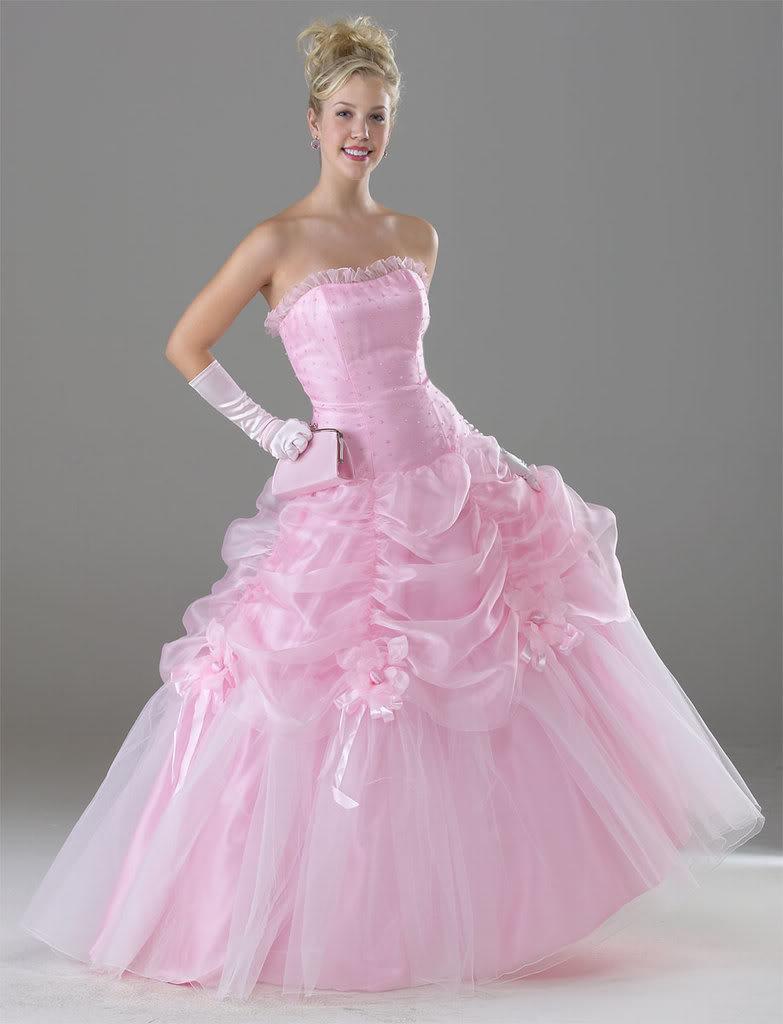
People, there is no better hot-weather garment in the world than the dress. Naturally, I do not mean the uncomfortable, bedazzled type of dress one might wear, say, when getting married.

Pink wedding dress
Not this kind of dress! (Also, hadn’t realized that “pink wedding dress” was a thing.)

I mean the plainer, looser type of garment that rests on your shoulders and just flows down from there, making a natural breeze as you walk.

T-shirt dress
OK, this one might not make a breeze when you walk. But you get the idea. It’s a very simple dress.

Obviously, the dress must be worn without any hose. Nylons would absolutely ruin the whole thing, in every way. No longer comfortable, no longer cool.

But just the dress, with some little sandals (and some undergarments, one assumes, but that’s really your business) is the next best thing you can wear in the heat. There’s a reason people in warm climes wear robes.

Buddhist man in robes

So pity the poor men-folk among us, who must make do with shorts–if their workplace even allows those, that is. Shorts are just not as good. They are a recipe for sweaty inner thighs. Who wants that?

The ability to wear dresses in summer is one of the very few advantages our society offers women over men.

And yet, I observe, not that many women take advantage.

Some, I suppose, may fear the air conditioning– that this outfit so perfect for the 33C degree, 40C humidex weather outside will only leave them shivering with cold while inside. A not unfounded fear (I actually sometimes bring in a sweater (!) just in case).

But an awful lot more, I think, either don’t realize how comfortable a dress can be (maybe they haven’t worn one since the prom?) or simply don’t feel comfortable in such a feminine garment. It’s undeniable that there’s nothing much more girly than a dress—even a simple dress—and girly just doesn’t sit well on every woman.

Fortunately, I am a lipstick feminist, totally in touch with my girly side.  (And no fan of sweaty thighs.)

Movie review: Before Midnight

**½ Before Midnight (May 2013) – Theatre

Before Midnight posterEthan Hawk, Julie Delpy. Third in the series of movies featuring one day in the life of this couple. They are now in their early 40s and struggling with the stresses of children and ex’s.

He says: Whatever you do, don’t say I liked that movie.

She says: So, he did not like that movie. But it wasn’t because he found it boring, or badly written, or unrealistic. It wasn’t a quality problem.

It was that Céline drove him nuts.

He says: God! She was so irritating!

She says: It’s true; Céline was really irritating. See, in this installment, the couple spends an awful lot of time arguing. And I must admit that I also found myself more often taking Jesse’s side. Céline often did seem over-dramatic, stubborn, unfair… even mean.

But these are movies of talking. And she would have her moments of being to explain why she was responding as she was. The strain of having to deal with their infant twins while he was on book tour. The feeling that she had to take on more of the burden of care. And she’d kind of win me back. (And maybe someone with kids would be more on her side in the first place… I dunno.)

Overall, there’s no way for this one to be quite as enjoyable as the first two, which involved falling in love, then reconnecting. Staying together is just a more difficult theme. But it is explored effectively in this movie, if you’re brave enough to go there. And Greece does look really lovely in it…