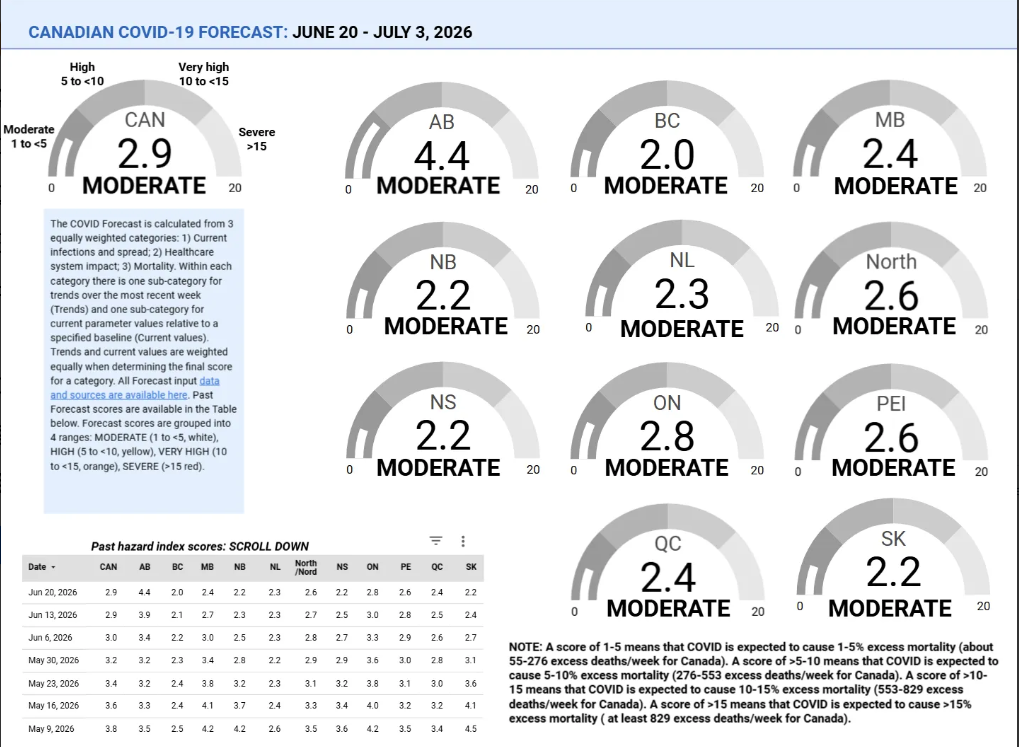
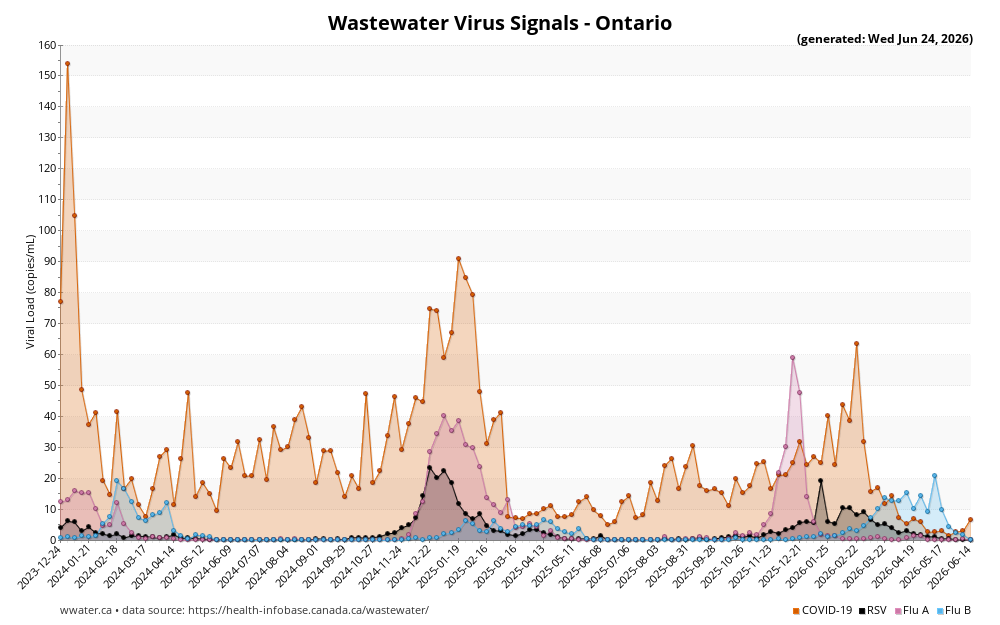
Now, plenty of Canadians had Covid earlier in the year. In Ontario, the peak was around late February / early March. (The source of this graph is https://wwater.ca/Ontario; orange on the graph is COVID-19; pink, flu A; blue, flu B; and black, RSV.)
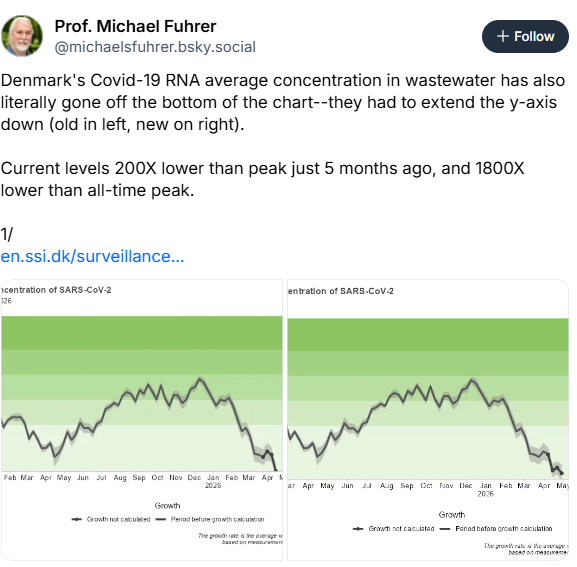
Still, what appears to be happening in Ontario, and Canada-wide, and in other countries, is that the infection peaks are lower year on year, which you can also see in the above graph.
This is not exactly expected, given that basically nothing is being done to stop the spread of this disease: vaccine uptake is low, mask usage isn’t prevalent in Western countries, efforts to improve ventilation and filtration are minimal, paid sick days haven’t become mandatory everywhere, and so on.
So why this is happening, exactly, is a bit of a mystery. I personally wonder if it’s related to another bit of good news about this disease: that the Covid virus is disappearing in wild animals. Because they used to say that the fact that Covid did have such a large pool of animal reservoirs meant that it would endure and continue to mutate. But now it seems to have specialized in humans. (Important to note that you can still infect your pet cats with Covid, though! But they are unlikely to infect you.)
Should I change my masking behavior as a result?
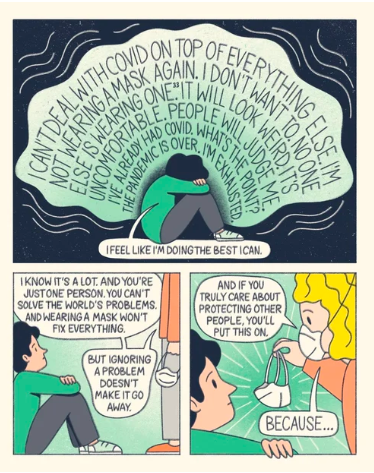
That is the question. Most people dropped masking when the government said they could, or shortly thereafter. I have stubbornly persisted with it, in most public indoor spaces. Excluded are restaurants (though friends / family all know my patio preference) and wine tastings (outdoor or private preferred there, too).
Sidenote: By “mask” I mean a respirator, which is an either N95 (headstrap) or a KN95/94 mask—not a surgical or cloth mask. If I’m going to go through the social and physical discomfort of masking in the first place, I’m going to wear a mask that gives me maximum protection. Surgicals are cheap and easily available, but they gap at the sides, which can let virus and other pollutants in.
Bonus: respirator masks don’t fog up my glasses or cling to my face getting all gross and wet. Very breathable versions are available now as well (see: BreatheTeq by Canada Strong Masks). And they come in fun colours.
These are the reasons I’ve persisted:
To avoid catching Covid
To protect myself against other airborne contaminants.
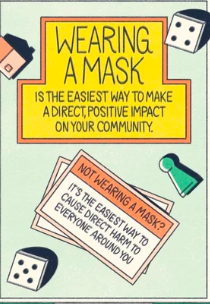
To protect other people.
To show solidarity.
To keep up the habit.
The question is, how relevant do these factors remain?
Avoiding Covid infection
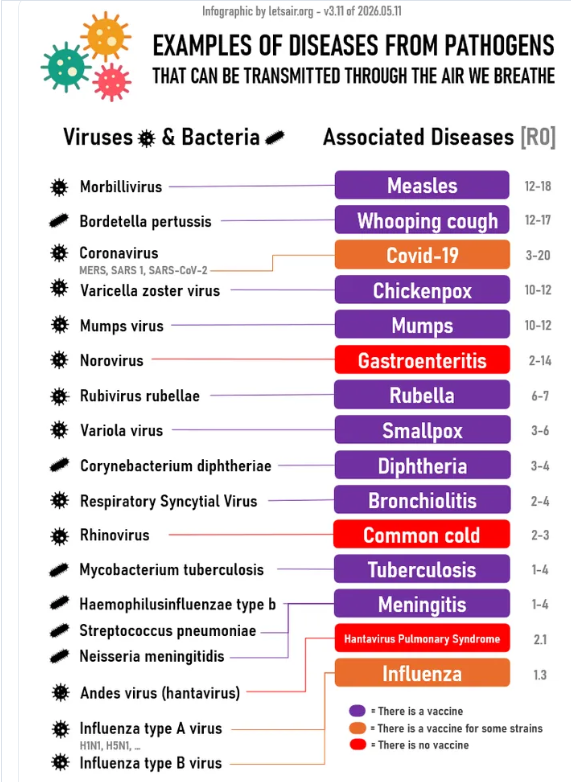
Though the odds of catching Covid are indeed lower now than they have been in some time, it’s not as though the disease has disappeared. Unlike flu and RSV, it’s not just a winter virus. Covid rates are often lower around June but typically they rise through the summer, due to increased international travel.
Now, I have kept up with my Covid vaccines—I get them every six months—but we all know that they provide only limited protection against infection. The vaccine is very protective against hospitalization and death, but not necessarily against the possibility that I would feel really crappy for five to ten days or so, were I to catch it.
I do not like feeling sick.
Even if lucky enough to have a mild Covid, though, the possible after-effects are rather alarming.
The scariest, for sure, is the risk of severe Long Covid. Fortunately, that risk has also declined due to vaccination, but it’s not been eliminated. I’ve done a lot of reading of what life with Long Covid is like (examples: Julia Doubleday from The Gauntlet, M is Living with Long Covid, The Sick Times), and it is nightmarish.
Now, I do hope that my stash of Metformin, which study after study continues to show reduces your risk of developing Long Covid, along with my lack of history with any auto-immune disease, will help me avoid it. But the only way to guarantee it is to not be infected. Repeat infections only increase your odds of coming down it.
Sidenote: This is why Covid testing remains important. Metformin only helps with Covid; not with the flu or RSV or the common cold. And you have to start taking in the first five days of symptom onset (or positive test). The government stopped providing Covid tests free a long time ago, unfortunately. You might be able to get free tests from your local Mask Bloc, if you have one. Or you can buy them—but they aren’t that cheap, unfortunately.
Long Covid isn’t the only possible bad outcome. Covid is a vascular respiratory disease: you breathe the virus in, then it gets into the blood, which brings it to all parts of your body, potentially leaving any of them open to damage. The effects are particularly notable on the brain and the heart, with some studies showing that every single person infected had some brain and heart damage. Immune system damage is also pretty common, which is why so many people get sick with so many intractable infections and other viruses in the months following a Covid infection.
Masks work, y’all. I haven’t had a single symptomatic respiratory disease since 2019. And I used to get one to three colds a year, just like everybody else. I’m super curious how much longer I can sustain this streak.
Masks also come in handy when air quality is poor, as it was in the summer of 2021 when Ontario had so many wildfires. If needing to go outside when air quality is terrible, N95 masking is recommended by Health Canada.
Masks also protect against other nasties in the air, like allergens and dust. For example, I was truly amazed at just how coated in cat litter dust my mask would get after one three-hour shift at the cat shelter (which involves scooping at great many litter boxes). They’d become just disgusting.
Without the mask, I would have breathed all that dust into my lungs…! I mean…!
Added bonus to masking at the cat shelter: Wearing it mitigates (doesn’t eliminate) the distinct odor of cat urine and feces. It’s also great protection against the sick kitties who have no compunction about sneezing right into your face. (It’s also protected me against a few dedicated fellow volunteers who were working sick.)
I don’t mask at restaurants, since I’m there to eat and drink, but I do doff one when I go to restaurant washrooms. As I would in any public washroom. Because public washrooms:
Are often less well-ventilated than the rest of the building.
Feature toilets with no lids, meaning flushed particles end up in the air.
Expose you not only to what people exhale from their nose and mouth, but also to whatever they excrete through other body parts (or by vomiting). Gross but true!
Conclusion: It still seems wise to try to avoid breathing in random airborne disease particles, wildfire smoke, cat litter dust, and bathroom cooties.
Protecting other people
Whether I like it or not, by masking I actually protect others around me more effectively than I protect myself (even though a well-fitting N95 is very protective).
As noted, I haven’t had a symptomatic respiratory infection in many years, but Covid, and less commonly flu (and possibly other illnesses?) can be asymptomatic, yet infectious. So it’s possible my masking has actively prevented someone else from getting sick.
But even if all I’ve done is prevent myself from getting infected, in the cosmic sense, I’m still protecting other people by breaking a chain of infection. (I know I’ve been around people who tested positive soon afterward.) And when you think about it, the specific people I’ve protected by doing so are the people I care about the most: Husband. Friends. Siblings. Father. Cats! All the living creatures that I spend the most time with, unmasked.
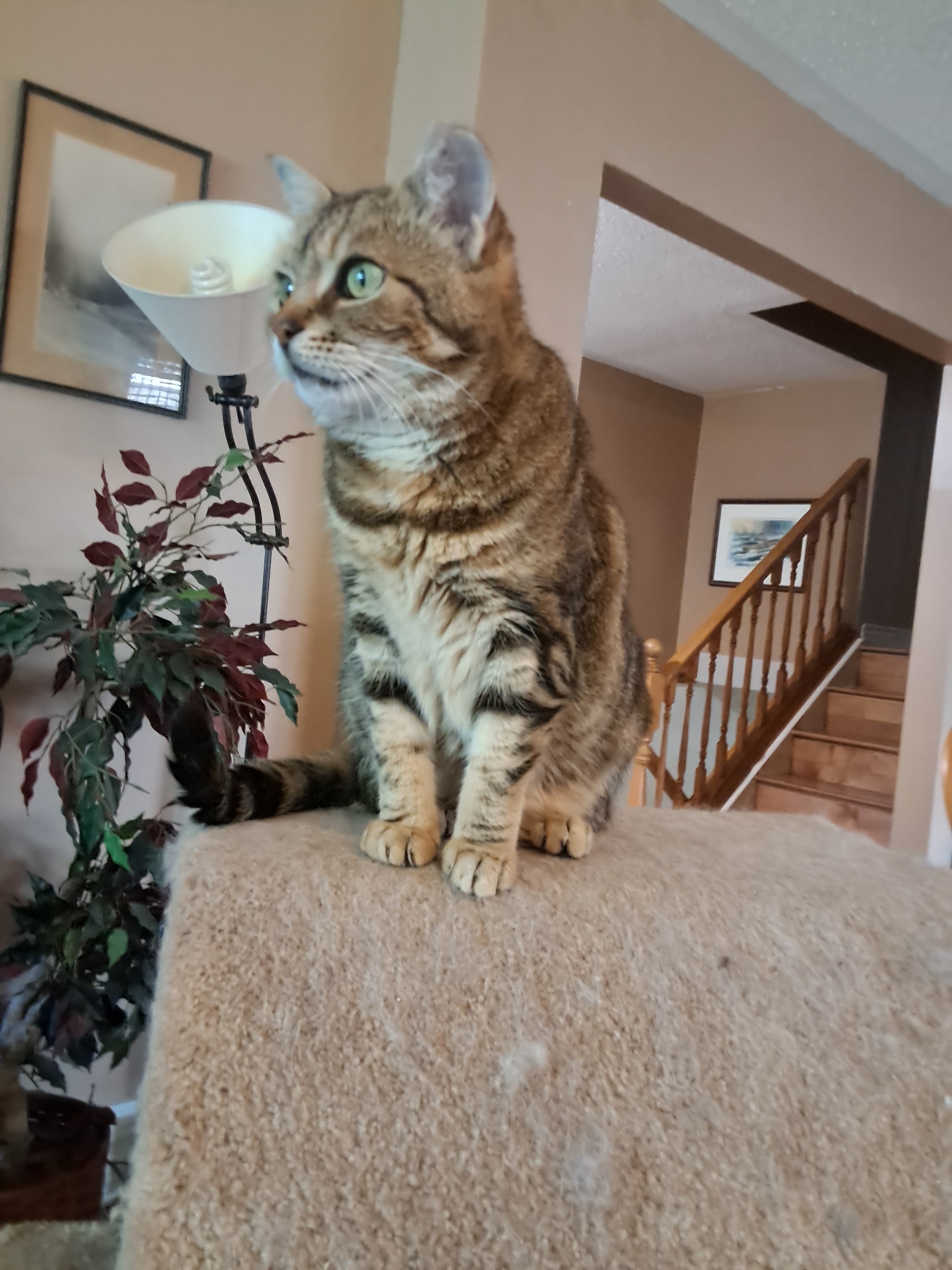
Shawnee cannot mask to protect herself. She’s counting on me!
Sidenote: I also believe that it’s absurd that it’s up to individuals to make a choice (or not) to try to prevent the spread of infectious disease, when should be done through collective action directed by public health / government, such as:
Improving indoor air quality in all public buildings, starting with schools, hospitals, and nursing homes, and continuing from there.
Providing paid sick days to all workers.
Retaining mandatory masking (respirators, not surgical) in all healthcare settings.
Encouraging remote work where it made sense.
Promoting mask usage as a sensible health practice in some circumstances.
Providing free respirator masks.
Providing free Covid and flu tests.
Maintaining widespread wastewater monitoring of circulating viruses.
Actively and effectively promoting vaccination efforts.
Educating the public about Long Covid and other long-term effects of Covid infections.
Conclusion: While it’s true that it can be hard to be motivated to protect other people who (apparently) can’t be bothered to protect themselves, let alone me, it is nice to think that the greatest benefit of me masking flows to my favorite living beings.
Showing solidarity
Unfortunately, we do not live in a world where governments take appropriate measures to protect their citizens against airborne disease. I think this is wrong. I think it’s important to remember that people with Long Covid and others especially vulnerable to Covid infection have been abandoned by society, basically deemed expendable. And that this is called eugenics, and it’s bad.
Regularly masking in public is way to visibly show solidarity with those who have no choice but to continue to do so, because otherwise they would die or be seriously debilitated. I understand that people who see my mask are unlikely to interpret it that way, and are more likely to think that I’m eccentric and paranoid and stuck in the past. But they also think that of people who truly do need to mask everywhere, and it’s a lot easier for me, isn’t it?
After all, I don’t have to mask at work, 40 hours a week, every week (I was a remote worker; I am now retired). I don’t have children who constantly bring diseases home from daycare or school, which would indeed make masking outside the home feel somewhat pointless. And, of course, I absolutely make exceptions— the restaurants, the outdoors, the gatherings with family and friends.
But still. I do more than most, and it does break chains of infection. For those wondering why it’s not sufficient for those who are vulnerable to mask for themselves, why they also would like other people to do so? (Honestly, I have to remind myself of this sometimes…)
Some vulnerable people can’t mask; for example:
Babies, who cannot be vaccinated until they are six months old (and most parents don’t bother, unfortunately), and who are at high risk of hospitalization if they catch Covid.
People with certain disabilities, a famous example being the late Alice Wong, a disability activist who had a tracheostomy.
People who would lose their jobs or tips or promotions were they to attempt to mask at work, because there is a real stigma against it.
Even if they can mask, in some cases a faulty immune system means they are more easily infected: more quickly, and with a smaller viral load. So an imperfect mask fit can easily lead to a serious illness if they around a lot of unmasked people.
Even if not vulnerable in this way, sometimes masks need to come off. To drink. To eat. For medical care. And then they only protection they have is those the people around them are willing to provide.
Do abled people understand, when they say it’s “unrealistic” to expect people to mask everywhere, that they are describing the only guidance disabled people have received re: how to get through another day alive? Like, very literally the guidance from the CDC as to how to survive the ongoing pandemic – by constantly masking, by testing every person around us, by avoiding the COVID that those around us are doing absolutely nothing to stop spreading?
Yes, it is difficult. It is burdensome. You could call it unreasonable! But when you shrug off the difficulty and burden of practicing COVID safety in the current climate, you are casting that burden onto the shoulders of those who are already carrying more than you are. Who can afford infections less than you can. Who in many cases have fewer resources than you do and almost certainly have fewer safe social outlets than you will.
Conclusion: Honestly, my conclusion is that this is ridiculous and society really needs to clean up indoor air and develop better vaccines and so on and so on! But in the meantime, masking regularly is at least a little something I can do to help.
Habit maintenance
Even when infection odds are lower, there are places where it seems particularly smart to mask; for example:
In medical settings like hospitals, clinics, labs, and doctor’s offices… Because whatever percentage of infectious sick people are in the community, a greater number of them are going to be here. Also, this is one place that the medically vulnerable must go.
On transit. Often the ventilation isn’t great; it’s frequently crowded; it’s another place that some medically vulnerable people must go. So plenty of reasons to mask there. And few reasons not to: Rides generally aren’t that long and it’s not a place for socializing nor for eating and drinking.
At concerts. Bit more socially awkward here, admittedly, and some people do like to eat and drink as part of the experience, though I do not. Also longer than a transit ride, at two or three hours. But concerts are almost alwasy very crowded. Ventilation, usually, is not stellar. Masses of people getting sick at concerts, even outdoors, is really common. It’s a high-risk setting. Masking helps me focus totally on enjoying the performance.
But a lot of other indoor public spaces aren’t particularly risky, like uncrowded stores, museums and art galleries (which often have amazing ventilation), banks, insurance offices… It’s not impossible to get or pass on infections in these situations, but can be pretty unlikely.
So then there’s a choice.
Do a risk analysis of each place every time to decide whether it’s worth masking: How crowded is it? Do I know anything about its ventilation? How high are Covid rates right now? Am I using the cash or the self-checkout? How long do I expect I’ll be here? Am I moving around a lot or staying near the same people for a long time? Etc., etc.
or
Make the simple rule that if it’s a public indoor space not for the purpose of dining or networking / socializing, I’ll put a mask on.
Conclusion: As with any other good health habit, masking works best if you do it regularly and fit it easily into your lifestyle.