Ontario election or voter suppression

Well, I voted, and it was really easy. Just needed some basic ID and some time to wait in the line I was, I admit, rather surprised to have encountered. Nobody tried to intimidate me or influence my vote. I went on just one of the several days that voting was possible. I didn’t have to register in advance. My vote was private. I saw it go into the machine and be counted.

And yet…

Holding a snap election in February in Ontario seems very much designed to ensure low voter turnout.

  • Weather: February’s always kind of miserable, but this year the province has been hammered with record amounts of snow. Some people literally cannot get out of their homes to vote, because they need clear sidewalks, and those are hard to come by. It’s also tough to get campaign signs in snow-covered lawns, or volunteers willing to stay out very long knocking on doors.
  • Condensed time frame: The election was announced one day, started the next day, and runs for only four weeks. It’s very little time to even let people know it’s happening, let alone any campaigns to gain steam and make an impression. No party started with a full slate of candidates! A lot of people won’t receive voter cards in time. (They can vote without it, but not everyone knows that. Or even realizes an election is happening.) Those who want to vote by mail are hard-pressed to get that completed by deadline.
  • There’s a lot else going on. The US keeps talking about annexing our country, along with doing various appalling things daily. The Federal Liberal party is having a leadership race, the winner of which will be Prime Minister. Shortly afterward, a general federal election is expected. Lots of competition for Ontario politicians trying to let people even know there is a provincial election, let alone who all the leaders, candidates, and positions are.

There’s nothing illegal about all this; but it kind of feels like it should be? Because this is not truly a free and fair election. Especially if you consider:

  • The governing Conservatives have been found to have inappropriate used taxpayer money to advertise themselves, before the election, and party money to advertise the Premier’s trip to Washington, which is also not allowed. The penalty? Bupkus! More votes for them, even though they’ve cheated!
  • The Conservatives have told their candidates to not attend any local debates, something they have followed, with few exceptions.
  • The Conservatives have not bothered to release a platform. (Today they did release one…)
  • Conservative leader Doug Ford has mostly avoided the media.

So the governing party, the one with by far and away the most funds, is doing its level best to ensure that voters are uninformed about anything.

They clearly hope that hardly any people will vote, since low voter turnout tends to favor incumbents and conservative parties. And polls have consistently shown them to be in majority territory.

Do the Conservatives deserve re-election?

I would argue no—and not only because of their “keep the voters ignorant” campaign style. Fortunately, I don’t have to personally write up all the reasons why, as many others have. One of my favourite examples is Please: Anyone but Doug Ford by Justin Ling. A few excerpts:

His years in office have been defined by shortages — a lack of homes, doctors, teachers, jobs, skilled workers, subways, buses, and bike lanes. Worse yet, his plan for a third term is ambitious only in its plan to build a massive new white elephant.

Let’s start with housing, inarguably the priority for any incoming government. But, somehow, Ford remains indifferent. Ontario is, in the full swing of a housing crisis, breaking ground on fewer units of new housing today than it was in 2012. It’s a stunning failure.

There are few problems in Ontario which don’t flow out of this acute housing shortage. Tent encampments, rising crime, the opioid crisis, sluggish growth, a stagnant culture, and declining productivity: All things that could be ameliorated by cheaper, abundant housing. 

Ford is addicted to giving private companies public money, often for no benefit to the province.

He has had nearly seven years to fix the province, and he hasn’t. What is he proposing for the next four years?

Ford’s healthcare plan is absolutely anemic, little more than a vague hand-wave at the crisis. If he has actual new plans to boost housing construction, he’s certainly been holding out on us. Does he have a real plan to improve education, reduce homelessness, hire more doctors, provide care for people struggling with addiction, or get real economic growth started again? No.

What Doug Ford has is a big dumb tunnel.

The opposition problem

If not Doug’s PCs, then who? And therein lies the problem. Both Liberals and NDP have new leaders that aren’t well known. Neither has managed to bust out a fantastic campaign to make them the clear alternative. The Green Party has a appealing leader and great platform, but are strong only in a limited number of ridings. The voter who wants “not Conservative” has to do the frustrating dance of whom exactly to pick instead.

I have voted. I will say it: I voted NDP. I live in a riding with an NDP incumbent who is excellent. I was happy to support her. I was less happy to support some aspects of the NDP platform. Really, you’re going to make the 407 toll-free to “reduce congestion” (which it won’t). Really, that’s your first announcement? And that whole grocery rebate thing? That sounds… complicated.

But as whole, it’s still a better platform than what the PCs have on offer. The party leader, Marit Stiles, is more appealing than Ford. And their Instagram ad today is one of the funniest political ads I’ve seen in some time (here’s hoping they also post on YouTube or somewhere more accessible than Instagram).

And they know the mission: Focus on the ridings they hold, and the ones they might conceivably take away from the Conservatives. From the Conservatives. Not so much from the Liberals or the Greens.

The Liberals haven’t played too much of a factor in my personal consideration, with the Greens having earned my “heart” vote, and the NDP clearly being the smart vote. But being someone who frankly doesn’t really understand political strategy, it’s been interesting periodically dipping into the writings of Evan Scrimshaw, who lives and breathes this stuff.

This one, pointing out that with Conservatives sitting at 45% support in polling (it’s since dipped a bit, not enough), there is no “rearranging of the deck chairs” possible to prevent them winning a majority, was particularly interesting: Ontario: Progressives’ Absurd Focus.

The idea that if you could magically optimize the Liberal and NDP votes, somehow Ford would be defeated is nonsensical. Not every vote who is voting for one or the other is a vote for the other. Not every Liberal trusts the NDP on fiscal policy or some of their more out there social values ideas (remember safety zones around drag bars?), while plenty of New Democrats are union, working class, blue collar voters who oscillate between the NDP to advocate for more health spending and the Conservatives because they’re mad at progressives, wokeness, and the general fact that the world isn’t how it was in 1995. Only 62% of Liberals and New Democrats think the OLP and ONDP should merge into one party, per a Friday Research Co poll. 

….

The unfortunate truth is that if you were to do head to head polling, Ford would easily beat Crombie’s Liberals, Stiles’ NDP, or some merged entity. He is what Ontario wants. The reason he’s what Ontario wants is in large part because the Opposition have not been good enough.

If there was some option of a merger or a deal, the Greens would also be a big impediment to it working. Green voters aren’t idiots who think the Greens can win, they’re about building slowly and adding to the conversation through presence and generally not making the compromises that the NDP and especially the Liberals make. It’s a party that is on some level about being anti-Liberal and anti-NDP more than it is about the environment or ecology or whatever else. It’s a statement of principles, and about one’s self. 

What both parties of the left have failed to do is create a coherent narrative for why they need to be elected. The real problem for Ontario progressives isn’t how the opposition splits their votes, it’s the fact that 45% of Ontario is about to vote for Ford, and any person or any organization focused on anything other than driving that down isn’t helping.

Vote anyway

The weather forecast has improved this week. The NDP still looks perky. The Greens are are encouraging you to not feel bad about voting for some other party if you don’t live in one of their favored ridings. The Liberals… Well, I’m not too sure what’s going on there, but they do have some good candidates.

You can vote any day between now and Thursday. Go here: https://voterinformationservice.elections.on.ca/en/election/search?mode=postalCode, enter your postal code, and it will tell you where and what form of ID to bring.

It’s not really a fair election, but it helps nothing to sit it out. Happy voting.

Garbage election day

Monday, October 22 was the municipal election day in Ontario. Much as I rely on electronic calendars like anyone else, I still like to rock it old-school with the paper calendar,  on which I note items such when garbage day (that is, the biweekly date on which the region picks up trash along with the recycling and compost they pick up weekly) and municipal elections occur. Those fell on the same day this year, so the calendar read: Garbage Election day.

Only it wasn’t.

Nor was the historic US midterm election that took place on November 6. It wasn’t immediately apparent how historic it was, because the counting and recounting, it turns out, goes on long past that date—it just finished last week or so. And the Democrats got the largest margin of victory in history, thanks in large part to that election having had the largest turnout for a non-Presidential election in a century.

midterm-turnout.png

Way to go, Americans.

Our municipal elections, of course, were far less consequential, and featured the usual poor voter turnout: 34% for the City of Waterloo (though 48% in the uptown Waterloo ward, so kudos to them). I don’t see this ever changing much unless we bring political parties into municipal politics, allowing people to forget about the individuals running and just focus on party platforms. Which I don’t want, as the partisanship would be a terrible side effect that we get enough of at every other level of government.

Municipalities try to increase voter turnout. This year, several cities and townships in Waterloo Region—not including the City of Waterloo—offered electronic voting from home. Though this greatly increased the days on which you could vote, a lot of people left it til election day. And then the system crashed under the load. Forcing extensions to the voting time, in some cases by an extra day.

Hence we didn’t get all the results—including who the new Regional Chair would be—until a full day later. Whereas cities who used the old paper ballots had results counted in a few hours.

Also, it didn’t really increase voter turnout.

Apart from the potential computer snafus, the most compelling argument against electronic voting is that some dominant person in the household could do the voting for everyone else. I’m sure that would be a very small problem, but there’s no way to eliminate it. Whereas when you have to go vote in person, everybody gets a chance to mark their own x’s in private.

Obviously, compared to the US wait, one day longer wasn’t a big deal, but it was odd and I was curious about the results. If you are going to vote in these local elections semi-responsibly, you do have to do a fair amount of reading and research. And at least in these parts, there’s no polling to give you any idea who might win!

There were some pleasing and somewhat surprising results.

In the absence of parties, incumbents always have a big advantage, with many getting re-elected for years. But in Cambridge, long-time mayor Doug Craig lost out to Kathryn McGarry (who had her own name recognition due to having recently been the city’s MPP). To me, Doug Craig’s political philosophy could be summed up as Cambridge First, characterized as an unwillingness to compromise and a large propensity to complain. I was happy that the people of Cambridge were also getting tired of that approach. (And now Craig is planning to run for the federal Conservatives.)

And Michael Harris, who had been unfairly (in my opinion) cast out of provincial politics by Doug Ford shenanigans, won a seat on regional council. He always seemed one of the brighter lights in the Progressive Conservative party, so I was glad to see him get another chance to serve (in a less partisan environment).

In general (and as in the US), a lot more women got elected. The new regional chair is Karen Redman; Kitchener City Council and two of the townships achieved gender parity. On both Waterloo and Kitchener City Councils, women candidates managed to defeat incumbents.

regional-chair.png
She defeated these three guys

ward-5-waterloo.png
She defeated this guy (the incumbent)

On the other hand, the two women I voted for (there are two seats) as Waterloo regional councilors both lost to men. But, at least the two men in question weren’t unqualified, boorish, populists, so one can take some comfort in that.

In my city ward, the incumbent chose not to run again. One candidate captured the support of most of my immediate neighbours by expressing dismay about the planned residential high-rise building nearby. I considered joining that bandwagon, but ultimately voted for Royce Bodaly, who seemed to have a really good grasp of the local issues and a real online presence, and who made an effort to visit every household in the ward during the campaign. I must have talked to him for 20 minutes myself! He ended up winning the seat… By a margin of 11 votes. (And yet, there was no recount.)

By the way, I am not critiquing how long the US results take—or that they have recounts. Those are elections on a much bigger scale, of course, and conducted very differently (in ways I won’t pretend to understand). Giving people various ways to vote and taking the time to count all the votes is good, even though that means you can’t trust the narrative on voting day. It’s not a blue wave! Unless, wait for it, wait for it, yes it is…

One of the challenges raised in the US midterms (in Maine) was over the use of ranked ballots, as the leader after the first round of ranked ballot voting lost his lead in the second. (The results were upheld.) Ranked ballots were also tried in one Ontario city this year: London. They had to do something like 14 rounds of counting, but in the end, the same person who was in the lead after the first round became mayor. People said that demonstrated that ranked ballots are pointless, but I’m not so sure. There were a lot of people running (hence the number of rounds of counting), and at least the winner now knows he’s not a polarizing figure, and that the majority who voted are basically OK with him being their mayor.

I think it might be worth trying elsewhere. (Cambridge and Kingston voted to do so in the next election, though the results aren’t binding in Cambridge.) When you do this local election research, you do generally end up with not only your #1 choice, but an idea of the other people you think would also be OK, and those you really don’t want elected under any circumstances. So marking your ballot accordingly wouldn’t really be so much more work.

Finally, municipally there was a period after the election where the previous council continued to sit and govern, til the new crew were oriented and took over about a month. There was no drama or scandal surrounding this that I know of—except perhaps Cambridge council voting themselves a raise without accepting the offsetting reduction in benefits. But they did that for selfish reasons that they wanted their cake and eat it too (many were re-elected), and not to hamstrung the newbies.

The US has a longer “lame duck” period during which some states, like Wisconsin, well:

wisconsin.png

Details: https://www.huffingtonpost.ca/entry/in-stunning-power-grab-wisconsin-republicans-pass-bill-weakening-new-governor_us_5c06e268e4b0680a7ec9a289

Democracy, man. It’s fragile. But worth fighting for.

Twitter break

We’d boarded, so I set my phone and tablet to airplane mode, and kept myself entertained with a novel. On the drive home from the airport, I decided: No more Twitter.

twitter-cigarettes-thefix
Going cold turkey

I made no announcements (who would care?), did not delete my account, didn’t even uninstall the app or turn off the notifications. I just… stopped going to Twitter.

What struck me at first was that… I felt like I had so much time. To read other stuff. To get chores done. To talk to people (in person). To arrive places on time. Woah.

What surprised me next was that, I didn’t miss reading Twitter at all. But I did miss tweeting out links to interesting stuff.

A few times, I just broke down and did that, the tweeting. (Alysha Brilla liked one of them. That was cool.) But I stayed away from the reading of the timeline.

The reason was nothing so dramatic as online harassment, thank God. It was just the stress of it, the anxiety.

Twitter was just Freaking Me Out.


Ontario was about to elect an incompetent populist as Premier. Canada was getting into a trade war with the US. Immigrant children were being separated from their parents. And reading about this (and more!) on Twitter, I worried about all of it.

Yet, it’s not like a took a news break here. While not on Twitter, I was still reading and hearing about all of this (and other bad stuff going on). It just seemed so much easier to manage the information in the form of news articles, editorials, and TV reports than in the hot takes, inflammatory opinions, alarming speculation, and emotional responses on Twitter.

pearls-before-swine.png
Twitter never warns you. (Source: Pearls Before Swine)

Twitter is a social media, and there can be some comfort in knowing that others are worried about the same things you are. But only to a point. The point where you start out seeking validation about one issue only to find yourself, an hour later, in a tizzy about ten other issues, three of which might just be inventions or misunderstandings.

So, I stopped. The generalized anxiety didn’t immediately disappear. Initially, it transferred onto other targets (Inner monologue: “Is the cats’ ear infection back?” “How do you get a skunk out from under the deck?” “Wait, is this just a mosquito bite, or…?”), like the angst needed somewhere else to go now that it didn’t have Twitter to feed it. But with time that diminished also.

On election day, I was able to view the bad (but expected) results without getting overly emotional, and I managed have a decent night’s sleep afterward. Sure, it was mostly an infuriating result, but my candidate won (easily), and she’s a qualified, experienced women. And Ontario did elect its first Green MPP, a just reward for the party that had the best platform on offer.


Today, after about a week off, I dipped a toe back into the Twitter. For all its flaws, it is a good way for me to find out about things that I care about, that simply don’t make the headline news. (Queen and Adam Lambert have done a live version of “Lucy”! Rainbow Rowell is writing a sequel to Carry On!)

And all that G7 crazy-ness was pretty interesting. Until… I found myself getting kind of anxious about it.

And then… I closed the app.

I have opinions. About things.

One of the great achievements of free society in a stable democracy is that many people, for much of the time, need not think about politics at all.

The Madness of King Donald, by Andrew Sullivan

But this is not really one of those times. It seems to me it would be exhausting to be against the current US administration right now, whether you are actively resisting (so many protests! So many calls to make and letters to write!) or feeling guilty that you aren’t resisting, or aren’t doing so enough.

Meanwhile in Canada…

I haven’t written, called, or protested about anything lately, save this letter to the editor about the faux scandal of Trudeau not attending Trump’s inauguration. Remember that? It seems so long ago! A number of people mentioned to me that they saw it.

It leaves me heartened that so many still read the local newspaper.

Oh, and I did sign the official petition protesting the Liberal’s abandonment of their electoral reform promise. Still open, if you’d like to do so also, though we all know it won’t change anything.

Electoral reform wasn’t my most important issue, but I did want to make at least minimal effort (and that was minimal) to register that the Liberal’s handling of it was… Unimpressive. 

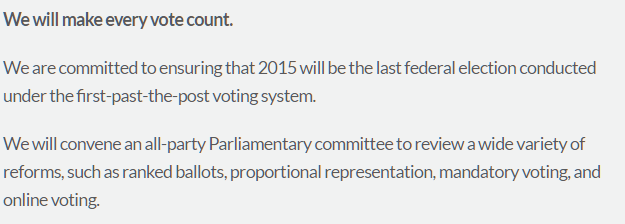
First of all in the drafting of the promise itself:

electoral-reform

If your goal is to no longer use first past the post, why are you studying mandatory and online voting? Neither of those is an alternative to first past the post! (You can be forced to vote or allowed to vote on your phone with any system.)

Second, in making such a big deal about it. This party made hundreds of promises, any number of which haven’t been mentioned since election night. Since we now know they weren’t so keen on it, why did they spotlight this particular one so much, repeating it, according to the Washington Post, 1813 times?

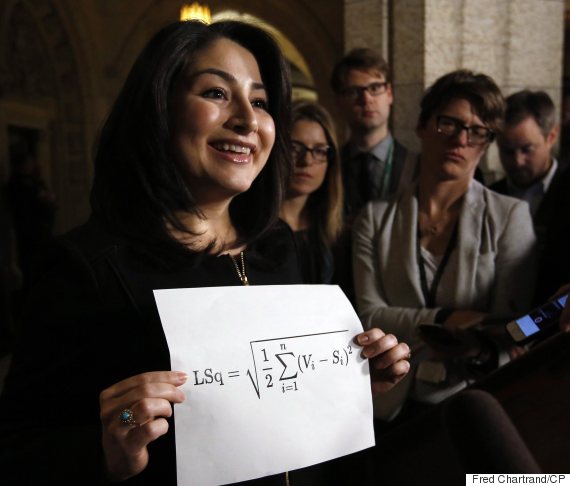
Third, their handling of the committee report. First, the Minister of Democratic Institutions insulted the committee members, saying “they had not completed the hard work we had expected it to do” [false!]. Then she followed it up with a press conference in which she made fun of math—always a good look on a young woman (so inspiring!).

Monsef
What a ridiculous formula!

Fourth, in the Prime Minister’s lame excuses for killing the promise, citing fears of extremist parties holding the balance of power. What, like having a party that wants to break up the country as the Official Opposition (Bloc Québecois, 1993 ot 1997—thanks, first past the post!)? And then bizarrely citing the example of Kellie Leitch running her own party.

Under first past the post, Kellie Leitch has a reasonably good chance of becoming Prime Minister in 2019

After all, she is one of the front-runners in the 14-person race to be leader of the Conservative party of Canada.

Look, if I’m sympathetic to PR, it’s because Canada’s major parties sometimes move in alarming directions, and I know they only need to convince slightly more than a third of a the population (living the right places) to gain a majority of seats. And these days the Conservatives are doing far too much cozying up to their lunatic fringe for my comfort.

Four of them—Leitch, Brad Trost, Chris Alexander, and Pierre Lemieux—happily attend a “Freedom rally” by “Rebel Media” (think Canada’s Breitbart) at which Muslims were called “unintegreteable” into Canadian society, and at which Muslims bans were requested. Nice!

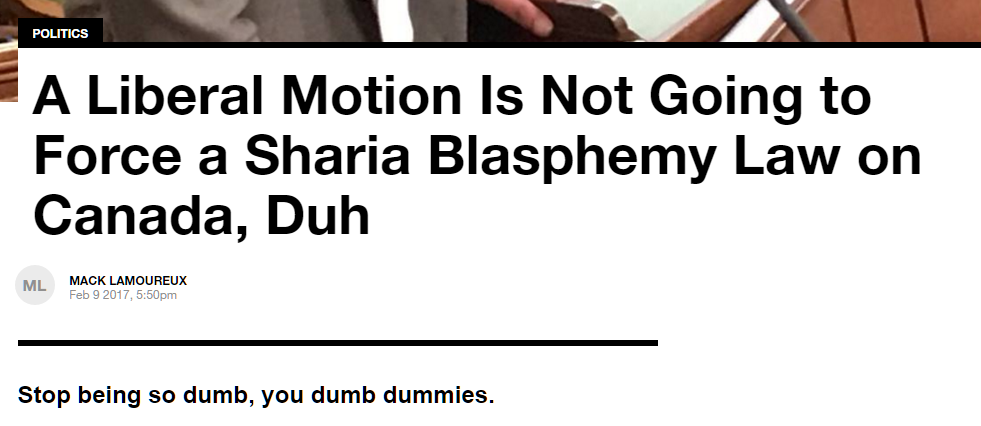
And the rest? Four weeks after six Muslims were murdered while praying at their Quebec, the majority of them are reluctant to support a motion condemning Islamophobia and other religious discrimination. Why? Because the Rebel people had stoked fears and anger about this innocent motion, erroneously claiming that it would stifle freedom and speech and bring in Sharia law (!!!).

liberal-motion.png

Source: https://www.vice.com/en_ca/article/a-liberal-motion-is-not-going-to-force-sharia-law-on-canada-duh

As Paul Wells says, “all parties must decide if it’s better to campaign on fear or campaign against it.” Are they with Iqra Kalid, the Liberal MP who brought forth this motion, or with the people now bombarding her with hate and death thteats?

So far, only Conservative canddiate Michael Chong has shown the courage and ethics to support Motion 103.

I never thought the first political party I’d join would be the Conservatives, but it’s the only way I can vote for Michael Chong as leader. [And you can too (if you’re Canadian): Sign up at https://www.chong.ca/. It’s only $15.]

Who also happens to be the only candidate with a climate change plan—one that would also give us a big income tax cut! Otherwise, we have one climate denier (Trost) and 12 people who claim to believe it’s a problem but apparently don’t plan to do anything to fix it.

And this is an issue because the Conservative leadership is not first past the post, but a ranked ballot. Meaning that even though I only like one candidate, I have to try pick out the least objectionable remaining candidates to rank higher than the truly odious ones (the Rebel four, plus O’Leary, wh0 apparently intends to run the country from a US base). Wish me luck.

Cute cat video!

If you’ve actually made it this far down this post, you deserve this:


Costs and benefits of reading Wired magazine

Wired magazine itself isn’t premium priced. Plus, they post most of their articles on their website for free. They get a little antsy about ad blockers, but that’s fair.

I started following Wired on Twitter during the last Canadian election. I thought that a little more science and tech news would be a nice break from all the politics in my feed. And I was right; it was welcome content. With the far worse US election on now, I can hardly give up on it.

But I hadn’t realized to what extent I was personally susceptible to constant promotion of the latest and greatest tech. I should have suspected, given that a single Wired article led me to spend I don’t know how much on a three-room Sonos system. I do love it, admittedly, but maybe there are other, cheaper wireless speakers that would have satisfied?

love-of-technology
Mmm, shiny new tech. (Image: Shutterstock)

Now I’m constantly drooling over new cell phones. Not iPhones, mind—I am simply not of the Apple world, and not even Wired can convince me to join it. (Possibly because I take such perverse amusement in reading about iWorld troubles; to wit the hilarious Don’t update your f-ing iphone!

nsoonaecxhen0kibllqmEnd of digression.)

But in “my” world of unlocked Android phones, look what they said about the Nexus 6P (the later iteration of my current phone):

There is absolutely no reason not to buy this phone. None. Zero. The Nexus 6P is the closest thing there’s ever been to a perfect Android device.

The perfect Android device! Why wouldn’t I want that? There’s no reason!

Except that, you know, it is a $700 (Can.) phone. Wired’s answer to that  point (in US dollars) [bolding mine]:

The Nexus 6P is absolutely the best Nexus phone ever. Hell, it’s the best Android phone ever. And at $499 unlocked, it’s even cheaper than nearly all its competitors. Everything Google could do, it did. It proved how good Android can be—that an Android phone can be better than the iPhone.

So it’s a deal! $700 is a deal, because it’s the best phone ever!

Only while I was pondering that, it basically went out of production, because there are new Nexus’s (Nexi?) coming out soon, and Wired hasn’t reviewed those yet.

But they did review the Huawei Honor 8!

Huawei’s new device, the Honor 8 (there have been many other Honors before), is every bit the spec monster smartphone. Glassy, colorful design; 12-megapixel camera, plus a second sensor just for good measure; ultra-fast processor and four gigs of RAM; fingerprint sensor that doubles as a clickable shortcut key; latest version of Android; lots of storage, with room to add more. In most practical ways, it’s not that far off from Samsung’s new Galaxy Note 7, or other Android phones like the new Moto Z. The only thing the Honor 8 is missing is the absurdly high (and VR-friendly) screen resolution, but you know what else it’s missing? $400 on the price tag.

Which translates to $520 Canadian. So look, by dawdling I’ve just saved $180! And, the Nexus is clearly too big (plus, out of production). I was about ready to order my new Huawei.

…Ignoring the fact that’s nothing really that wrong with my current phone, and the the little detail I don’t really use my phone that much, anyway. I’m much more the tablet girl, and Wired is kind of down on tablets these days (particularly of the Android variety).

I was also feeling some e-waste guilt. I started to ponder what could I do with the old phone, should I in fact get a new one. There are articles about that (you can guess where). It seemed it might serve as a sort of tablet extension for cases where the small screen isn’t so much an issue—for Chromecasting, Twitter reading, playlist display, and such. And yes, I can do that with the phone now, only that always risks me leaving the house without it—which doesn’t happen if I just keep the phone safely in my purse.

As I was justifying all that in my head, I won a 10″ tablet in a draw.

Haiti_5K_160911_(13of18)
The prize

Now, this is not the sort device Wired would rave about. It’s a bit slow and clunky. It has only 8 GB storage and limited ability to use the SD storage. The screen looks acceptable only from direct angles. It’s not sporting the very latest version of Android.

But as an extension to my “good” Samsung Pro tablet, it’s fine! There are even a few things it does better.

It’s proven enough of a distraction that I’m willing to put off the phone purchase again.

Well, that, and the fact that I’m also… Awaiting shipment my new Kobo Aura One ereader!

The new Kobo Aura One is literally big, a 7.8-inch behemoth in a world of standard 6-inch displays. But its features are also outsized, whether it’s robust waterproofing, a clever new nighttime lighting system, or a way to help you read as many top-shelf books as you please without paying a cent. More importantly, they’re all enhancements you won’t find on an Amazon Kindle.

It was a mere $250 Canadian, and Jean thinks he will use my old Kobo. (Which is good, cause it’s still perfectly fine.)

Umm, how long now til the election?

Meanwhile, in America

Monday night, I’d had it with the “Bernie or bust” people. After that convention? After the almost cartoonishly sinister connections to Russia? You’re just going to pout—and boo!—because it’s not your guy?

giphy
Source: http://www.demconvention.com

This Seth Meyers piece summed up my feelings perfectly:

Hey! A message to the Bernie or Bust Die-Hards

Look, I’m Canadian. I’m from the country where 80% of citizens would vote for Hillary Clinton over Donald Trump. She’d win every province, every demographic—the men, the less educated, the old people. We don’t feel the Hillary hate. We don’t understand the appeal of the Miserable Angry Bag of Orange Jello™.

™ Tabatha Southey, Globe and Mail

But, but this is not meant to be another smug “look how great Canadians are” post. Because there’s one thing that’s brought me out of the doldrums the past few days, and that’s Americans.

After my disgust Monday night, I returned to Twitter Tuesday morning to find much discussion of Michelle Obama’s speech at the DNC. I watched the entire, amazing, inspiring thing on YouTube. And after wiping up the sniffles, the world felt to me like a better place.

Tuesday night I had dinner with friends (always a good thing), and one remarked that she was a bit sad about missing the DNC convention that night. And that seemed slightly odd to me, a Canadian watching all that live. I’m not sure that I ever had.

And Wednesday night, I had shit to do. I had to catch up on the dishes, the groceries, the laundry… I figured I might try to watch President Obama’s speech live, later. Yet somehow, between all the chores, I managed to catch much of Joe Biden speech of righteous anger.

How can there be pleasure in saying, you’re fired? He’s trying to tell us, he cares about the middle class, give me a break. That’s a bunch of malarkey.

And pretty much all of Michael Bloomberg’s (former Republican, current In dependant) take-down of Trump’s supposed business acumen.

Throughout his career, Trump has left behind a well-documented record of bankruptcies, thousands of lawsuits, angry shareholders, and contractors who feel cheated, and disillusioned customers who feel ripped off. Trump says he wants to run the nation like he’s run his business. God help us.

Tim Kaine (yeah, I saw that too) wasn’t ab entirely riveting speaker throughout, but those Democratic Vice Presidential picks sure are charming, warm men, don’t they? And when he started to imitate Donald Trump’s “Believe Me!”—that was good.

And then President Obama came on and knocked it out of the park. The speech was long. It was late. (And now I’m tired.) But I hung on every word. And I liked the world… even more.

See, Canadian politicians don’t do that. This country just doesn’t have that history of inspiring speaking. Trudeau Senior, whose movie bio I’m re-watching, was very eloquent, had some good lines. His son and current PM can put together a decent stump speech. The late Jack Layton’s last letter to Canadians touched many.

But it’s grasping at straws. It doesn’t compare. And I’m a total sucker for this sort of eloquence. I can’t put words to what made President Obama’s speech so great; I again have to turn to the experts, the Americans, for that, per this brilliant Esquire article:

The president is all those things—jazz musician, torch singer, politician, president—all fashioned from his own aesthetic derived from the hidden music he found in our common history. He appropriated optimism and the best elements of that tired, loaded concept called American Exceptionalism. My lord, he even jacked Ronald Reagan, ringing his own changes on the shining city on the hill. He is cool in all the ways that matter.

November is a long way away, and I still don’t how understand how this thing is even close. But at least for today, I’m feeling more hopeful.

landscape-1469724084-obamahil2
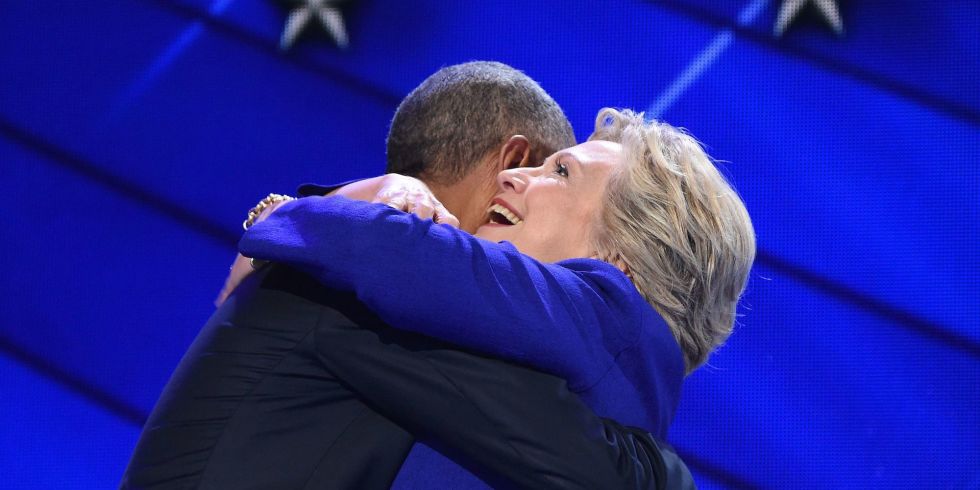
Passing the baton

A PS: CBC’s Arron Wherry writes about why Canadian politicians don’t make speeches like American ones do. And why that might be unfortunate.

Electoral reform: Asking the right questions

Canada’s current, low-key debate about whether to change the federal voting system (and if so, how) is way less dramatic than the political power plays in the UK, Australia’s coping with a near-tie in their new Parliament, and the insane US election. But it’s what we got.

The Liberals ran on a promise that 2016 would be last election under “first past the post” (FPTP), but without committing on how it would change. They have struck an all-party committee to try to figure that out. The main debate is between those who want PR (proportional representation) vs. those who want to keep FPTP. (A side debate is whether the question should be put to a referendum.)

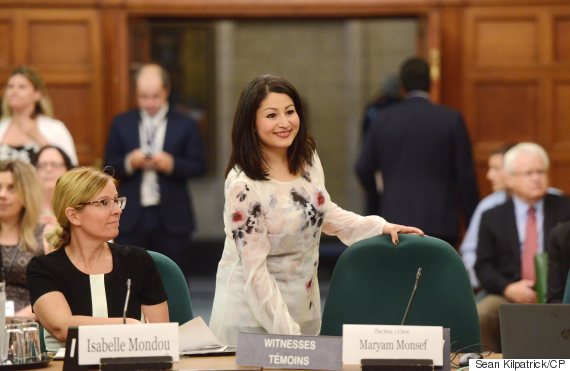
Maryam Monsef

Democratic Institutions Minister Maryam Monsef appears as a witness at an electoral reform committee on Parliament Hill in Ottawa on Wednesday July 6, 2016. (Photo: Sean Kilpatrick/CP)

Essentially, PR proponents think it’s important that each Canadian voter have a reasonable chance of electing an MP of the party they vote for. In practice, this would be achieved by having larger multi-member ridings that allow for a more proportional distribution of total votes, vs. the current system of one member per smaller riding. (Andrew Coyne, PR advocate, explains.)

FPTP proponents don’t agree that this matters. They seem to think that wanting to be able to elect an MP from the party of your choice is just a sign of not really understanding the Canadian system of responsible government. For example: Roundup: Values vs. mechanics.

Now, said lack of understanding is likely true—we don’t have great civics education in this country, and even politicians seem a bit fuzzy on how it’s all supposed to work. But, just dismissing PR proponents as ignorant is neither helpful, nor persuasive.

Admittedly, PR proponents have a tendency to be overly optimistic about the system’s potential benefits, claiming it will lead to increased voter turnout, better representation of women and minorities in Parliament, improved social equity, more political harmony—even a cleaner environment. Absolutely none of which is guaranteed. (Not the most egregious example of these, but see Activists gear up for ‘historic opportunity’ to usher in proportional representation.)

But, PR does give you that better shot at electing an MP from your preferred party. An MP who is then more likely to vote for legislation you agree with, and against legislation you don’t.

I wish FPTP proponents would address that fact. Why exactly do they think we better off having one MP from a party we didn’t vote for (which happens to the majority of voters under FPTP), than having four or five MPs, one of whom (odds are greater) we did vote for? What  current benefits will we lose if we move to a multi-member riding system?

While not exactly addressing this question, I did find this article, from a pro-FPTP perspective, rather interesting: Trump and electoral reform: Connecting the dots. Not sure about the main point that Canadian politics is in such a great state right, so why change it. If true, isn’t that more a factor of who won the last election than the system itself? Great Britain has the same system; does anyone think their politics are in a great state right now?

But, Mr. Heath did cause me to think about the fact that even if you do manage to elect an MP you want under PR, and they mostly vote how you prefer they do, that might not make any difference in the grand scheme of things. MPs that are not part of the coalition government still won’t win too many votes. It’s also absurd to think that under PR, there won’t ever be Conservative governments again (even if the current Conservatives, with their constant bleating about referendums, seem to believe that themselves). PR is no road to leftie utopia. All parties would adapt, include theirs.

It is a bit fear-mongering, though, to suggest that “the first thing you are going to get is a redneck anti-immigration party, which will get around 15% of the vote, and which will hold the balance of power in any parliament where the Conservative party has the most seats.” Not that such a party might rise; that’s likely true. But that such a party would definitely and always partner with a more moderate Conservative partner. I have a higher opinion of Red Tories than that; I expect they might prefer to ally themselves with another centrist party than a bunch of racists.


A bewildered Canadian on a world gone mad

It’s Canada Day. And right now the world is giving me many reminders of how lucky I am to live here.

1. That Quebec’s referendum on separation was defeated.

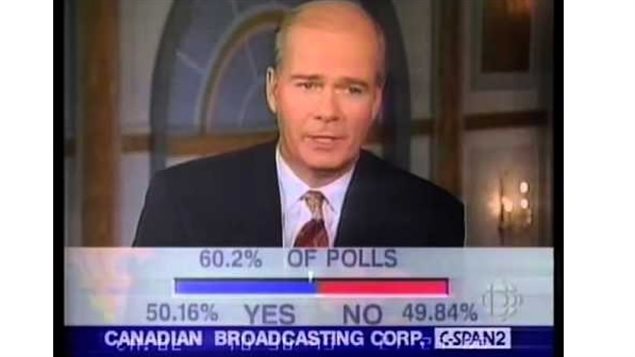
I wasn’t paying much attention to Brexit until a couple weeks before it happened, and even then I was thinking that surely they wouldn’t vote Leave? Watching the results come in reminded me so much of the horrible Quebec separation referendum of 1995. A full night of tension (following weeks of worry on a vote I, an Ontarian, couldn’t even participate in) watching the movement of a Yes (separate) / No (stay) line on television.

151030_is0se_rci-m-vot_sn635
That nail biting time before the needle moved to the side of good

But then, while the Yes started out strong, it gradually swung toward the No, who ended up taking it with a 0.6% margin. Whereas Great Britain’s vote was the opposite: A strong initial showing for Stay giving way to Leave, who took it with 2% margin. (No matter how many times I refreshed my browser.)

What would have happened to Canada had it gone the other way? Great Britain’s experience is giving us an idea:

  • A precipitous drop in currency.
  • Tumbling stock markets, with the UK dropping from the 5th to the 6th world economy overnight.
  • Expected rises in unemployment, debt and lowering of GDP and growth.
  • A Leave team with no plan for how to exit.
  • Political disarray all around, leaving no party or leader currently able to effectively govern through the chaos.
  • Regions (Scotland, Ireland, London) unhappy with the result talking separation of their own.

For Canada, it would have been all that, only worse. (For an idea just how ill-prepared the country was for the possibility of a Yes vote in the Quebec Referendum, read Chantal Hébert’s The Morning After: The 1995 Quebec Referendum and the Day That Almost Was.)

And just for the record, Leave voters in Great Britain: What you did was crazy. Your country had a great deal in the EU: you were allowed to retain your own currency and greater control over your own borders than other countries, while still enjoying full trading access and movement of workers. And you gave that up for what?

177763_600

2. That recent attempts to win Canadians’ votes through xenophobic appeals have failed.

While a number of factors inspired Leave voters, the wish to reduce immigration—particular a certain kind of immigrant—was among them, as evidenced by the unfortunate increase in hate crime and racist abuse since the vote (as though racists now feel “allowed” to air their views). Meanwhile, the presumptive Republican nominee for US President wants to ban all Muslims from entering the country (“til we figure out what’s going on”) and build a wall to keep out Mexicans. And France has their National Front party. And so on…

But similar appeals haven’t met with success in Canada. In Quebec’s (them again) 2014 election, the Parti Québecois ran, in part, on a “Charter of Values” that would have banned public sector employees from wearing “conspicuous” religious symbols:

MG0911003A_.indd

This bill was so popular in polls, the PQ used it try to turn their minority government into a majority. It didn’t work. After a fairly disastrous campaign by the PQ, it was the Liberals, who opposed the Charter, who were elected with a majority of the seats. With the added bonus that the spectre of another Quebec referendum on separation retreated further.

Then in the 2015 election, the ruling Conservatives appeared to gain ground in polls after they pledged to ban the wearing of niqabs at Canadian citizenship ceremonies, and to set up a barbaric practices tip line. [This is when I had to check out of Canadian election coverage for a while, as I was so distraught.] But the end result was, again, a coalescing around the Liberal party, who were foursquare against both proposals (and, it must be said, who generally ran a brilliant election campaign).

justin_trudeau_liberal_leader_federal_election_surrey_bc_-_mychaylo_prystupa
A plurality of Canadians chose hope over fear

Upon election, Liberals walked the talk, dropping the court case on the niqab ban, and most notably, welcoming 25,000 (and counting) Syrian refugees, moves that have only made them more popular since the election. Americans look on it in wonder, from The Daily Show to the New York Times:

Why? Well, Vox Magazine says it’s the outcome of decades of Canadian government fostering tolerance and acceptance as core national values. As a result, most Canadians see immigration as an opportunity, not a problem; as something that improves rather than threatens the nation. Apparently, Canada is the least xenophobic country in the Western world.

3. That our current government is (mostly) pro-trade

One of the most confusing results of the Brexit vote, to me, was the cavalcade of federal Conservatives MPs who tweeted their approval—the only Canadian I’m aware of who did so. But isn’t Conservatives supposed be all pro-trade, because it’s good for business, while it’s the lefties who are opposed, fearing it’s bad for labour?

And yet there’s Trump, spitting about pulling out NAFTA. What? When did this turn around? (Harper’s government, it must be said, was most definitely pro-trade, making the MPs comments all the more confusing.)

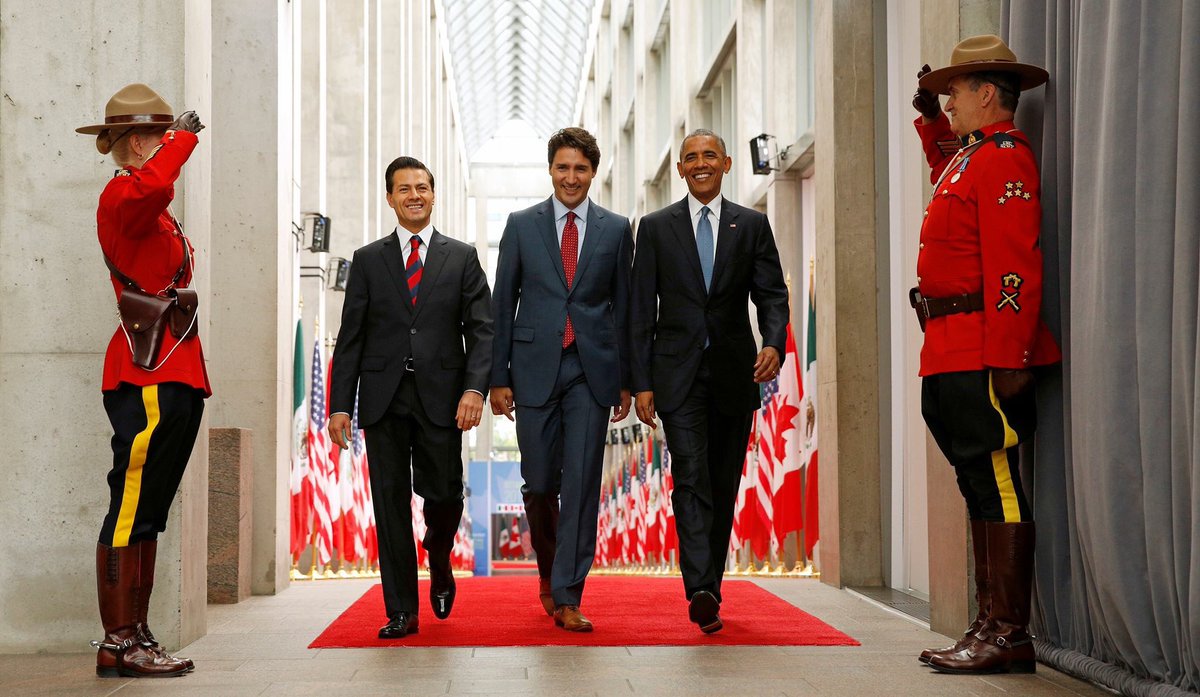
So it was another interesting bit of timing that this week was the NAFTA summit between the current US President, Canadian Prime Minister, and Mexican President.

cmjo22zwmaavs9w
Too bad they’re all men (but this US will be changing that soon, right? right?), but a fine-looking trio they are

Their big message: Trade is good. Countries are stronger when they work together. Globalism brings prosperity. And it was all capped off by one amazing speech President Obama gave in the House of Commons:

And what makes our relationship so unique is not just proximity. It’s our enduring commitment to a set of values, a spirit alluded to by Justin that says no matter who we are, where we come from, what our last names are, what faith we practice, here, we can make of our lives what we will.

Watch or read the rest here.

It was heart-warming, and for a while, one might forget that it remains so much easier to cross borders in Europe than it is to move between the US and Canada, that we have to pay duties on even tiny online purchases from the US, and absolute absurdities such as Canadian inter-provincial (!) trade barriers that cost our economy billions.

So there’s a lot of work to do on this one. But at least it seems the intent it to make things better, not worse, on this front.

Cause that’s the Canadian way.

Happy 149, Canada.


Sunny ways—Canada is back

I was nervous Monday.

Despite my reduction in news consumption, and even though off on a wine-soaked vacation last week, I was well aware of what the polling was showing: That Harper’s horrible Islamophobic campaigning had seemingly backfired, and that the Liberals’ numbers were rising steadily—showing a comfy 9-point lead in one of the last polls to be released.

But also knew that polls were often wrong, and at any rate, were entirely meaningless. Only the vote counts for real.

My less emotionally invested yet still interested husband set up his tablet in anticipation of result, using CBC website tools to track certain ridings. He was at the ready as soon as Eastern results were posted. As I distracted myself with housework and such, he was giving reports:

“It’s looking good.”

And a little later: “It’s looking really good.”

And we all know what happened. Canada’s Atlantic provinces turned into one big Liberal red lobster.

Nova Scotia riding results
Yes, I know this is just Nova Scotia, not all the Atlantic provinces…

Of course that made me feel better, but we still had a big time gap til the more decisive Quebec / Ontario results.

So we watched a little iZombie to pass the time.

Around 9:30, I turned on the TV and said I’d just “have a look.” Of course, then I couldn’t stop watching (though I did bounce around channels a lot), mesmerized as the “Leading  or Won” seat counts just kept ticking up. By 10:00, they’d called that the Liberals would have a plurality of seats. The numbers kept going up, til it was clear that majority wasn’t an impossibility after all. And that was officially called around 10:35.

Canada votes Liberal majority
Holy doodle.

This would be the first time in about 20 years that a Federal candidate I voted for was elected as part of the governing party. Not to mention the first time in 10 years that I’m not appalled by a Federal election result.

It is unfortunate that the NDP and Greens were collateral damage in this; I didn’t wish ill to either of those parties, who lost some good MPs. But they were just as out-campaigned by the Liberals as the Conservatives were. The Liberals were able to do something else that hasn’t happened in decades: inspire disaffected voters to come back to the polls. The Liberals received more votes than in any party in Canadian history.

Even when the overall results were evident, I couldn’t stop watching. I looked up particular ridings. I cheered the principled Michael Chong’s victory, the only Conservative for whom that was the case.

I was pleased that my local candidate, Bardish Chagger (#MovesLikeChagger) garnered nearly 50% of the vote. I was glad to see her joined by three other Liberal MPs, replacing our previous set of middle-aged, white Conservative MPs with a more diverse group.

New Liberal MPs of Waterloo Region
(And the remaining middle-class white guy’s name is Bryan May, so he can’t be all bad!)

I liked that the Liberals won seats in all provinces, even Alberta and Saskatchewan! (What’s up with Saskatchewan, anyway? Why so Conservative?)

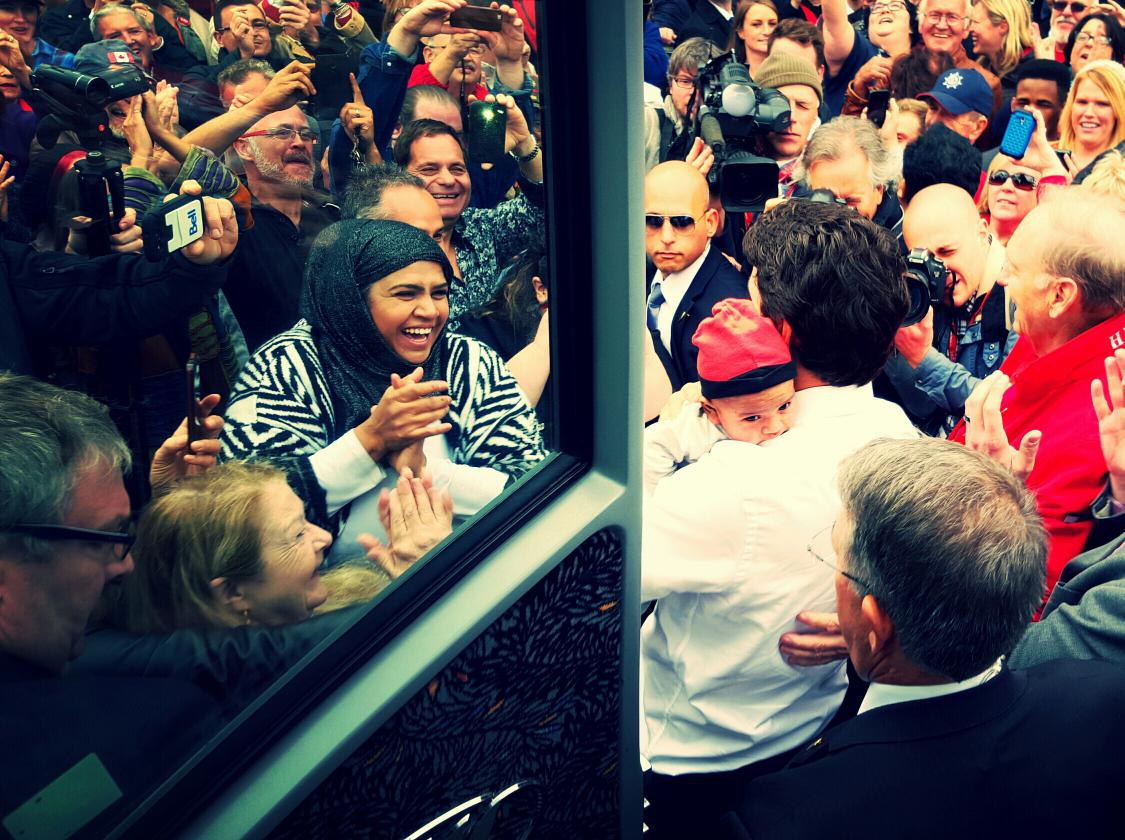
And I stayed up to watch all the speeches. I admit to being moved by Trudeau’s story about the Muslim woman and her baby. (But then again, it was nearly 1:00 AM, so that might just have been an exhaustion response.)

Trudeau and baby with her mother
This is the picture: It really happened!

And while I was going to say to say that results really don’t affect my daily life much, this one has. Because now that I know this story has a happy ending, I’ve ended my news diet, and have happily returned devouring interesting news stories wherever I can find them.

Though I must say I didn’t expect quite so many of them to be about how “boinkable” Justin Trudeau is. World: some respect for our hot new PM-designate, please!

About my last post

I’ve admittedly had some relapses in my “ignore the election” resolve, but the previous post was actually written before said resolution. I sent it as a letter to the editor, but it appears it’s been rejected. As I actually spent a lot of time writing that sucker (takes so much longer to write less!), I just wanted it published somewhere!

(And by the way, Braid used the exact same line to avoid an all-candidates debate on Science held at University of Waterloo.)

Still, sorry for adding to the discussion of topic that I know Canadians are tired of, and non-Canadian don’t give a fig about. (But just for the record, progressive Canadians: Please do get out and vote!)

And frankly, though voiced in a bit of jokey way in my “shit’s making me crazy” post, it’s pathetically absolutely true that my mental health degrades when I pay too much attention to politics. It literally sucks the joy out of my life. And I can’t write about something without thinking about it.

So it’s time this blog got back to the admittedly trivial topics that actually make me happy to ponder.

Starting with a poll in which none of the results could be depressing.