Concerts, plays, stand-up, and movies are sometimes an escape from current events, sometimes a reflection of it.
Beethoven 9 / Mijidwewinan
The two final concerts of the KW Symphony’s season, featuring new conductor, Andrei Feher, were both sellouts. The draw, besides Feher himself, was the performance of Beethoven’s Symphony No. 9 in D minor, a choral piece better known as the Ode to Joy. It’s always a worry, when facing a 65-minute symphonic live performance: Will my pop-music brain be able to stay focused for that long?
After hearing reports like the above for a couple of years now, ith our Ottawa leg, we decided to give this Air Bnb thing a whirl. We wanted a place close to downtown, that would be self-contained, and cheaper than a hotel (or why bother)? We picked one that met those qualifications and otherwise seemed OK, per photos and reviews.
The place was kind of… run down. Creaky, uneven floors. What looked like a hole punched in the wall. Water pooling at the bottom of the fridge. Trash strewn around out back. An electrical outlet of dubious safety. And we could really hear the next-door neighbours.
On the other hand, it was basically clean, we spotted no insects of any sort, the location was very convenient, it had a strong the wifi signal, and after a visit to the Byward Market to add fresh fruit and Montreal-style bagels to our arsenal of produce from Ile d’Orléans, we made ourselves the best breakfasts of the trip.
Still, now I have an answer when people ask, why would anyone stay in a hotel anymore?
Unlike our accommodations, Ottawa looked very regal while we were there
Our first Ottawa dinner was at Fairouz, a restaurant specializing in high-end Middle Eastern food. It’s a smallish place, and somewhat noisy, but with very good service. We had with spicy olives, salmon pastourma, lamb kofte, and date cake for dessert. It definitely was a step above your typical Middle Eastern food—but that type of food still isn’t our favourite.
We then had to decide what to do with ourselves in Ottawa, a city we visit rather more often than Québec City. We decided to give the Museum of History another chance, now that the Canadian History Hall was open. They also had a special exhibit on The Franklin Expedition that was of interest, especially since we’d been watching AMC’s The Terror.
The walk to the Museum of History
The Franklin Expedition exhibit was really terrific. It was interactive and laid out in a way that gave a good sense of what the men went through. The bit about the recent discovery of the two lost ships was featured less than I expected it would be, but it was featured.
The Canadian History Hall, which is on two floors, is also really well done. It starts with Native history and their story gets included throughout, much more than if this Hall had been put together a decade or so ago, I suspect. We then get the stories of the French explorers and settlers (and the Filles du Roy), the Acadians, the United Empire Loyalists. We revisit Confederation, Louis Riel, the building of the railroad. Exhibits continue on to more current events: the world wars, Expo 67, Trudeaumania (the first), the two Quebec Referendum, the October Crisis, the legalization of gay marriage, the Idle No More movement, and so on.
It was all very interesting, and we ended up spending far more time at that museum than we’d expected to. At one point we took a lunch break to eat at the fairly indifferent (nowhere near as good as Apsara) Thai restaurant across the street (the Green Papaya), then headed back. We were there til 3:30.
The day had turned lovely, so we then did some ambling about Ottawa. I also stopped off at clothing boutique near the Air Bnb, featuring local designers. I tried on a number of items and did end up purchasing a pretty cute little black dress (about $120).
Ottawa
For dinner, we met up with some friends at Play Food and Wine. The service was a bit error-prone: a cheese plate including blue cheese despite an allergy having been reported to that very thing; duplicated dishes arriving when different dishes had been ordered. But everything got rectified and we did enjoy our various small dishes, though nothing especially stood out this time.
Saturday was predicted to be rainy, but in the end, less rain fell than expected. We started the day at National Gallery. It was partly under construction, and featured no special exhibits, but we hadn’t been in a few years, and so just enjoyed the regular collection, particularly the European and American works.
Jean was there!So were camels!
We then had a decent lunch in the Market area, resisted the offerings at the Poutine festival on Sparks Street, and did some shopping around the Bank street area, mainly picking up books and magazines (like, on paper!). The independent coffee shops all seemed to be overflowing with patrons, so made our way to Starbucks at the Chapters.
Our final dinner of the trip was at the Beckta Wine Bar, and it was quite lovely. We started with some oysters, and both had the Parisian gnocchi (ricotta, asparagus, pine nuts, peas), which was worth doubling up on. (I suspect we had dessert as well, though I can’t remember what, now.) Service was very good (not error-prone) and helpful with the wine matching.
A nice ending to this leg of the trip. Then it a blessedly uneventful drive home on Sunday (during which we didn’t quite finish Ready Player One).
I have found a new (to me) podcasting app Pocket Casts and it’s very good. It has solved all my podcasting problems: It gathers all podcasts in one app, whereas before I was bouncing between iTunes, Google, SoundCloud, and a browser. It keeps my spot in each podcast I’ve started, even when switching devices or playing through Sonos or Chromecasting. It can even cut silences out of each episode, making it each one slightly shorter.
Wait, did I say it solved all my podcasting problems? There’s one it’s likely only exacerbated, even with the seconds or minutes saved by cutting out silences: finding time to listen to all the ones I’d like to.
Some people do this by listening on what they call chipmunk speed, playing it at a faster speed than recorded. I tried that, but I just don’t like the weird sound that results, even at only 1.5x faster.
I can’t attend to a podcast while reading, or having a conversation, or working (because fortunately my job’s not that boring), or writing, or anything else in which I have to attend to my thoughts. My commute is extremely short, which is wonderful in most ways, but means that it’s really not enough time to make much of a dent in a podcast episode.
And I just don’t want to give up my daily habit of listening to music while making dinner. I also don’t think they would be as good as soundtrack to my Monday night cleaning routine as my “high-energy songs” playlists.
“Know what would make my life better? Listening to music less often.”
— No one, ever.
So I found myself seeking out extra chores I can do, for which a podcast would be a useful adequate. Now, anything that can motivate me to do some tidying up is beneficial. But I still prefer cooking to tidying, so I also find that I’m now trying out more dessert recipes. The value of that is debatable.
(On the other hand, you can definitely overdo this podcast thing, as revealed in this article: I Listen to 35 Hours of Podcasts Every Week. Is That … Bad? Answer: yeah, kind of… And towhich I say… 35 hours a week! Jesus. When do you do… anything else?)
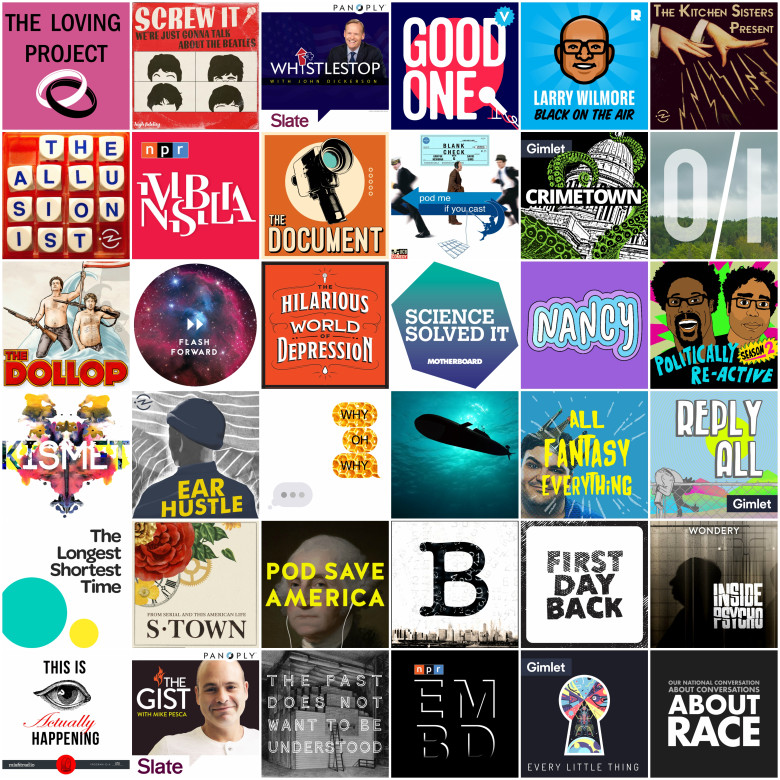
There seems to be podcasts about every topic under the sun, and I’m not always sure how I stumbled upon the ones I try to listen to semi-regularly. But here’s a sampling of them and what I like about them.
Psychology
These are nice because, being less attuned to current events, you can more cherry-pick through them and feel less pressure to listen to them soon after their posting date.
Good old CBC Radio—the original podcaster! This particular series is by Terry O’Reilly and is on the subject of advertising, or “the art of persuasion”. Recent episodes have covered jingles (with a WKRP reference), use of celebrities (early Ellen Degeneres!), brand myths (no, little Mikey from the Life cereal commercial didn’t die of pop rocks + coke. In fact, he’s alive and works in advertising). I’ve always loved this show, but rarely catch it on the radio. Podcasts to the rescue.
Hidden Brain is by NPR: the CBC of the US! This is how it describes itself:
Hidden Brain helps curious people understand the world – and themselves. Using science and storytelling, Hidden Brain reveals the unconscious patterns that drive human behavior, the biases that shape our choices, and the triggers that direct the course of our relationships.
One three-part series that actually changed my own behavior a little was on the subject of sleep: The “Swiss Army Knife” Of Health. It makes a pretty compelling case that while sleep feels like a waste of time, it’s really important. And that while those who routinely get only 5 or 6 hours of sleep a night might think they’re managing just fine, they actually aren’t. They just no longer notice how tired they are all the time. But they are chronically under-performing, both mentally and physically. To be at your best, you need an “uncompromising 8 hours of sleep.” Every day.
Pop culture
Pop culture stuff is timely, but not that timely, especially since I almost never see movies on opening weekends, read books when they first come out, or watch TV live (love my PVR). So I can go back a few weeks on the pop culture ones without them feeling irrelevant.
This one, hosted by two young women, looks at all aspects of pop culture—music, TV, movies, podcasts, books, magazines—from a feminist perspective. I’ve gotten some really good recommendations from it, along with some great insights; for example, their episode about the movie Get Out pointed out a whole lot of racial metaphors and symbols that I had missed, and made me admire the movie even more.
The only issue? And I don’t know how to say this without coming across as a disapproving granny, but wow, they sure swear a lot. I know, there’s a lot for American women to be angry about right now, and you gotta speak your truth. I just feel the arguments might be a bit more effective if the colorful language was applied more judiciously.
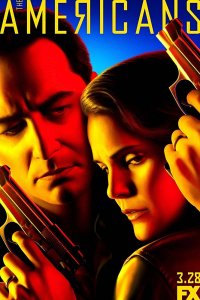
Where Backtalk is very broad; The Americans Podcast is super-specific. It’s not about all the people living in the country to the South, but about the FX TV series by that title that tells the story of Russian spies in 1980s who pose as an all-American couple, complete with all-American children. As previously reported, Jean and I love it.
It’s currently in its sixth and final season, and I have just discovered this podcast, which contains interviews with the cast, crew, and creators of the show, and thus is strictly a post-episode listen, as it’s rife with spoilers. This season is setting up to be epic.
Politics
Political stuff, especially American, is just moving with break-neck speed these days. These are the ones I don’t like to wait too long after post date before listening.
Crooked Media was a response to the election of Trump. Most of its members used to work for President Obama in some capacity. So they’re not unbiased, but the aim is to have “better conversations about politics.” They have a ton of podcasts, and I’ve sampled various ones. But my favorite is Lovett or Leave It.
Some sincerely cool Crooked Media merch
Lovett or Leave It is taped live Friday nights in front of an audience, who participates in some segments. It’s a humorous, improvised look at the week’s stories in US politics. To add to the many other sources of humorous looks at US politics. What’s different here, I guess, is that it’s a lot of super well-informed people cathartically doing things like playing a clip from Fox news, saying “OK, stop”, and responding to the stupidity. Or turning the ridiculousness into a game. Or spinning a wheel to decide which topic to rant about.
This is a relatively new one, and it’s about Canadian politics! I was drawn to it because they seem to be especially covering wonky issues I get somewhat obsessed with, like carbon pricing, why doesn’t the NDP seem more viable in Ontario, and what’s up with Sikh politics.
It features journalists Justin Ling and Jen Gerson, who are supposed to in “opposition” from left and right positions, but it took me two episodes to realize that was the idea, because neither of them is really that extreme or partisan. Which I think is good (and also kind of Canadian).
The KW Symphony recently presented “Sing-Along Musicals”! I got tickets even though Jean is not so big on “singing along”. When I saw the program, I wasn’t so sure how much of that I would be doing, either. South Pacific? Oklahoma? The King and I? Those are some old-timey musicals! Did I even know any of the songs from those?
Turns out I did, at least somewhat. “I’m Going to Wash That Man Right Outta my Hair” has not always been a shampoo jingle, it turns out. Oklahoma includes “Oh What a Beautiful Morning”, “The Surrey with the Fringe on Top”, “ I Can’t Say No”, and “People Will Say We’re in Love”. The King and I has “I Whistle a Happy Tune”, “Getting to Know You”, and “Shall We Dance”. And they projected the lyrics, so you didn’t need those memorized.
The second half got a bit more modern, with “Defying Gravity” (done as a solo, mind you), selections from The Sound of Music, and a surprise encore of “Let It Go” from Frozen. The whole evening was fun, the concert featuring a youth choir, two talented young singers leading the sing-along (when they weren’t solo-ing), and young dancers making an appearance during some numbers. Conductor John Morris Russell, of the Cincinnati Pops, was lively as usual. So Jean enjoyed it also.
It got me thinking, though: What would be my picks if programming a sing-along musicals concert? Excluding any musicals based on the works of great rock and pop artists (such as We Will Rock You, Tommy, American Idiot, Mamma Mia, and Jersey Boys), because that would be cheating. And I guess that also excludes Moulin Rouge, though kudos to Baz Luhrmann for truly re-imagining all those pop songs in that music.
But merely having mentioned Moulin Rouge, I can now include this Virtue and Moir dance video, right?
First up, musicals with multiple great numbers in them, so we could do a bit of a singalong medley with those. In no particular order…
We saw Lady Bird last weekend. This indie film is most famous for having attained a record 100% fresh rating on Rotten Tomatoes, meaning that it got positive notices from all 195 critics who reviewed it.
It would be nicely contrarian of me to report that I didn’t like it… but I did. Set in 2002, it’s about a young woman named Christine (who prefers to be called Lady Bird) negotiating her last year of high school in Sacramento, California. Nothing epic or bizarre occurs. She tries to boost her college changes with extracurriculars. She dates boys for the first time. She abandons old friends for new. She consistently fails to please her mother.
But it works because her character and the supporting characters are so strong and appealing, with great acting that makes them all believable. And, because it presents a time of life and experiences that most of us (at least most North Americans) can relate to. Even Jean, who definitely prefers plot-driven films over character-driven ones like this, was able to enjoy the ride. For me, it didn’t hurt that it was centrally a story of women: Christine, her mom, and her best friend are the main characters. Dad, the boyfriends, the brother, were all supporting cast.
Meanwhile, I’ve been reading a new-ish Freddie Mercury biography called Somebody to Love, by Matt Richards and Mark Langthorne. It’s hardly the first Freddie biography ever written (or that I’ve read) and I missed the fine print that this one would be particularly looking at his life in the context of the AIDS crisis. Which I pretty quickly decided was not the context I prefer to focus on. Sure, it was sort of interesting finding out just how far back the disease’s origins can be traced, and that Freddie had had an encounter with “patient zero”, and that Reagan wasn’t quite as bad on AIDS as they say (though he was pretty bad), but overall I found myself skipping over the pages discussing increasing death rates or what symptoms Freddie developed when, preferring the parts that talked about the music and the important relationships in his life.
Those parts were a reminder, though, of the extent of critical slagging Queen endured throughout their career. The reviews were not just negative—they were scathing.
A Day at the Races, 1976: “I hate this album…. All of these songs with their precious impotent Valentino kitsch mouthings on romance, their spotlight on a vocalist so giddily enamoured with his own precious image—they literally make my flesh creep.” NME. (Hey, NME: Homophobic much?)
The Game, 1980: “Less obnoxious than Queen’s last few outings, simply because it’s harder to get annoyed at a group that’s plugging away at bad rockabilly than with one blasting out crypto-Nazi marching tunes.” Rolling Stone (Yes, Nazi comparisons are always apropos.)
The Miracle, 1989: “Addresses the question how much bad taste it is possible to cram onto one album.” The Times.
Few critics at the time seemed to recognize that Queen wrote songs that would endure, become the soundtrack of people’s lives. That in the multi-layered vocals, they developed a sound unique to them. That they four song writers each capable of writing hit songs. That they had one the best rock vocalists. That this band would come to be seen as one of all-time greats.
Both of which got me thinking of the state of professional criticism today, compared with the pre-digital era. For movies, while the influence of any individual critic has diminished compared with the heyday of the likes of Pauline Kael, Anthony Lane, and Siskel and Ebert, as an aggregate, they seem to have Hollywood spooked!
Decades ago, the only way to evaluate a movie before its release was to read reviews in major publications such as the New York Times, the New Yorker or the Los Angeles Times. Today, moviegoers rely on the Tomatometer, a number that shows what percentage of critics recommend the film.
…
It’s no coincidence that the few breakout hits of the summer box office all have scores of 80% or higher… And for lesser films, a very low score can be fatal.
But for music? Aggregate sites do exist, like Metacritic—but I had to look up that fact, because I don’t use them, even though I do listen to music regularly. And the only thing I’ve read about recent music criticism is that it seems to be overly positive now. The original WSJ article is pay-walled, so here’s a report on (and critique of) that article: No, There Weren’t Only 8 Bad Albums in the Last 4 Years.
Why the difference? Well, movies are still something of an investment, aren’t they? Of time, if nothing else: two or so hours you won’t get back if you hated, hated, hated that movie. But often of money also: people still go to theatres to see movies, buy them on disc, pay to rent them, subscribe to movie channels. And they’re still expensive to make, so there’s only so many of them released each month. And there’s no Spotify of movies, really: Current movies are not in constant competition with movies of the past. If you’re into movies, you can focus on and make a decision about each.
But albums? They’re no longer distributed on vinyl discs you can play only on your home stereo system… And it’s really just about songs now, which are short, and you can listen to those anywhere, and (if you don’t mind the ads) it’s free to do so. Who needs to be warned away from a bad album when the skip button is right there? The danger isn’t in wasting time (or money) on bad music; it’s on missing out on great music because there is just so much music so easily available now. Of course music reviews are mostly positive: Recommendations are all we need.
So yeah, Rotten Tomatoes got me out to see Lady Bird, and I’m glad it did. I would point out that its 100% score doesn’t mean that all 195 critics thought it was the best movie ever, only that all agreed it was a good one. I would say that too. I liked it, but I don’t know if it’s the best movie I saw even this year: Get Out was so creative, The Big Sick did a great job of balancing the tragic and the comic. But Lady Bird was also a worthy two hours.
As for Queen, all those crappy reviews at the time never deterred me—I’m not sure how many I would have read, anyway, in the pre-digital era where British music magazines weren’t easily available. But the band read them, and yes, despite their success, it did bother them. So I’m glad that most of the group has survived to see the tide of opinion change, and that they can still play to sold-out arenas around the world (to positive reviews, at that). It’s just really tragic that Freddie didn’t live to see that, as well.
Fun way to end this:
Most of these kids actually have heard of Queen, which likely in itself says something of their legacy. But the most fun is the one little girl who hasn’t. “That’s the same band?” she comments, amazed, hearing “Killer Queen” right after “Radio Gaga”. “What is this?” she says, eyes wide, of “Bohemian Rhapsody”.
That, my dear, is probably the greatest rock epic of all time.
We had someone over for dinner last Thursday, a not-that-common event that we did memorialize in photos. However, he did bring flowers—some lovely orchids—and Jean used those to experiment with close-up photography.
As the main course, I made Garlicky Lamb Chops. This recipe (follow the link) is so simple and fast, but turns out so well: You just dip the chops in a mix of fresh rosemary, garlic, salt, and pepper, then pan-fry them in olive oil.
One of the sides was Roasted Brussels Sprouts with Walnuts & Dates, though I used raisins instead. Fortunately, our guest liked Brussels sprouts; not everyone does. This turned out well also; these do well roasted, and adding raisins, walnuts, red wine vinegar, and honey produces a tasty results.
I also roasted some potatoes—I just winged that “recipe”.
Dessert was Cherry Fool, and I can’t find the recipe online, even though it came from LCBO magazine. Basically cherries in whipped cream with icing sugar and almond extract, though. And I used mixed berries that included cherries instead of just cherries.
Friday we were supposed to go see TransCanada Highwaymen with some friends, and I was really looking forward to it. This is a group made up of Chris Murphy of Sloan, Stephen Page of Barenaked Ladies, Craig Northey of The Odds, and Moe Berg of Pursuit of Happiness. They were to do songs by all of those bands, while regaling us with tales of life as semi-famous Canadian rock star. Doesn’t that sound great?
I’m sure it would have been. Unfortunately, Northey broke his ankle playing hockey about a week before the show, which then got cancelled. (Though as I keep telling people, I don’t know why he couldn’t still sit down to play guitar and sing.)
We decided to go out anyway and revisit TWH Social, present home of a former favourite chef. We’d found the place a bit loud on previous visits, but it didn’t as bad this time, at least for the first part of the evening. And I was very happy with my food.
Squid with tomatoes and roast potatoes, a speciality of this chef
Grilled lamb chops with sweet potato and mushroom saute
So yes, that’s lamb two days in a row for me.
Jean started with a Caprese salad, then had the gnocchi with sage butter and chicken broth. This was a different gnocchi recipe than what the chef had made at the previous restaurant, and Jean didn’t think it was an improvement.
Saturday we got our live music fix. Other friends had invited us to go see Whitehorse, a band neither Jean and I were familiar with before getting tickets. But I had been listening to them since, and they are pretty good.
Before the show, Centre in the Square offered a $30 three-course dinner in the Member’s Lounge, catered by Borealis Restaurant. We decided to do that, and it was great. First was a kale Caesar, then a paella, then—I forget what dessert was. All good, though, and we also enjoyed the drink list (among us, we sampled orange wine, Pinot Noir, champagne cocktail, Scotch), though it was more premium-priced than the food.
The show was done in “On Stage” format, meaning that the whole audience, and the band, and a bar, were up on the very large Centre in Square stage, instead of the usual “band on stage, audience in theatre seats”. It was pretty cool.
Ready to rock!
It was a good show. Opening act Begonia had a lovely voice and an entertaining manner, a combination that reminded me of Jann Arden (or Adele).
Begonia
And Whitehorse did some of their best-known songs (I assume they were? At least, at this point I recognized a number of them), reminisced about the early support given them by Waterloo, and talked of causes important to them, like supporting sex trade workers.
Whitehorse are a husband and wife team, this night supported by a band
They also threw in a couple of covers. One was of AC/DC’s “Back in Black”, in tribute to Malcolm Young. Another was of Neil Young’s “Ohio”.
(Should have zoomed in a lot earlier than I did on the video. Not used to this taking videos at concerts thing.)
Last weekend we to a reprise of the KW Symphony “Dancing through the decades” concert. At this show, they open up a dance floor in front of the stage for the use of those in the audience who are inspired to move. Once again, it was great fun—even though they move quickly from the slow fox / jive / disco era to the modern “what is this beat?” time.
The Symphony posted a (somewhat fuzzy) video of the event on their Instagram. Jean and I are in it. Can you spot us?
When the Stratford Festival decided to include Molière’s Tartuffe in their line-up of 2017 plays, they had no way of knowing how the US presidential election would turn out. But they were not about to miss the dramatic opportunities this afforded them.
Tartuffe was a comedic satire written in 1664, and was immediately controversial for speaking truth to power. It was banned after its first performances, but Molière fought for it, and five years, it was revived to great acclaim.
Stratford’s English-language production is set squarely in the present, with the characters listening to modern pop (much of it French), making lattes, and being distracted by their cell phones. The main nod to the age of the script is that all the dialog rhymes—which strikes me as an amazing feat of translation (by Ranjit Bolt).
In Tartuffe, the (white) father of the household—and his mother—are in the thrall of a recent house guest, the apparently pious Tartuffe. Everyone else—his wife, children, brother-in-law, and housekeeper—are appalled. Can’t the father see that Tartuffe is nothing but hypocrite and con man who cares for no one but himself? Doesn’t he care that Tartuffe’s rules are making their lives miserable? (That everyone other than the stepmother are played by people of colour is a clever bit of casting: so we have women, people of colour, and younger people in complete disbelief that the older white characters cannot see Tartuffe for what he is.)
For most of the play, none of the current political subtext is made particularly explicit. It’s only in the climatic final scene that a certain orange President is specifically alluded to.
The production was hilarious, and it was great to see this situation played out in purely comedic fashion. And that it all worked out in the end. If only real life were so simple.
Vacation means more time to read, and I did get through a few works that I found worthwhile.
The Blue Castle by L.M. Montgomery
Lucy Maud Montgomery is best known for Anne of Green Gables, and like many people, I expect, the Anne books are the only ones of hers I’d previously read.
The Blue Castle was first published in 1926, but I first heard about it in 2017 on Twitter. Kady O’Malley (@kady) was highly recommending it, saying it’s a book she returns to annually.
I got it as an epub and, being out of copyright, it was very cheap, but also not formatted properly. It wouldn’t load at all on one of my devices, and on others, wouldn’t paginate properly. No matter; the technical glitches did not take away from the pleasure of reading it.
It’s the story of a young woman of 29, Valancy Stirling. Unmarried and expecting that will never change, she lives with her domineering mother, obediently and quietly following all house rules, though they make her miserable. She escapes only in her imagination, to a blue castle and the company of the man who lives there.
One day, in an act of minor rebellion, she goes to a doctor who is not the family physician, to find out about some chest pains that have been troubling her. The news is the worst possible: she has a heart condition that gives her only a year or so to live.
This leads to some serious introspection about how to spend her remaining days. She concludes:
I’ve been trying to please other people all my life and failed. After this I shall please myself. I shall never pretend anything again. I’ve breathed an atmosphere of fibs and pretences and evasions all my life. What a luxury it will be to tell the truth!
Therein lies the fun. Her domineering family thinks she has gone insane, and are now somewhat afraid of this previously meek creature who now speaks her mind and does what she pleases. With time she moves out. She meets a man. He has a house on an island. Things have a way of working out, which is not a surprising in itself, but the way in which they do is. A delightful read.
The Daily Show (The Book): An Oral History
And now for something completely different…
This 400 or so page tome indeed tells the history of Jon Stewart’s time on The Daily Show, in the words of the various people who were there: correspondents, writers, directors, producers, publicists, and Jon himself. You’ll need to have some investment in this show to find this behind-the-scenes look at how it unfolded over 17 years of interest.
For myself, I was surprised at how much of that 17 years I had watched the show. I knew I wasn’t there from the very start, when Jon took over from Craig Killborn—but I got in there pretty early, with Indecision 2000, Chapter 2 of the book.
The other surprising thing was how much melodrama and personality conflict was occurring, at times, behind the scenes in a show whose contributors don’t really make the gossip columns. I had heard about a few, like the problems between Wyatt Cynac and Jon, but most… Who knew?
Also striking was the horror they felt at what was going on in the George Bush administration. Of course, he was not a great President. But still, you can’t help thinking… Dudes, you have no idea…
13 Reasons Why
This one is not a book. Well, it is a book, but I haven’t read it. What I have done is watch the Netflix series based on the book, some months after most other people did.
Though definitely aimed at young audience, Jean and I got totally hooked on this thing. Whenever we had some lounging time at our hotel on our week off, we’d put another episode on. We finished up shortly after we got home.
Partly thanks to the performances of the two leads, it seemed important to find out what part Clay had played in Hannah’s suicide. In the book (I read afterwards), Clay listens to all the tapes in one night. In the series, he gets through only about one per episode, allowing the series to progress in both real time and flashback, which is often handled rather deftly.
I’m not sure how a season 2 of this will work, but I’ll likely be checking it out to find out.
A Man Called Ove
This was our vacation audiobook, because it had really high ratings on Audible.com. (Highest rated ever, by the way, is Trevor Noah’s Born a Crime.) It’s a translation of a Swedish novel, and has also been made into a movie (that we haven’t seen yet).
Its central character, Ove, a 59-year-old recently (and unwillingly) retired man, is initially pretty unlikable—unfriendly, blunt, critical. But he’s unlikable in an entertaining, often hilarious, way, so we can stick with him.
As the novel progresses, we learn more about what led to this point in his life. How he was raised. The people he’s lost along the way. His innate nature.
This is set against the event of a young family moving in next door and insinuating themselves into Ove’s life whether he likes it or not. His interactions with them, along with the gradually unfolding story of his life, makes Ove an increasingly sympathetic character. Even though he never becomes a warm and carefree one.
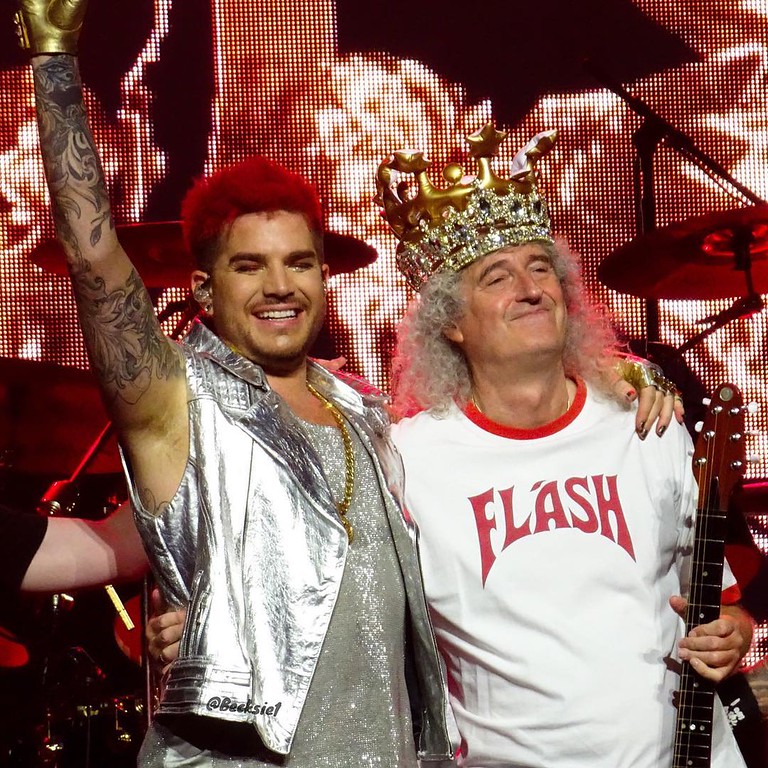
We took a week off in July in lieu of the one originally planned in June, when Jean’s work commitments meant he couldn’t get away. We had to go to Toronto on Tuesday, July 18 anyway, because we had tickets to a Queen + Adam Lambert concert. We built the rest of the vacation around that.
The city can look purty
We’d first thought of going to Québec City after Toronto, but that’s a really popular destination this time of year. Finding a hotel was a challenge, and we started to think it would just be unpleasant with so many people crowded into the Old Town there. We switched over to Kingston, which is much less of a drive, so thought of adding a day in Toronto.
But Toronto is also a very popular destination this time of year. And while we could have stayed at our hotel an extra night, the price for that extra night jumped dramatically. (And this was for a hotel room that was probably the smallest we’ve ever had in Canada. Mind, the hotel itself—the Strathcona—was very conveniently located downtown, though something of a nightmare to drive to and expensive to park at.) So, we decided to stick with just two days in “The 6”.
At night also
We took some time while there to visit my sister and brother-in-law in their lovely new apartment. That didn’t leave much time for doing Toronto “stuff”. Mainly, during the day, we walked around various neighbourhoods: The Harbourfront area, the Distillery District (highlight: visiting the Soma chocolate store), Kensington Market.
Unofficial poster. Seems to be one of these for each stop.
You see this warning sign? This show has strobe lights, it has lasers, it has smoke, it has explosions. You name it, this show has it. You’re allergic to any of these things? I suggest you go home now.
It was the first time I’d had to go through a metal detector at an Air Canada Centre concert, but all the ACC staff (like the one quoted above) were really very cheery and nice, helping everyone out to ensure we all got through quickly and safely. This was a relief to Jean, who’d been worried on seeing the lineup when arrived. As was the fact that we had no problem getting his camera in (only “professional” cameras were banned, but what is that?).
We sat next to a woman from Newfoundland, a fan of Queen but especially of Adam Lambert, who’d flown up special for the concert. (Jean shared that we’d flown all the way to Berlin for our Adam Lambert concert.) Her husband was in town with her, but not at the show, which caused Jean to give me a look. Well, he couldn’t very well abandon me on our 25th wedding anniversary night, could he?
Our view was from here—and it actually wasn’t bad. Though Jean complained that they played more to the other half of the room.
And truly, it was a really great show. Would have been a shame if he missed it.
The staging, the lights, the effects
I’m not sure I’ve ever seen better. Before the show started, we could tell the stage was in a guitar shape, but were having trouble figuring out how things (like the projection screens) were laid out… Then the show began with this huge robot hand smashing through the screen, then looking out, then raising it with both hands to reveal the band playing “We Will Rock You.” Awesome!
Other highlights included Adam Lambert literally rising from the floor to sing the exquisite “Who Wants to Live Forever”; the stunning laser show; the effect of a simple disco ball in a stadium; the interesting, multi-level video background for Brian May’s solo (built around the Queen logo, deconstructed); and the stunning amount of confetti at the end.
Disco inferno!
Dynamite with a laser beam! Source: ror0roror0ro at https://www.instagram.com/p/BWthmNKDLlL/
That’s a lotta confetti! Source: lauracjthistle at https://www.instagram.com/p/BWtkqdOFbbQ/
The music!
Of course I love all the songs. But the band also performs them so well—without vocal modulators or click tracks. And, the sound mixing at the ACC was quite good. So I could hear Adam Lambert’s impeccable, incredible vocal flourishes on songs like “Don’t Stop Me Now”, “Somebody to Love,” and “Who Wants to Live Forever.” And the band’s excellent harmonies on songs like “I Want It All”.
One great band
The drum battle between Roger Taylor and new recruit (from Queen Extravaganza) Tyler Warren was fun. And the guitar solo—which I’d been dreading a bit, having found it somewhat long and dull at their last concert—was fantastic. It was shorter, for one, and all built around familiar melodies (at least to a Queen fan) from “Lost Horizon” and “Brighton Rock”. Kudos.
All the feels
The set list is designed to take you on an emotional journey. You start with the powerful adrenaline rush of a snippet of “We Will Rock You,” followed by the powerhouses “Hammer to Fall” and “Stone Cold Crazy.”
Power!
There is then a gradual segue to the fun and frothy part of the evening, introduced by Adam Lambert singing “Killer Queen” atop the head of Frank the robot, while wearing a hot pink suit. (“Gayest suit ever!” he proclaimed.) Included at the juncture was an Adam Lambert single, “Two Fux,” along with “Don’t Stop Me Now” and “Bicycle Race,” wherein Adam rode around on a pink, flower-laded tricycle.
Thanks to Adam’s super-tights pants, propensity for hip thrusting, and just general handsome-ness, the entire evening was somewhat lust-inducing (if you like that sort of thing).
Adam’s groiny interpretation of Fat Bottomed Girls
But they really amped up to 11 on “Get Down, Make Love,” a welcome addition on this tour. The whole backdrop for this song was red, dripping, sexy imagery, which Lambert only enhanced with his orgasmic vocal prowess.
“Was it good for you?” he asked. (Umm, excuse me, I’ll be in my bunk.)
But Adam wasn’t the only significant contributor to this portion of the evening. Roger Taylor took lead vocals on another recent set addition, “I’m in Love with My Car,” a song that really shouldn’t be sexy, but somehow is, the way he sings it.
Brian May? Well, he introduced the poignant part of the evening, moving to the front of the stage to sing “Love of My Life,” accompanying himself on accoustic guitar. The effects here were a sea of cell phone lights, which was just beautiful. And though I knew that video Freddie Mercury would make an appearance near the end, the way they did that, with Freddie seeming to stand right beside Brian, I couldn’t help tearing up.
Stars in the cell phone firmament. Source: a_jm_v, https://www.instagram.com/p/BWtmDWGFpq-/
Through “Somebody to Love”, and “Under Pressure,” and “Radio Ga Ga,” [aside that I’m not listing every song they played], the band managed to create a more intimate feel in this large space.
So close you could touch them. (Not really.)
Of course, the ending was triumphant. I liked how they rejigged “Bohemian Rhapsody.” They included the usually skipped “Is this the real life?” introduction, with Adam taking lead vocals. He also sang both verses, instead of sharing those with video Freddie. Of course, the operatic part is still from the original video. Freddie just appears at the very end, trading off lines with Adam.
The finale? “We Will Rock You / We Are the Champions,” of course. Full Toronto set list
The crowd was really great (as I usually find with Toronto). I thought we’d spend most of the concert sitting, but no, they were up for standing for probably three-quarters of the show. Brian May’s birthday was the following day, when there was no concert, so we got the fun of singing “Happy birthday” to him, after he honoured us with a selfie stick photo (posted here: https://www.youtube.com/watch?v=Vw6i-QMjSuY). At the end, Adam thought Brian should wear his crown (though that proved a bit of a problem, as it was sized for Adam’s bigger head).
(This is turning an epic post, but why stop now.) The evening before the concert, we’d originally hoped to dine at Canoe, but it was summerlicious time in Toronto (that is, specially priced meals at certain restaurants), which meant that Canoe was fully booked for two weeks. (And that likely happened on the first day summerlicious reservations were open.)
So, we went to Richmond Station, a new restaurant for us, even though we couldn’t get in til 8:30 pm. We’d read that they offered surprise, multi-course “chef’s menus”, but that wasn’t mentioned on their printed menu. Jean asked about it, though, and they confirmed that it was on offer, and the head chef was in that day, so it should be a good one.
They also asked us if we had any special occasion, and Jean mumbled something about, no, we’re just here for a darn Queen concert, but I piped about it being our 25th wedding anniversary the next day. That was good, because it resulted in a complimentary glass of bubbly each, to go along with our half-liter of (delicious) Oregon Pinot Noir that we thought should be generally food friendly.
The bubbly with our first course, oyster and trout tartar
What a nice meal we had there. All courses—eight of them—were prepared with care and delicious. The service was attentive. Our late start meant that we had a waiter switchover near the end, but that was handled very well. Tables were close together, so it was a bit loud, but that somehow didn’t bother us. And the whole thing was like, $200? Which seemed a great deal for a meal of this caliber in Toronto.
Beef tartar is not a thing I normally eat, but theirs was flavored very well. There was a small charcuterie plate. This amazingly light zucchini tempura. A set of two salads: one beet, one tomato, both great. [I feel like there might have been sweetbreads in here somewhere also?] Seared salmon with great vegetables. A smoky sirloin beef with potatoes (the smoke made it special).
Two salads
Le saumon
It was all topped off by a very special dessert of ice cream, peanut butter, and hazelnut.
Before the concert on Tuesday, we went to our reliable Ki, where they once again did a really nice job of their “modern Japanese” food and excellent service.









 Lucy Maud Montgomery is best known for Anne of Green Gables, and like many people, I expect, the Anne books are the only ones of hers I’d previously read.
 And now for something completely different…
 This one is not a book. Well, it is a book, but I haven’t read it. What I have done is watch the Netflix series based on the book, some months after most other people did.
 This was our vacation audiobook, because it had really high ratings on Audible.com. (Highest rated ever, by the way, is Trevor Noah’s Born a Crime.) It’s a translation of a Swedish novel, and has also been made into a movie (that we haven’t seen yet).




 Cultureguru's Weblog