Dinner in an instant (pot)

An Instant Pot is a Canadian-manufactured pressure cooker whose claim to fame is that it can also be used as a slow cooker, steamer, saute pan,  and yogurt maker (!). It’s been a hot seller, and already available in baffling variety of models, with a great number of supporting cookbooks and web resources.

I at first wasn’t interested in the device, as it was described as a handy one-pot option for people who don’t like to cook. I got more intrigued with the reports of the speed which you could cook certain things—baked beans, brown rice, whole squash. Maybe it would allow me to cook those types of dishes and foods more often.


I used some birthday money to take the plunge. This required first doing some research into the varieties of models available to figure out what I wanted. I thought that maybe I would want to make yogurt some day (?), so I’d go to at least the Duo model, instead of Lux. But I didn’t really see the need to be able to control the thing with a phone app (!), so I wouldn’t spring for the “Smart”.

I then tasked Jean with figuring out where to buy the Duo from. We ended up getting it at Best Buy: The 6-quart Duo Plus.

instant-pot.png

There’s a bit of a learning curve to this thing. I did read the manual, and some web resources, but Jean and I were still fumbling our way through the first recipe we tried, honey-garlic chicken. Like, first we had to sauté, and we missed that we were supposed to wait until the indicator said Warm before adding the food. Then it was on to pressure cooking, and it took a few tries to get how to set the cooking time, and how to tell when it was actually cooking. And then we had to decide on a technique for “releasing” the pressure cooker five minutes after it was done.

So all in all, this supposed 30-minute recipe took over an hour. It was, however, absolutely delicious.

instant-pot-honey-garlic-chicken-recipe
And did kind of look like this. Photo courtesy the Diethood blog.

Since then I’ve also tried:

  • Adapting my Mom’s baked bean recipe to the Instant Pot
  • Making roast potatoes with rosemary
  • Steaming basmati rice
  • A momo meatballs with cilantro chutney recipe
  • Cooking whole beets
  • Making pina colada rice pudding

And so far I’ve learned:

Mentally add in a 10 to 20 minutes preheat time to each recipe

Long-grain rice in 4 minutes? Baked beans in 40? Well, not quite. Because recipes will tell you how long to saute or pressure cook something, and how long to let it sit before releasing, but will never estimate the preheating time—perhaps because it can vary with the model or how hot it got in the previous phase. So in addition to prep and cook time, you have to consider that preheat time.

It’s not always faster

Baked beans, chicken with bones, brown rice, beets—even with the preheating, all of these were definitely faster in the Instant Pot than they would have been in the oven or stove top. But for long-grain white rice…? About the same. And, you have to make a lot of rice at once, which isn’t ideal if you’re trying to limit carbs.

It doesn’t do crispy

It’s been terrific at producing tender meat, creamy rice pudding, and flavorful and tender baked beans. But in roast potatoes, I prefer more crispness than you get cooking them this way (though I still might do it again if I were low on time).


What I’m most eager to try next is a macaroni and cheese recipe (from a book) and a chicken adobo. I’m looking forward to trying risotto (which I’m too lazy to make the traditional way) and seeing how it does with whole squash.

Oh, and I guess one of these times I’ll have to try making my own yogurt (!).

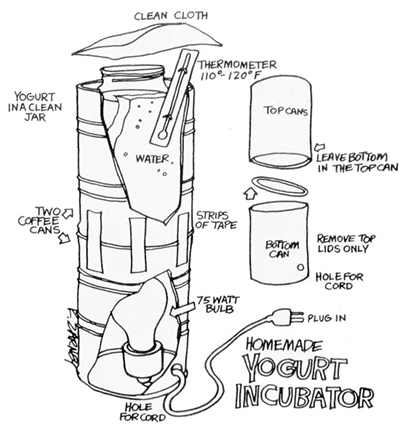
yogurt-maker.png
Case where the Instant Pot definitely beats the alternative (from https://www.motherearthnews.com/)

I have not completely forgotten how to read

This Globe and Mail article, called I have forgotten how to read, was posted some weeks ago now, but the opening sticks with me [bold added by me]:

Turning, one evening, from my phone to a book, I set myself the task of reading a single chapter in one sitting. Simple. But I couldn’t. There was nothing wrong with my eyes. No stroke or disease clouded my way. Yet – if I’m being honest – the failure was also not a surprise.

Paragraphs swirled; sentences snapped like twigs; and sentiments bled out. The usual, these days. I drag my vision across the page and process little. Half an hour later, I throw down the book and watch some Netflix.

Out for dinner with another writer, I said, “I think I’ve forgotten how to read.”

“Yes!“ he replied, pointing his knife. “Everybody has.”

“No, really,” I said. “I mean I actually can’t do it any more.”

He nodded: “Nobody can read like they used to. But nobody wants to talk about it.”

I identified with the gist of the remainder of the article, which is that the Internet has rewired our brains and made it difficult for us to focus on extended text, such as a book. Heck, even a brief Internet outage (maybe 2.5 hours) one Sunday left and my husband and I feeling like lost, disconnected souls, missing our regular jolts of online distraction.

But still, that opening example… You literally can’t sit and read one chapter? That just seems impossible. Like, how boring was this book you were trying to read? Maybe don’t go for Moby Dick or Middlemarch. Try some hot fiction. A lively bio, maybe.

On the other hand, if actually true, it’s made me feel slightly superior, because despite my web-addled brain and Twitter addiction, I still manage to read a book chapter pretty much every single day.

Sure, it takes a bit of conscious effort. No screens in the bedroom (other than an eReader), TV off by a certain time. And quite deliberately having at least two books on the go, so that my Internet-addled brain has variety and choice. Normally, I try to make sure it’s at least one fiction and one non-fiction on the go.

Here’s a few I’ve gotten through—or am working on—recently.

Caught by Lisa Moore

Nobody I’ve talked to seems to have of this book, even though it was supposedly a best seller. It’s a Canadian novel, set in 1978, about a young man convicted of drug dealing who escapes from prison. He then connects with his former partner in crime, who evaded incarceration, for another possible job. But he might not be evading the law as well as he thinks….

This was a well-written novel, with each chapter acting like a short story in itself, with its own suspenseful arc.

I was pleased to see that CBC has adapted the novel as a mini-series, and even more pleased that they’ve changed some plot elements in an interesting way. Now I don’t know how this version will end, as I’m thinking it can’t be the same as in the novel…

The Handmaid’s Tale by Margaret Atwood

Yes, it was about time I read this, and yes, it came to mind because of the popular mini-series, even though I only watched the first episode of that, because then the free Bravo preview ended, plus I found it kind of dark.

Compared with that one episode of the mini-series, the novel was not as depressing as I’d expected. The episode quickly presents the story of Offred’s capture and “orientation” into the life of handmaiden; the novel spends more time with her immersed in that life, with flashbacks occurring only later on in the book. And it’s overall less graphic, I suppose.

I “enjoyed” reading it, if that’s the right word? It kept me engaged, anyway. And not having seen the rest of the mini-series, I didn’t know how everything would play out.

Mortal Error: The Shot That Killed JFK by Bonar Menninger

This a non-fiction work about what I think is the most convincing take on the Kennedy assassination: that the President was accidentally killed by one of his own security men. It documents the work of ballistics expert Howard Donaghue, who was asked to prove whether Oswald could possibly have fired three times in the necessary time span for him to have acted alone. Donaghue managed to replicate that feat, but wanted to do more research before giving his own stamp of approval on the official account. Hence begins years of research.

He discounts some of what conspiracy theorists insist prove their case; the “magic bullet” problem. He explains that by how Kennedy and Connolly were seated relative to one other, and by the type of bullet used. But he couldn’t buy everything about the official account, either, concluding, for example that the first shot did ricochet onto Kennedy but not Connolly. And he was especially troubled by the fatal head shot: both its trajectory and its effect. Leading to his eventual conclusion that it was actually fired from a different location and type of gun.

I know exactly nothing about gun and ballistics, of course, but the evidence laid out here just works better for me than any other I’ve heard. The official story, about one deranged man acting alone, makes it hard to explain why so many officials did act in such weird, suspicious, cagey ways—breaking Texas law by stealing away the body, later losing the President’s brain (!). But arguing that Oswald was either just a patsy or a party to some government conspiracy doesn’t work that well, either; he really did seem the deranged loner type to try something like this, and he did murder officer Tippet.

But that Oswald alone tried to murder the President, and that one of the security men reacting to the shooting tripped and accidentally fired? And that officials didn’t want the world to know that accident happened? Yes, that makes sense to me.

There was a documentary made about this theory in 2013. (The book was published in 1992.) Trailer below, but the whole thing seems to be posted on YouTube.

My Real Children by Jo Walton

Someone had recommended Jo Walton to me as an author, and I picked this particular novel because it was the only one immediately available for borrowing (as an ebook) from my library. It’s a novel about a woman whose life starts off on one trajectory, then splits off in two directions based on a pivotal decision. After the setup chapters, the book alternates between what happens when she says “yes” versus what happens when she says “no”.

It’s not only her own personal life that veers in different directions in each case, but world history itself. Early on we learn that in one case, President Kennedy (him again!) was killed, while in the other he was not. So you initially think that one life will take place in “our” world vs. an alternative one. But no. Kennedy is killed is different way, and a whole other history follows (such as his brother not being assassinated and instead becoming President himself).

With the mix of two personal stories and two alternative world histories, I got totally caught up in this. My original plan was to read what I could doing the three-week borrowing period then check it out again later, but no, I found I really wanted to finish it! The only downside to that was that it meant reading the later chapters in rapid sequence, which got pretty confusing—there was so many characters (friends, children, partners, grandchildren), not to mention varying historical facts—to try to keep straight in each “life” at that point.

I was wondering how this would all come together in the end. The answer wasn’t entirely satisfying, but I didn’t regret the journey one bit.

The Last Black Unicorn by Tiffany Haddish

The current read, one I am still working on. (Plus, it’s a book club book, so discussion is to come.) Early part is a really sad story, told by a very funny person.

Call Me by Your Name by André Aciman

Just anticipating this will be my next fiction read, as that is the Oscar-nominated movie that really had my heart this year. Whereas my brain said Get Out might have been the best in terms of ideas. But the Academy thought Shape of Water, of course—it was also good. Jean and I liked The Post also, but it was more conventional than the other five nominated movies I saw.

I did not watch the actual telecast, beyond the opening monologue. I had reading to do.

The pedantic corner

Digging this one up from 2014. Because nobody necessarily lost an hour of *sleep* this weekend, and I am tired of hearing that we all did…

cultureguru's avatarCultureguru's Weblog

No idea why, but it just got to bugging me this past weekend that the media kept referring to us “losing an hour of sleep” this weekend due to daylight savings time.

Because, no we didn’t. Not necessarily.

Sure the lost hour occurs overnight, and sure most people are sleeping then. But it doesn’t have to follow that they therefore lose an hour of sleep.

You can, after all, go to bed an hour early that day. Or, you can sleep in to an hour later than usual. (It happens on a weekend, after all. Many people don‘t work, or at least start later on the Sunday.) You can even go to bed and get up at your usual times (according the clock), then have an unusual one-hour afternoon nap.

So media, we do not lose an hour of sleep due to daylight savings. We lose an hour of…

View original post 39 more words

Sing-along musicals

The KW Symphony recently presented “Sing-Along Musicals”! I got tickets even though Jean is not so big on “singing along”. When I saw the program, I wasn’t so sure how much of that I would be doing, either. South PacificOklahomaThe King and I? Those are some old-timey musicals! Did I even know any of the songs from those?

Turns out I did, at least somewhat. “I’m Going to Wash That Man Right Outta my Hair” has not always been a shampoo jingle, it turns out. Oklahoma includes “Oh What a Beautiful Morning”, “The Surrey with the Fringe on Top”, “ I Can’t Say No”, and “People Will Say We’re in Love”. The King and I has “I Whistle a Happy Tune”, “Getting to Know You”, and “Shall We Dance”. And they projected the lyrics, so you didn’t need those memorized.

sound20of20music20two

The second half got a bit more modern, with “Defying Gravity” (done as a solo, mind you), selections from The Sound of Music, and a surprise encore of “Let It Go” from Frozen. The whole evening was fun, the concert featuring a youth choir, two talented young singers leading the sing-along (when they weren’t solo-ing), and young dancers making an appearance during some numbers. Conductor John Morris Russell, of the Cincinnati Pops, was lively as usual. So Jean enjoyed it also.

It got me thinking, though: What would be my picks if programming a sing-along musicals concert? Excluding any musicals based on the works of great rock and pop artists (such as We Will Rock You, Tommy, American Idiot, Mamma Mia, and Jersey Boys), because that would be cheating. And I guess that also excludes Moulin Rouge, though kudos to Baz Luhrmann for truly re-imagining all those pop songs in that music.

But merely having mentioned Moulin Rouge, I can now include this Virtue and Moir dance video, right?

First up, musicals with multiple great numbers in them, so we could do a bit of a singalong medley with those. In no particular order…

Continue reading “Sing-along musicals”

Please save us, NDP, you’re our only hope

Given its persistence in my thoughts, apparently I need to write something about the strange goings-on in Ontario politics.

Setting the stage

To catch up people living elsewhere:

The Ontario Liberal Party is currently in power. It has formed the government since 2003—15 years. The official opposition is the Progressive Conservative (PC) party.

There is a provincial election in June.

With the Liberals, and leader Katherine Wynne, having persistently low approval ratings, the PCs appeared poised to win that election.

It was all kind of routine and dull. Which isn’t necessarily a bad thing.

But then the PCs decided to make it interesting

About four weeks ago, PC leader Patrick Brown was accused of sexual misconduct; specifically, of initiating intimate activity with women who were much younger (though of legal age), while they were inebriated. One of them worked for him.

Brown denied the accusations and vowed to stay on as PC leader. He was convinced to step aside by his staff, who resigned en massed, and by the rest of the PC caucus, who went on to elect Vic Fedeli as interim leader.

Fedeli then discovered serious problems within the PC party itself, including a sexual assault allegation against the president of the party and bogus membership numbers. There were more resignations.

The new PC party officers decided to have a quickie leadership convention, with a winner to be declared on March 10. Four candidates entered the race, include Doug Ford, brother of former Toronto mayor Rob Ford (gah!), and a woman (Tanya Granic Allen) who thinks children shouldn’t be learning anything about sex in school. (She was just endorsed by a white nationalist organization. That’s nice.)

Satirical take on Doug Ford’s leadership announcement. But he really did announce it in his mother’s basement, and he did used to be a drug dealer

And then last week, Patrick Brown came out swinging. He defended himself against the sexual misconduct allegations (including, in part, through statements from his girlfriend, 17 years his junior, whom he started dating when she was his intern. Umm…). He launched a defamation suit.

Oh, and he applied to be PC leader again, and has been allowed to run.

And then they blew up their platform

That Patrick Brown won the PC leadership in the first place was a surprise. He had been undistinguished backbench MP in Stephen Harper’s Conservative government. But he won by getting a lot people to sign up as new members of the party to vote for him.

He ran for the leadership as being at least sympathetic to social conservative views, but as the election, he and his team gauged that to win Ontario, you had to be a bit more centrist. They came out with a platform to mostly… Keep doing what the Liberals had been doing. The only “radical” element was getting rid of the Liberal’s cap and trade system for carbon pricing, and instead adopt the federal Liberal’s carbon tax plan. They would use the greater revenues from that to reduce income taxes.

But one by one, all the PC leadership candidates have declared they will not support carbon taxes. And they are going to get rid of cap and trade, too. in Maclean’s, Mike Moffat outlines how Scrapping carbon taxes leaves a gaping hole in the Ontario PC platform. To not run a deficit, they’d have to cut spending by $16 billion instead of the originally planned $6 billion. And they simply won’t have any way to cut greenhouse emissions. Ontario just won’t.

people-s-guarantee-ontario-pc
So much for that….

Except, as National Post’s Andrew Coyne has pointed out, A carbon tax is coming, no matter what the PC candidates say. Because if they do cancel cap and trade, then the Federal Liberal government says they are going to impose a carbon tax on Ontario (and give the revenues back to the province). While it’s always possible the Federal government will backtrack on that plan, none of the PC candidates can personally make that happen. Whining alone will not do it.

And that’s one of the reasons Patrick Brown stepped back into the race, he says: To defend his platform. For the record, I do not believe his motivations are noble; I think he’s just very ambitious and really wants to be Premier. But he’s not wrong in saying that the policy void of the rest of the candidates is irresponsible.

Problem is, responsible policies will not win you the PC party leadership. Compared with the general population, the PC membership has a much higher percentage of people who hate carbon taxes in a deep, passionate, and irrational way, and cannot be convinced to accept them as policy, no matter (for example) how big an income tax cut you offer in return. Saying what you need to say to get past the members in March, then pivoting to become mainstream enough to win in June, is going to be a challenge for whoever wins this.

Which proves that having a tiny minority of the population with special interests select party leaders is ridiculous. Elected members of the party caucus should be the one to decide who leads them. Member vote has been the practice long time in Canada; there’s no real momentum to change that now. But if that time ever comes, this will be a textbook case as to why it’s needed.

So do the Liberals win again?

I’m not going to make that prediction. If nothing else, the PCs are gaining a ton more attention than they managed with Patrick Brown as uncharismatic leader, and the Liberals remain stubbornly unpopular. (That people say they actually dislike Katherine Wynne as a person is a puzzle to me, by the way. To me, she comes across very well, as knowledgeable, compassionate, and well-spoken. But maybe people are just tarring her with whatever Liberal policies they’re angry about.)

140304wynnec

Which seems to be mostly increased hydro rates? Although those date back to some bad contracts that previous Liberal premier Dalton McGuinty got us into, and that no party can get us out of. But the Wynne government has made some of their own bad decisions (along with some good ones, it has to be said): I’m not convinced that selling Hydro One was such a great idea. I’m not a fan of their LCBO-style plan for selling marijuana. Back-tracking on their promise to Toronto mayor John Tory in implementing tolls on the DVP and Gardiner was unconscionable. As is the amount of money they spend trying to get us to gamble more, online.

Overall, I think they could use a little time out here.

But I can’t see voting for that gong show of a PC party, either.

Our last hope? No, there is another

Ontario actually has a third party with seats in the legislature: The NDP.

Even before all this, I was leaning toward voting NDP. My MPP, Catherine Fife, is from that party and is a very good representative. She deserves to be returned to Queen’s Park.

But the party as a whole still seems to having trouble setting themselves up as a government in waiting. Even though they have the most popular leader. Even though the PCs are in a bit of a mess and people are tired of the Liberals. The NDP still seems to have trouble getting any attention, and keeping showing up third in “Who would you vote for” polls.

Could be a few reason for that, including having less money than the other parties, but they also seem notably light on the policy front. (Though what they have, on pharmacare and Hydro, seems sensible.) Maybe they should take a page from the Liberals, who have been known to crib from the NDP, and borrow some from other parties.

ndp-ideas.png
Horwath, Wynne, and Brown (this is an older cartoon….)

Like, the Ontario Green Party has some excellent policies, such as having small business dispensaries sell marijuana instead a government monopoly.  (Also, Ontarians should consider voting Green, at least anywhere they stand some chance, like in Guelph.)

And / or, how about if the NPD gets rid of cap and trade, happily accepts the Federal government carbon tax, and gives everyone an income tax cut?

For one thing, it would be hilarious to see them debate the PC leader on that. And the NDP isn’t going to get any of the “I hate carbon taxes” vote, anyway. They could even put an NDP spin on it, and make sure all low-income people got a carbon tax credit.

An NDP government in 2018?

Look, it’s a long shot, it definitely is. But the past four weeks have shown that nothing in Ontario politics is as predictable as we’d thought.


Four days in January

Now that I’ve come up with it, the title of this post seem vaguely ominous, as though I’m about to recount some tragic event that, in four short days, changed my life forever.

But no, sorry, this is nothing that interesting, I’m afraid. (Mind you, I am glad I haven’t recently experienced a great tragedy.)

Jean’s work has been requiring more travel lately, including three weeks in Barrie (about a 2-hour drive away). The first weekend in between, he came home. The second one, he decided to go a conference in Toronto. I would join him there.

This conference is annual, and normally I just stay over for one, maybe two nights. But with us having seen less of each other, I went there Friday after work and took Monday off, such that we could spend three nights and (part of) four days together.

Due to heavy Toronto traffic, my Friday bus was late arriving. Meanwhile, Jean was dealing with the fact that he couldn’t get into his hotel room, because the hotel (Doubletree by Hilton) had mistakenly registered him as staying only one night, even though we had booked for four (and had the paperwork to prove it). Initially, they also weren’t sure where his luggage was. (Turned out it was still in the room.) That all got straightened out shortly before I arrived.

Originally we’d been planning to meet with my younger sister and her husband for dinner, but she’d contacted us a couple days before with the realization that her son had a basketball game and her husband would be out of town, so… We made other plans. Which was just as well, as with the bus delay and hotel troubles, we would have been late for dinner.

But we were on time for the alternative we booked, old reliable Ki, where we once again had a really nice meal of their “modern sushi”, with a bottle of Grüner Veltliner.

Ki_Restaurant (16 of 95)
The jalapenos gave this a nice kick

Ki_Restaurant (42 of 95)
Sushi and sashimi assortment

Saturday morning Jean had more conferencing, and we had an early dinner booking, so in the afternoon, we just did a bit of ambling about on Toronto streets…

20180128-Toronto_Restaurants-150of150-HDR
Hospital street art

Til the weather became rainy and unpleasant, at which point we decided to explore the Toronto underground. This told us that… A lot of stores in the Toronto underground are closed on Saturdays. Kind of weird.

Dinner was at the very popular Richmond Station, which we’d really enjoyed this past summer. Given its popularity, we were only able to get reservations at either 5:15 or 10 pm. We went with 5:15 pm. We were able to do the chef’s surprise menu, which made it easy. They were able to give us five courses before they needed the table again, and everything was lovely, from the raw oysters…

Richmond_Station (1 of 66)-HDR

To the truffle mushroom soup, and on to the trout with cauliflower and barley…

Richmond_Station (31 of 66)

to the beef main course, and the hazelnut ice cream dessert, and polished off with some chocolates and macaroons.

Richmond_Station (61 of 66)-HDR

The wine we had was a French Pinot noir that was a pretty flexible match.

We were back at the hotel early enough to watch Eddie the Eagle on Netflix. Pretty much the definition of “feel good movie”, that one, but it’s well done. Eddie the Eagle was the British ski jumper at the Calgary Olympics who had taken up the sport only a year before, and came dead last in the competition, but was thrilled just to land on his feet (and, incidentally, set a British record for that sport). This movie was good at showing that this really was an accomplishment! Landing at Olympic ski jumping is not easy.

So, I’d recommend it. (Canadians, though, will have to look elsewhere than Netflix to watch it. They dropped it on February 1. Hence my hurry to watch it in January.)

Sunday late morning we met with my other sister at the Crown Princess for dim sum. Food and conversation were good, as usual.

Then we headed to the ROM, where they were featuring three special exhibits. Once we got through the rather long entry lineup, we went to the first one, on the Vikings. And found it somewhat underwhelming. Definitely I learned more about the Vikings, but that included the fact that they didn’t leave behind that many artifacts. I was expecting something more spectacular, I guess.

IMG_20180128_143708.jpg
I was amused by Zuul’s tag line

The Wildlife Photography exhibit, on the other hand, was really great. Lots of fantastic photographs (none of which we could take photos of, of course). As for Christian Dior exhibit? Honestly, we didn’t go ub because of the lineups. Which is really unfortunate, because when we first got to the exhibit door, there was no lineup. Had we realized, we would have gone in then and looked at the Wildlife Photography afterwards. But we didn’t, and we didn’t.

Our dinner that night, with some friends, was at our first new (to us) restaurant, Pearl Diver. It was a little bit noisy, but friendly service and definitely good at preparing its signature cuisine, seafood.

Pearl Diver Restaurant (1 of 1)
Jean’s meal was Spanish-style: No sides! But they weren’t all like that.

And snowy Monday was basically about getting ourselves on the road, back to our respective destination cities.

Comments about movies (and about comments about movies)

Gone are the days where you go into a film without a whole lot of Internet chatter about it filling your brain…

The Disaster Artist

This is a movie about the making of a “so bad it’s good” movie, The Room. I’d never seen The Room, but I had heard of it, because it plays regularly at the local repertory cinema. Before going to The Disaster Artist, I listened to a How Did This Get Made? podcast that combined an older interview with Greg Sestero, a lead actor in The Room, and a new interview with James Franco, director and star of The Disaster Artist.

That did give me some insight, such that I, for example, understood faster why it was funny when Tommy Wiseau insisted on randomly throwing a football around with Greg Sestero. I don’t think that advance research is necessary to enjoy this film, though. That scene was funny regardless, thanks to Wiseau’s sheer incompetence at throwing the ball.

the-disaster-artist-poster

Indeed, overall, this movie was one of the funniest I’ve seen in a while—particularly the part where The Room is premiered to an incredulous, sold-out audience. But it’s an interesting story as well, because Wiseau is such a mysterious and eccentric character, and his friendship with all-American Greg is unexpected.

As for the acting, well, James Franco lost himself so much in the character of Tommy Wiseau that Jean didn’t even realize that’s who it was; he thought that James played the character of Greg (in fact played by James’ brother, Dave). And it’s chock full of cameos by the likes of Sharon Stone, Megan Mullally, Nathan Fielder, and Judd Apatow.

[At least some of the reports of James Franco’s “bad behavior” had come out just before I went to see this. Obviously, I concluded that I still wanted to go. Your mileage may vary.]

Blade Runner

This would be the original 1982 Blade Runner, which I thought we should see before seeing Blade Runner 2049, given that Jean had never seen the original, and I had forgotten almost everything about it—other than it starred Harrison Ford and involved androids.

The version we watched was the “Final Cut”, so it lacked the explanatory voice-over and slightly extended ending of the original. Mid-way through, we were both a bit confused about what was going on. But the story does come together, and the movie as whole is thought-provoking and engaging and has a great look. Interesting that it’s set in 2019. We aren’t as far along as that with androids (I don’t think?), but we have much thinner monitors. (This world was still full of cathode ray tubes.)

What else clangs a bit with modern sensibilities? Jean and I were both taken aback at the “seduction” scene between Deckard and Rachael—because it’s actually a rape scene (albeit one that fades to black). She tries to run away from him. He physically stops her. He insists that she say she wants to be kissed. She never looks anything but frightened.

But I don’t think we’re supposed to read it as an assault, given that later in the movie, Rachael declares that she loves Deckard, and they leave together. Reminding me that Pretty in Pink sees nothing wrong in boys having sex with a passed-out drunk teenage girl, and that Grease has a disastrous message for women in general (“Did she put up a fight?”). How many movies of my youth contain similarly jarring scenes? On that topic, check out Maclean’s column  James Bond was a rapist.

Star Wars: The Last Jedi

I’m not a “Star Wars person,” and I’m a bit mystified by those who are, really. Still, I got curious about the low fan vs. critics ratings of this movie on Rotten Tomatoes—you’d expect that to be the opposite, if anything. But I also knew that a lot of “Star Wars people” liked this one very much.

I figured I should go see it for myself.

I liked the movie well enough, as did Jean. I was pleased that it did have its own plot, instead of borrowing storylines from the older films as The Force Awakens had. I liked that it bounced between three different stories for much of its run-time; preventing any one from getting too tedious. Having all those strong female characters was great. It was pretty long, but it kept me engaged.

star-wars-the-last-jedi

After seeing it, I did some reading on why some super-fans didn’t like it. Certainly for a minority it’s just a matter of sexism and racism (as in, ha ha ha, the men’s right activists who created a nonsensical “no women” edit). But for other critics, seems to me, they just cared too much. That is, they had preconceived notions of what this movie should be and couldn’t handle having those expectations thwarted. They wanted Luke to be a certain way (heroic!), they had their ideas of what was possible with the Force (no astral projection!), they wanted the plot to follow an expected arc (plans should work out!). The movie itself told them to move on from the past, and they didn’t like that.

Whereas I didn’t particular care what happened to Luke (sorry Luke), have no theories of the Force, and found it rather interesting that the plans didn’t work out! (Is the lesson here that you can enjoy the world more if you care less? Hmm.)

I would note that despite its 48% audience score on Rotten Tomatoes, The Last Jedi was a huge box office success.

Call Me by Your Name

We settled into our theatre seats. The lights lowered as the first of the upcoming attractions was queued up.

“Hey,” Jean whispered to me. “What movie are we seeing?”

Truthfully, I wasn’t sure this would be Jean’s kind of movie. The issue wasn’t that it’s a gay love story. It’s that it’s not much more than that. It’s a slow-paced, character-driven exploration of growing attraction over one summer, between 17-year-old European Elio and the handsome American doctoral student, Oliver, who travels over to work as a intern for Elio’s father. The kind of movie Jeanoften finds boring.

To both our surprises, he didn’t hate this one—though “it was deadly slow,” as he pointed out.

(I personally would have described it more as “languid”.)

But the issues raised by the relationship kept it interesting, and led to quite a discussion afterward. Like the young woman that Elio starts a relationship with as a distraction from the one he really wants. The movie really lets us off the hook in feeling bad for her, with her sincere expression that she’s fine and that she and Elio will always be friends. Big of her!

Then there’s the age difference. The movie is fuzzy on exactly what that is—Jean guessed that Oliver was 30 (accurate to the actor’s age), but according to the novel it’s based on, the character was 24. At any rate, one’s a teenager, one’s a man. “What if that had been a 17-year-old girl?” asked Jean.

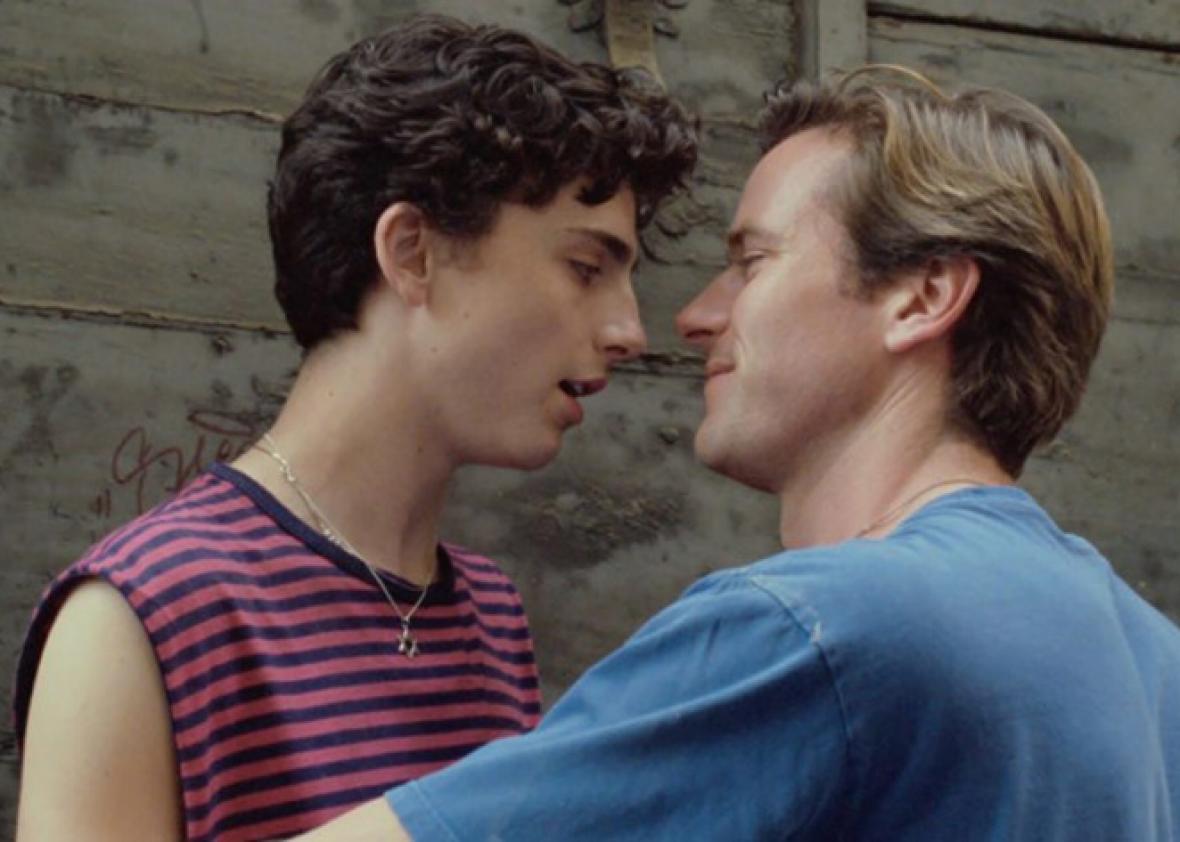
call_me-crop-promo-xlarge2

That feels like a bit of a straw man argument, as a movie about a 17-year-old girl and handsome older man would be another movie entirely, one telling a completely different story. The whole point of Call Me by Your Name is that the relationship is not socially sanctioned (it’s set in 1983). That informs everything about it.

And for my part, I felt fine about the relationship, as it was so clearly consensual, and initiated, really, by Elio and not Oliver. It’s a lovely movie, one with a twist at the end that I didn’t see coming, and indeed didn’t really understand until I reflected on it a bit later.

Quick takes: Coco and The Third Man

While you can’t count on every Pixar movie being a classic anymore, it’s nice to know that they can still put out great films, as with Coco. I really liked the Mexican concept of the afterlife—one I hadn’t known anything about, going on. And as Jean said, this movie “had a really good message” about the importance of family over personal ambition, about the power of forgiveness. And it looked amazing! Well worth seeing on a big screen.

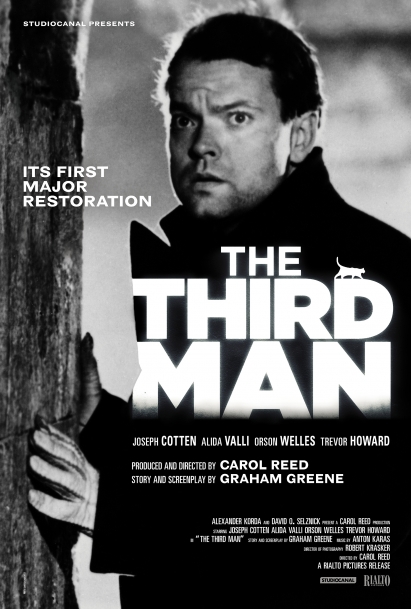
The Third Man is a classic film from 1949, but Jean and I had never seen it. Turns out it’s one of those that does hold up. It helps that it’s set in a particular time and place, post-World War II Vienna. And also that the moral issues it grapples haven’t gone stale. But mostly that it’s an engaging story about an American writer whose convinced there’s more to his friend Harry’s death than he’s being told. He’s not wrong…

219b3cc0e74bf1ad073d9e3dab1a571c


Lowest of the Low live at Maxwell’s

I went to see Lowest of the Low in concert again on January 20. That ties  them with The Who, Bob Geldof, U2, and Sting as the artists I’ve seen live most often: three times each.

If I keep going back to see Lowest of the Low, it’s partly that it’s so easy to do: All the shows I’ve seen have been at small-ish venues in my hometown. But it’s also that, 26 years after their first album’s release, the music still holds up.

Now, the challenge of finding someone to join me at a Lowest of the Low concert is that most people have never heard of them. (The challenge of finding someone to join me at a concert by a more famous artist is that most people won’t like them enough to want to pay the ticket prices. So concert company is always a challenge.) But, I didn’t give Jean much choice in the matter, and then he suggested I invite Tim and Jess, and they were willing to give it a go.

Continue reading “Lowest of the Low live at Maxwell’s”

Reservations about resolutions

Angela: [voiceover] What I was thinking, as like a New Year’s resolution, is to stop getting so caught up in my own thoughts. Cause I’m, like, way too introspective… I think.

Generally, I find the whole ritual of trying to think of something to change about yourself or your life just because it’s January 1 is silly. Sure, sometimes a change is a very good idea—but it doesn’t need that kind of schedule. Deciding that something in your life just isn’t working or could be better shouldn’t be a once-a-year event. Whenever it needs to be happen, you should try to make it happen.

But, what does occur annually, just before January 1, is that you have down time. That time before and between Christmas and New Year’s when everything just… slows… down…

OK, not everyone gets that down time. Jean is in a line of work where they get super-busy from Christmas Eve to New Year’s Day.

But, I get that down time. Most people do. Even if you are at work, it’s so quiet and slow-paced. But likely you’re off and you have all this time to read… And to think…

Angela: [voiceover] … but what if not thinking turns me into this shallow person? I better rethink this becoming less introspective thing.

All that reading and thinking can lead, sort of organically, to maybe deciding to try to change something about your life, about now.

I got a bonus dose of that sort of time this year, because Jean wasn’t feeling well in the days before Christmas, so we did fewer activities than we otherwise would have. That meant I upped the amount of reading I did. I got through a number of books, including In my humble opinion. My so-called life by Soraya Roberts, a nice refresher of essays about that beloved series, and suppliers of handy quotes for this post.

But I was also keeping up better with online news, and newspapers, and magazines, which led to some pondering about how I could more routinely keep on top of my reading? But I haven’t quite cracked that nut, given that the biggest obstacle seems to be my job, which is probably wise to hang on to for the time being.

Angela: [voiceover] …okay, so I’ll stay introspective.
But I do resolve to stop doing Jordan Catalano’s homework.

mscl-ep16-car
Angela doing Jordan Catalano’s homework

One Globe and Mail story I read then was called Minimal carbs, lots of fat, incredible dieting results – but not enough science. It was about all the anecdotal evidence that people with diabetes often do really well on a high-fat, low-carb diet—though the point of the article was that there wasn’t scientific study of this, and there should be.

I am not diabetic, but my husband is, and I do the cooking. This got me wondering: Is this how I should be feeding him? I found another article, Low Carb-High Fat Diet And Diabetes: A Detailed Guide For Beginners, whose prescriptions were not only mind-blowingly different from what I thought of as a “healthy” diet, but also sounded fairly gross: pile up on meat, eggs, and high-diet dairy. Don’t eat much fruit or grains, and even limit root vegetables. And beans and lentils.

So bacon is the health food, and apples are the villain now?

There was no way I was going to eat this way. For one thing, I seemed to be keeping myself pretty healthy, and I somewhat feared that switching over to more saturated fat and less fruit and vegetables might be detrimental to me. Plus, there were all those ethical and environmental issues around meat eating.

(As an aside, I once told Jean’s Mom that we ate vegetarian twice a week, and she reacted with stunned amazement that such a thing could be possible. “Deux fois par semaine!” Funny.)

Anyway, I was rather relieved when Jean seemed equally unenthused about this approach. “I don’t like meat that much, ” he pointed out. “I get sick of eggs. I like fruit. I like potatoes. And this granola is actually really good!”

The funny thing is we’re discussing this at Christmas time, when we’re busily eating things like sticky toffee pudding and tourtière. (Hey, we still gotta live.)

Angela: [voiceover] The thing about resolutions is, it’s hard to remember them around somebody like Jordan Catalano.

Once back home, I experimented with moderately increasing Jean’s protein and fat intake, like giving him back bacon (organic and “humane treated”) as side dish on vegetarian night, while he rethought eating five tangerines in one go (“But they’re so good!”).

Then the Globe and Mail ran a follow-up on their “we need to study high-fat diets for diabetics” story with A diet high in fat is best – with the right kind of fat. It said that, no no, we have studied this thing, and the best diet for diabetics isn’t a high-fat, low-carb diet; it’s really the Mediterranean diet. I found a more full report on that here: Best Diabetes Diets.

Jordan: This is wrong.
Angela: What?
Jordan: You, doing my homework, it’s wrong.
Angela: Well I was just trying to help.
Jordan: It’s like I’m taking advantage of you or something.
Angela: You’re not taking advantage of me.
Jordan: Yeah I am. It would be different if we were like… but now you’re just… you know, a friend or whatever. [pause] I can’t do this anymore.

“So what is the Mediterranean diet?” asked Jean, by now pretty weary of my dietary resolutions du jour.

“Lots of fruits and vegetables. Fish, lean meat, and low-fat dairy. Plenty of healthy fats like olive oil. Nuts. Wine. Whole grains. Limit red meats. Avoid sugar and simple carbohydrates.”

“So,” he said. “Pretty much how we were eating before?”

“Uh huh.”

Angela: [voiceover] I couldn’t believe it. For the first time in my life I actually stuck to a resolution.

On the eve of 2018

I’m not sure how many times we were asked if we were going to the Rainbow Rhythm New Year’s Eve dinner / dance. Often by the same people, multiple times.

But New Year’s Eve, for us, has traditionally been a night for consuming gourmet food, which is not exactly what’s served at the Rainbow Rhythm dinner / dance. The dance people don’t quite get that we’d rather just eat that night, nor are they generally willing to spend as much for a dinner as we are.

So what are you doing that night, instead?

To have some kind of answer, fairly early on I’d booked an 8:00 dinner at The Berlin for New Year’s Eve night. Figured we could cancel it if something better came up, but at least we’d have somewhere to go that night if not. We’d been the previous two years and found it pretty good.

But The Berlin experienced a shakeup earlier this month: Founding chef, Jonathan Gushue—who’s become a bit of a celebrity—decided to leave. He’s headed back to his native Newfoundland to be head chef at a high-end restaurant on Fogo Island. In his place they’ve brought in Ben Lillico, who is all of 23 years old (and looks about 18). Despite his youth, though, he does have some great experience, including a stint at Langdon Hall.

Ben-Lillico-1-300x400.jpeg
The Berlin’s new chef

Without intending it, we ended up trying Lillico’s cooking just a few days after he started at The Berlin—at the admittedly easier meal of brunch. Brunch there includes your choice of hot items from the kitchen, along with the buffet table, and we were very happy with the meal.

As New Year’s approached, The Berlin announced that they would be offering a 7-course meal for $95 that night, which sounded intriguing. Initially seating times were listed as 5, 7, 9, and 11, so I switched our 8:00 reservation to 9:00. Then they decided that 2.5 hours might be a more comfortable amount of time for that many courses, and offered seating at 4:30 (!), 7:00, and 9:30. Hence, we would be dining at 9:30.

We had to figure out how to get there and back, since they were offering wine pairings (for $50), which meant that we both planned to be drinking. We tried to reserve taxis, but the local companies don’t take reservations for New Year’s Eve night. Over the Limit (who drive your car home with another car following) were already booked up. We figured Uber’s surge pricing would make that a pretty expensive option.

And so, despite it being -19C that night (air temperature, no wind chill), we took the bus. Buses are free on New Year’s Eve, and Grand River Transit has this very good route planning thing that tells you exactly how to get from point A to point B, including all walks and bus transfers involved. We bundled up, and darned if the buses weren’t exactly on schedule the whole way, such that we arrived exactly when Grand River Transit said we would, at 9:12 pm.

20171231-Cathy-013of013
Me before I had to put on the parka, toque, winter boots, and mitts in order to walk 11 minutes to the first bus stop

We had a short wait before our preferred table, facing the kitchen, was ready. As we sipped our bubbly, Jean noted that the entire kitchen staff seemed to have changed. We asked our waiter about it later, and he confirmed that when Jonathan said he was leaving, pretty much everyone else in the kitchen gave notice, too.

But the fact the crew had only been together for three weeks by this point did not show in any stumbles in either food or service. Really, I think this was the best New Year’s Eve dinner we’ve ever had at The Berlin.

The amuse was bay scallops escabeche (we asked, and it means cooked in an acidic mixture) with pickled root vegetables and crème fraiche. The seafood had lovely flavor and texture. Next up was this lovely item:

Foie Gras Terrine - Fantastic!

Which was a foie gras terrine with beets and celery. Rich and fantastic. It was served with 2 oz. of Southbrook Farms Whimsy, which is a sherry style drink. It made for an effective contrast with the foie gras.

Truffle Mushroom Soup

The incredible truffle mushroom soup was also served with a contrasting wine, a Chablis from Burgundy. Not a match I would have thought of, but it worked really well.

Seared Ling Cod in Smoked pork Broth adn Sunchoke mask - The mash was the highlight

The ling cod served next was fine, but the highlight of the dish was actually the mashed sunchokes, as set off by the lentils and smoked pork broth. The wine here was a delicious 2015 Sangiovese, light enough to not overpower the fish but picking up on the smoky flavors.

We had a pear palette cleanser next.

Pear and Ice

And the main course was venison prepared in caul fat, which (we asked) made it extremely tender and less “gamey” tasting than venison normally is. That was served with roast parsnips, onions, and juniper sauce. The wine served was a bigger red, a Gingondas from the Southern Rhone.

Venison

That left dessert, which was this absolutely incredible chocolate torte with raspberry sorbet. It was served with Southbrook Farms Framboise, a raspberry wine that is very well suited to chocolate.

Chocolate torte and Rasberry Sorbet

We managed to finish up somewhat before midnight, which meant that we got through to the taxi company with no delay. (There was no suitable bus route back home at this time of day.) That also meant that we rang in the new year while still in the cab, but there you go.

onwin-taxi-happy-new-year.jpg